‘What about dark-skinned Latinos, other Latinos, and members of other minority groups?’ the dissent asked.
By Catholics for Catholics
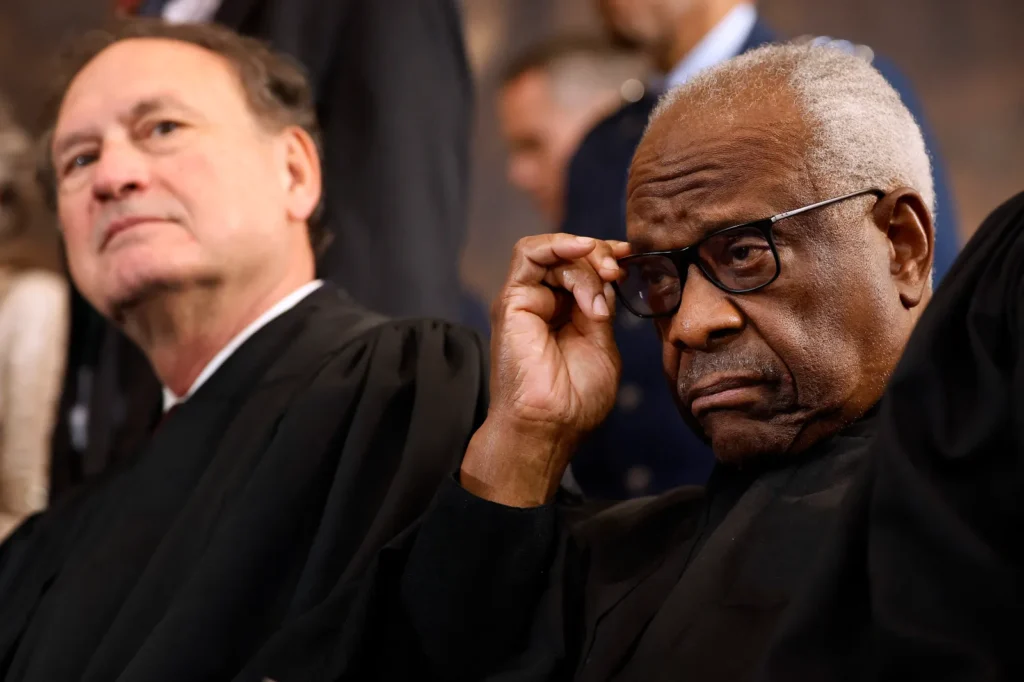
On Monday, the United States Supreme Court turned down a Fourth Amendment-related case, with Justices Samuel Alito and Clarence Thomas saying the outcome left a major constitutional question unsettled.
The case in question involved whether courts can use race as a component in concluding when a police encounter becomes a seizure, but the court’s decision leaves in place a Washington, D.C., ruling that used a race-conscious legal standard, according to a story by Fox News.
Justices Alito and Thomas on Monday dissented from the Supreme Court’s refusal to take up a case that they said forces police officers to create a separate set of rules for racial minorities.
“It is dangerous to allow an individual to be treated differently based on statistics, studies, or expert testimony that purports to show that members of the racial or ethnic group to which he belongs are more likely to act in a certain way than are members of other groups,” Alito wrote on behalf of himself and Thomas. “Here, the special treatment helped the individual; in other situations it will not.”
According to Fox News, the case, U.S. v. Donte J. Carter, implicated a Black man whose firearm and theft convictions were removed after the D.C. Court of Appeals held that police seized him before they had reasonable suspicion. Officers later confiscated a .40-caliber pistol from Carter’s pants and the government said the gun had been pilfered from an FBI agent’s vehicle.
According to the D.C. court, “black Americans like [Carter] are ‘especially distrustful of law enforcement’” and therefore “‘less likely’ than other people ‘to terminate a police encounter’ due to skepticism that any attempt to exercise their constitutional rights will be respected.”
In addition, the D.C. court deduced that Carter’s race was pertinent to whether a reasonable person in his position would have felt free to end the police encounter. It ruled that the encounter effectively became a seizure, and that such an action was unlawful because police officers hadn’t established reasonable suspicion before subjecting him to it.
But Alito and Thomas contend that the D.C. ruling essentially compels law enforcement to treat people differently based on their race, something a precedent established by the Supreme Court prohibits.
“Under the test, officers will need to quickly assess a person’s race, and if officers and courts must craft special rules for black persons, what about dark-skinned Latinos, other Latinos, and members of other minority groups?” Alito continued. “We have said that our ’Constitution is color-blind.’ It ‘almost never’ allows government actors to treat persons differently based on their race.”
Save and Share This Catholic Patriotic Minute!