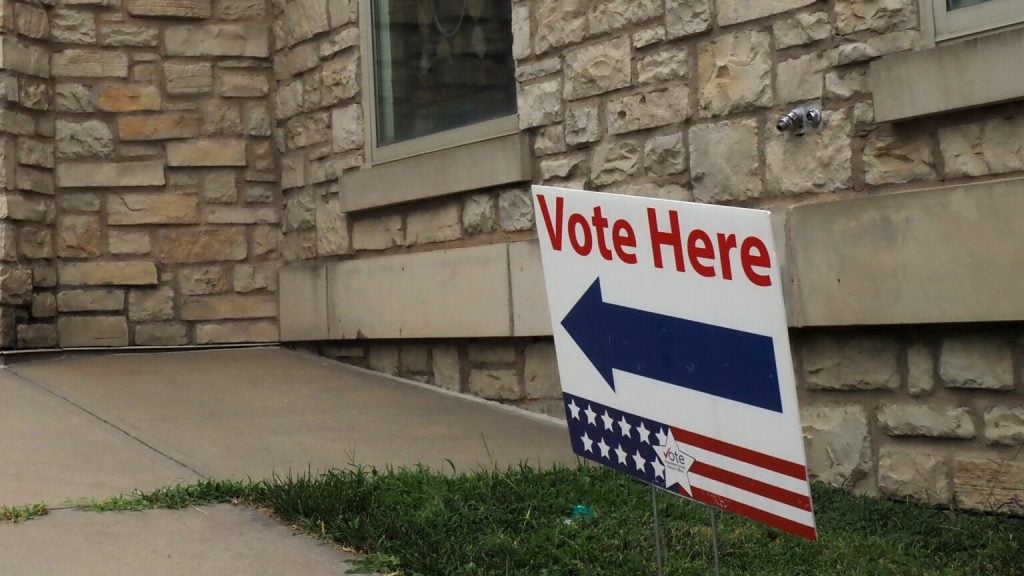
On Tuesday, Kansans will vote on whether to change their current system of selecting justices for their Supreme Court and replace it with direct elections. Twenty-one states currently use direct elections to put justices on the bench of the high court.
The current system involves the Supreme Court Nominating Commission of a nine-member panel that screens applicants. The panel includes five lawyers and four members who are not lawyers. From that screening, three names are forwarded to the governor, who selects one name for appointment.
The justices initially hold a one-year term and then face a retention election. Ballots simply ask whether the justice should be retained in office; if yes, the justice gains a six-year term and then faces another election for another six-year term. There is no limit to how many terms a justice can serve. Notably, not a single justice in Kansas has ever lost one of these retention elections.
Since the overturning of Roe v. Wade in 2022, the responsibility for shaping abortion law has fallen to the states, and legal battles often end up in state supreme courts. Thus, changing how justices are appointed to the high court may dramatically affect hot topic issues including abortion.
Currently, 75% of the abortions performed in the state of Kansas are from women coming out-of-state. That is because in 2024, the state Supreme Court affirmed a constitutional right to abortion and struck down a law that banned the most common type of second-trimester abortion.
Pro-life advocates are the driving force behind the effort to reshape the Supreme Court, but opponents of the measure have spent more than double – around $8.5 million.
Advocates for bench reform don phrases like “Take back the bench” and “Don’t let unelected attorneys pull the strings,” but even some pro-lifers fear that direct elections to the high court will merely bring in out-of-state, millionaire-funded voting campaigns to influence voters towards leftist candidates.
Save and Share This Catholic Patriotic Minute!