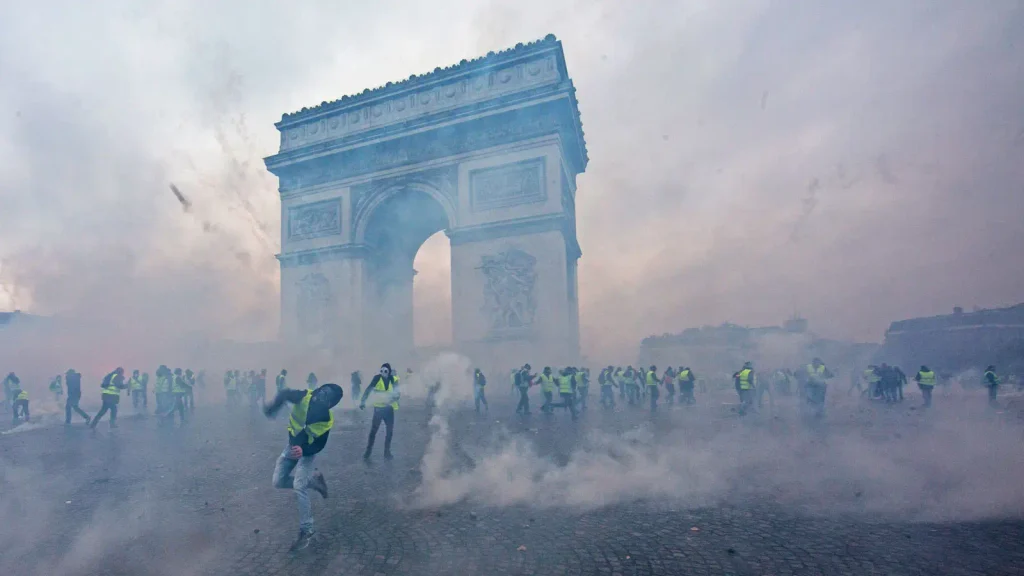
More than 6,800 arrests in France and fresh unrest in Belgium reveal growing frustration among young people, fueled by failed integration, deteriorating education, and increasing distrust of institutions.
By Javier Villamor
What began as a student protest against the deterioration of France’s public education system has turned into a public order crisis that is beginning to spread to other European countries. It also risks escalating into a much broader conflict ahead of the 2027 elections in which the party led by Marine Le Pen and Jordan Bardella could come to power for the first time in French history.
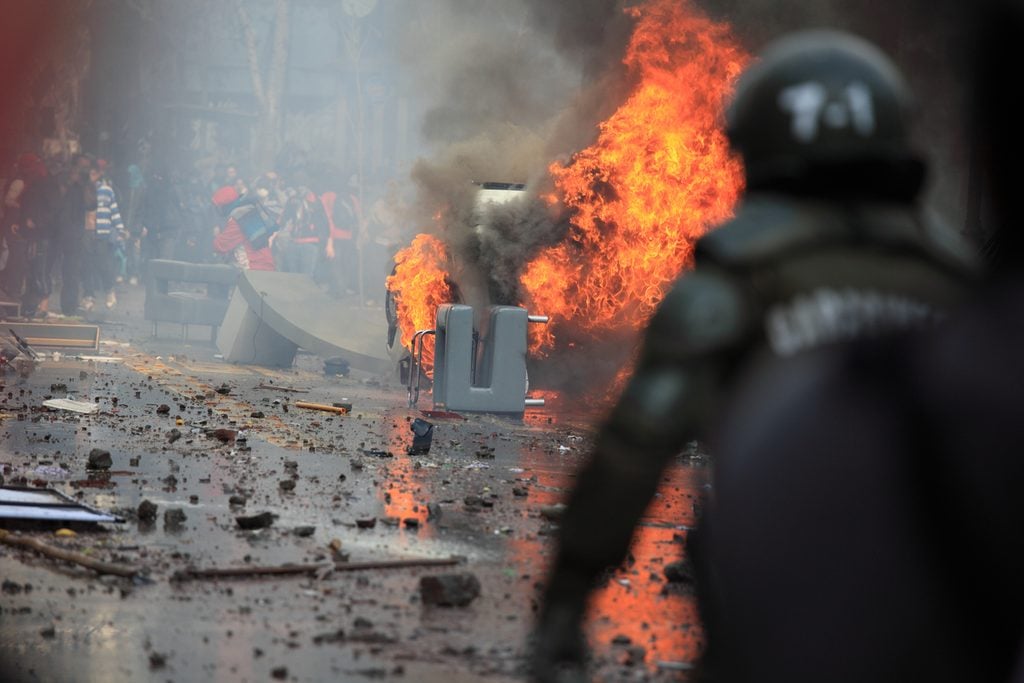
Fires, clashes with police, vandalized schools, and thousands of arrests have marked several weeks of demonstrations that can no longer be explained simply by teacher shortages or poor classroom conditions.
According to figures from the French Ministry of Justice, 6,877 people had been taken into police custody by October 8, 86% of them minors. Of those, 2,376 faced judicial proceedings.
At the beginning of October, the Ministry of Education recorded 24 schools that had been burned or looted and 78 education staff members injured. Reuters subsequently reported that around 700 police officers had been injured during the protests.
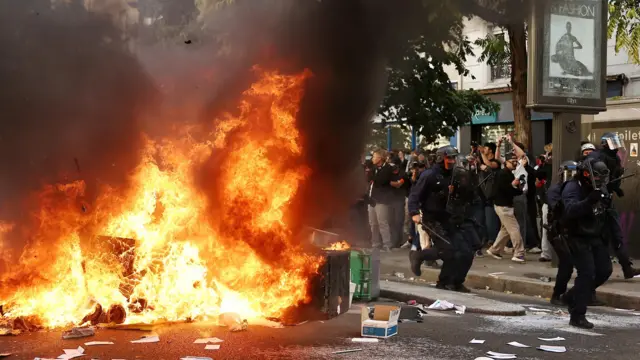
The mobilization continued on October 13, drawing 161,500 participants according to the Interior Ministry, with further clashes reported in Paris.
The unrest has now crossed the border. In the Belgian city of Liège, protests against education reforms and rising school costs descended into riots that resulted in more than 200 arrests during the first week of October.
In Brussels, on October 9, groups of masked youths attacked police with stones and firecrackers and set bicycles and scooters on fire near Central Station, one of the city’s main transport hubs.
The incidents coincided with an anti-austerity demonstration, although authorities said those responsible for the violence were not connected to the trade union march.
The violence has now gone far beyond the demands that initially prompted the demonstrations. One of the most sensitive—and increasingly apparent—aspects of the unrest is the social composition of those involved. Footage circulating online appears to show predominantly young people of foreign origin, although the growing presence of native French youths is also raising concerns.
This makes it difficult to determine what proportion of the violence can be attributed to the children or grandchildren of immigrants. Nevertheless, the integration difficulties affecting numerous French neighbourhoods are well documented and have become a recurring subject of discussion in the country’s mainstream media.
According to France’s National Institute of Statistics and Economic Studies (INSEE), the unemployment rate among descendants of immigrants reached 11.7% in 2025, compared with 6.5% among people without a direct immigrant background. The difference is not particularly large in absolute terms, but when unemployment is concentrated in particular areas with large immigrant populations, potential conditions for social unrest are already in place.
Among descendants of African immigrants, unemployment reached 16.1%, while among those of North African origin it stood at 15.1%. These disparities reflect persistent statistical inequalities in employment, although factors such as age, education, and geographical location also play a role.
Brussels presents an equally complex demographic picture. According to Statbel, Belgium’s national statistics office, at the beginning of 2026 only 21.5% of residents in the Brussels-Capital Region were classified as Belgians of Belgian origin. Another 41.8% were Belgians of foreign origin, while 36.7% held foreign nationality. In other words, fewer than one in four residents were classified as being of Belgian origin.
These figures illustrate the demographic transformation of the European capital, as well as that of a growing number of European cities.
There is, however, another factor that distinguishes this crisis from previous episodes of urban violence in France.
The discontent is no longer confined to suburban neighbourhoods with large immigrant populations. Students from elite institutions such as Sciences Po, CentraleSupélec, and other grandes écoles have also joined the mobilization, expressing concerns about deteriorating public services, employment opportunities, and their future prospects. This deterioration is directly linked to overcrowding and inadequate maintenance.
Jean-Luc Mélenchon’s La France Insoumise (LFI) supports the students’ demands, while the government and sections of the right accuse the party of bearing political responsibility for the radicalization of the movement. LFI rejects these accusations and denies encouraging violence. It is one of the two main parties, alongside Marine Le Pen and Jordan Bardella’s Rassemblement National, with a realistic chance of governing France following the forthcoming elections.
Beyond the usual exchange of accusations, Mélenchon is well aware that these conflicts can bring significant electoral benefits. He has repeatedly called for an end to traditional France. Although the politician now denies being a Freemason, he has a long history with the Grand Orient de France, which he joined in 1983.
Save and Share This Catholic Patriotic Minute!