Aid to the Church in Need warns that 413 million Christians live in countries where religious freedom is severely violated.
By Javier Villamor
Churches, cathedrals and monuments around the world were illuminated in red this Wednesday, November 18, to remember Christians persecuted for their faith.
The initiative, internationally known as Red Wednesday, is part of a campaign organised by the pontifical foundation Aid to the Church in Need (ACN). This year, 130 cathedrals and more than a thousand churches and landmark buildings across five continents were expected to take part.
The campaign aims to draw attention to religious persecution affecting millions of people, a phenomenon that, according to the latest reports, is also showing worrying signs in Western societies.
According to figures released by the foundation to mark the occasion, 413 million Christians live in countries where religious freedom is severely violated. Of these, approximately 220 million are directly exposed to persecution.
These figures represent one in six Christians worldwide in the first category and one in ten in the second. Christianity is therefore the world’s most persecuted religion, despite various claims that other religious groups, like Jews or Muslims, are the primary victims of religious hatred.
The organization documents attacks (physical or verbal) against Christians on religious grounds in 73 countries. Attacks on churches and places of worship have been recorded in 62 countries, while persecution has forced Christian communities to flee their homes in 33 countries.
The phenomenon takes different forms. In Nigeria and the Sahel, jihadist violence threatens the survival of numerous communities. In China, repression comes from the state apparatus. In India and Myanmar, religious nationalism contributes to the exclusion of Christian minorities.
The significant finding surrounding this year’s Red Wednesday is that anti-Christian hostility is no longer confined to regions ruled by authoritarian regimes or affected by terrorism.
On November 16, the Observatory on Intolerance and Discrimination against Christians in Europe (OIDAC Europe) published its 2026 annual report, covering incidents recorded in 2025. The document identifies 2,465 anti-Christian hate crimes and incidents across Europe, drawing on official records and civil society organisations.
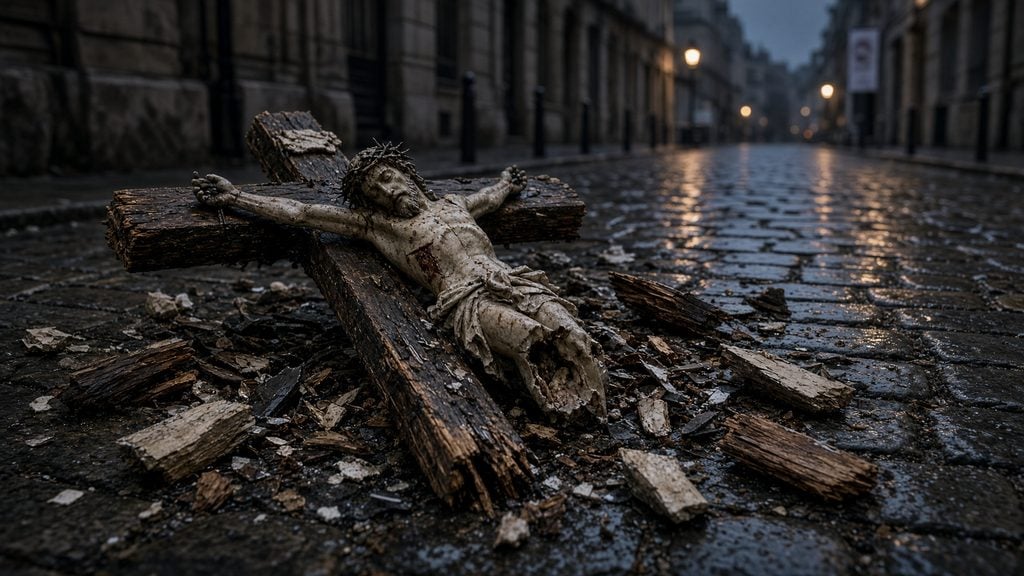
Of these, at least 395 were attacks against individuals, compared with 274 recorded in 2024. This represents a 44% increase in just one year. The category includes physical assaults, threats and harassment. Most recorded incidents targeted churches and other religious sites through vandalism, arson and desecration.
Secular, republican France tops the official list with 843 incidents, followed by England and Wales with 624, Germany with 337, and Austria with 134.
The French case is particularly significant. Offences against individuals increased by 70%, while physical attacks against priests and other religious officials quadrupled.
Among the incidents documented was the murder of Ashur Sarnaya, an Assyrian Christian who had fled Islamist persecution in Iraq and was stabbed to death in Lyon while livestreaming Christian messages. According to the report, French authorities confirmed the jihadist nature of the attack.
In England and Wales, recorded anti-Christian hate crimes increased by 24% compared with the previous reporting period.
Although differences between national recording systems make comparisons difficult, the figures show a rise in attacks against individuals targeted because of their Christian faith.
The OIDAC report also examines restrictions on religious expression in several European countries, ranging from legal proceedings involving silent prayer near abortion facilities to employment disputes linked to Christian beliefs.
The campaign is also reaching the European Union’s institutions. On November 23, the European Parliament buildings in Strasbourg are scheduled to be illuminated in red.
OIDAC is calling on the European Union to appoint a dedicated coordinator to combat anti-Christian hatred, with powers comparable to those of existing coordinators tackling antisemitism and anti-Muslim hatred.
The issue goes beyond the symbolic significance of a day of solidarity. Europe condemns the persecution of Christians elsewhere in the world while its own records reveal a growing number of attacks against believers and places of worship.