Andrew Jones says new lab results align with traditional dates for the biblical flood.
By Catholics for Catholics
A team looking for the remains of Noah’s Ark has said new lab results demonstrate that some pieces of wood discovered in a boat-shaped rock formation in Turkey agree with Biblical dates.
The founder of a group exploring Noah’s Ark in Turkey says the first lab results have dated the wood recovered from the site to about 4,300 years ago, a timeline he says lines up with traditional dates for when the biblical flood occurred.
“We can announce that the samples date back to about 4,300 years ago, so this lines up with some of the traditional dates for the flood of Noah,” Andrew Jones said on “Saturday in America.” “So we’re in the right time period.”
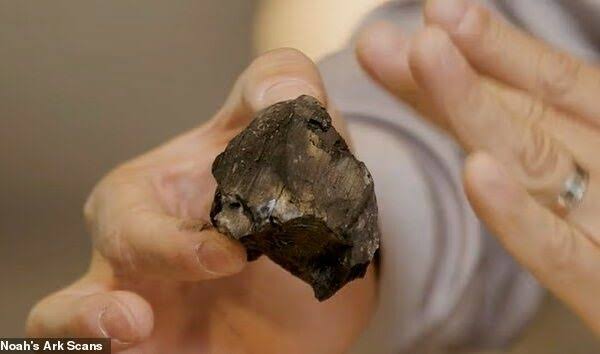
According to a story by Fox News, Jones said the Noah’s Ark Scans team retrieved various bags of what he described as “burnt-looking wood.” Other pieces of wood gathered from the site, located near Mount Ararat, bore markings coherent with tool work.
The samples were discovered 30 feet underground on the western side of what Jones called a “boat formation,” which he said is about 300 cubits long — corresponding to the size of the ark described in the Bible.
More exciting discoveries from the Noah’s Ark site in Turkey! Professor Cenker Atila is examining remarkable pieces of wood recovered from the Durupınar formation, and these fragments could help answer some fascinating questions about the Ark’s history. What type of wood was used to build Noah’s Ark? Could these samples help us finally understand the mysterious “gopher wood” described in Genesis 6:14? Some of the fragments have unusually straight edges and markings that appear to have been made by tools. Others show evidence of burning, raising intriguing questions about what happened to the Ark after it came to rest in the mountains of Ararat. Andrew Jones has also announced dating results indicating an age of more than 4,000 years, aligning with the biblical Flood timeline. Now, further laboratory analysis will help researchers identify the wood, examine the markings, and investigate what caused the charring. After thousands of years, could we finally be uncovering the materials used to build Noah’s Ark? This extraordinary site continues to reveal more of its secrets, and we’re excited to share every new discovery as the investigation moves forward. Help us in our mission at https://t.co/QxEcfVMUhb
— Noahs Ark Scans (@noahsarkscans) November 24, 2026
“What we don’t know is how the wood got there. And so we’re doing it one step at a time, but we’re happy to see these initial results from one of the labs.”
He believes he is studying the real Noah’s Ark, Jones said, adding that his team is “following the scientific evidence.”
“We’re checking out every piece of evidence that we gather… and reporting the results wherever the data goes.”
His attraction to the site first started more than 65 years ago when the boat formation was discovered close to the place the Bible says Noah’s Ark landed. His claims, nevertheless, contradict the scientific consensus that the site is merely a natural rock formation.
Despite some opposition to the excavation, Jones said one professor he is working with was impressed by the public interest.