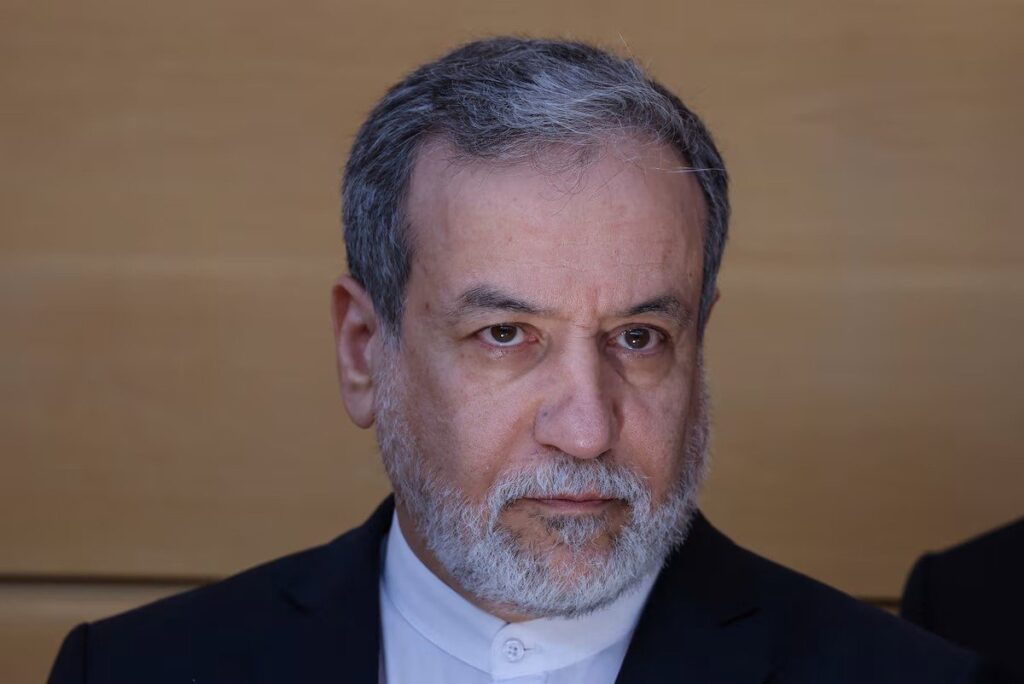
Foreign Minister Abbas Araqchi said diplomacy between both countries is moving forward.
By Catholics for Catholics
While tensions still simmer between both countries, Iran and the United States reached an understanding on Tuesday on main “guiding principles” in discussions geared toward settling their nuclear clash, however, that does not mean an agreement is about to happen, Iranian Foreign Minister Abbas Araqchi said.
In the meantime, oil futures fell and the benchmark Brent crude contract tumbled more than 1% after Araqchi’s comments, which helped ease fears of conflict in the region, where the U.S. has deployed naval forces to press Iran for concessions.
According to Newsmax, the Talks between the United States and Iran moved forward Tuesday toward what Tehran described as the start of a potential agenda, but strong public differences between the two sides accentuated how far apart they continue to be.
Nevertheless, Araghchi said the two sides agreed to start drafting a text for a possible deal, with plans to exchange drafts and schedule a third round of talks.
“Good progress was made compared to the previous meeting,” he said, adding that while drafting would slow the process, “at least the path has started.”
However, Washington has stipulated that any deal must end in the dismantling of Iran’s nuclear program — including its enrichment capacity — along with limits on the country’s ballistic missile program and terminate its support for allied militant groups such as Hamas and Hezbollah. Those demands go well beyond temporary enrichment pauses or technical adjustments.
Ali Khamenei, Iran’s Supreme Leader, appeared to push back directly against that premise, signaling a firm ceiling on Iran’s concessions.
“The Americans say, ‘Let’s negotiate over your nuclear energy, and the result of the negotiation is supposed to be that you do not have this energy!’” he wrote on social media as talks were underway. “If that’s the case, there is no room for negotiation.”
But while diplomats talk, the United States has greatly expanded its military presence in the region. The USS Abraham Lincoln is operating in the Arabian Sea, and recently F-35 fighter jets from the carrier shot down an Iranian Shahed-139 drone after it came close to the strike group — a move U.S. officials described as demonstrating low tolerance for provocations.
Also, the USS Gerald R. Ford, the Navy’s newest aircraft carrier, is now approaching the Middle East. President Trump confirmed the deployment on Feb. 13, saying, “In case we don’t make a deal, we’ll need it.” Reports indicate a third carrier, the USS George H.W. Bush, is being prepared for possible expedited deployment, which would create a rare three-carrier U.S. presence near Iranian waters.
Save and Share This Catholic Patriotic Minute!