Justice Thomas contends that the majority of the court fundamentally misread both the statute and Constitution’s separation of powers in its tariff ruling.
By Catholics for Catholics
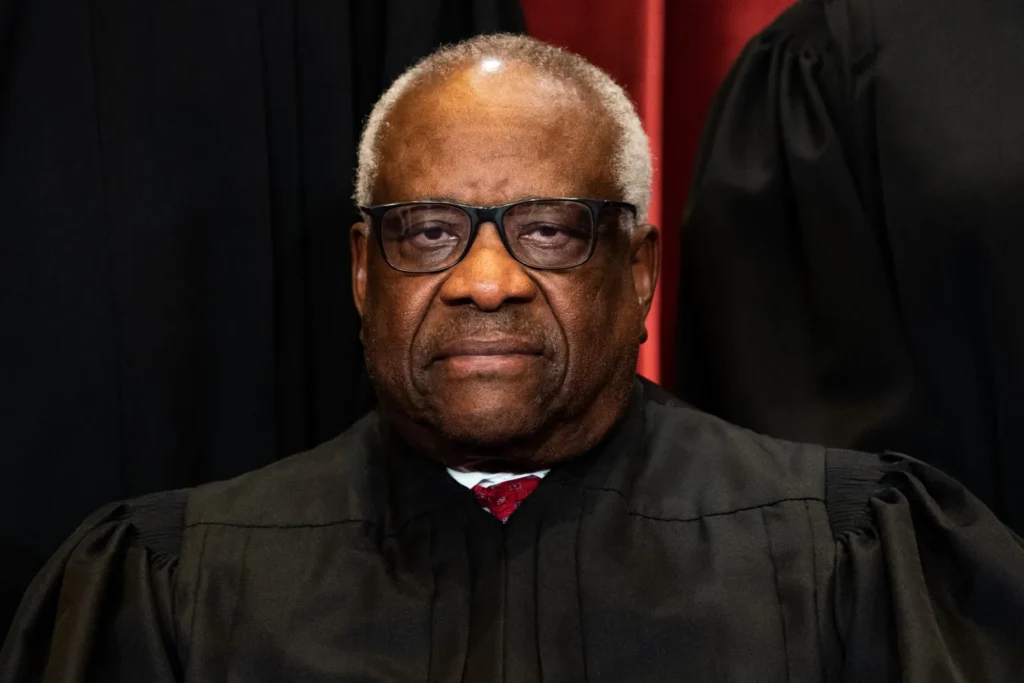
The Supreme Court last week dealt President Donald Trump a harsh blow as it blocked his use of enforcing tariffs, but Justice Clarence Thomas harshly criticized the decision, calling it a deep-seated misread of both the governing statute and the Constitution’s separation of powers.
“As (Kavanaugh) explains, the Court’s decision … cannot be justified as a matter of statutory interpretation. Congress authorized the President to ‘regulate … importation,’” Thomas wrote in his dissent, according to Fox News. “Throughout American history, the authority to ‘regulate importation’ has been understood to include the authority to impose duties on imports.”
Last Friday, the court annulled Trump’s use of an emergency law to impose tariffs in a 6–3 decision after weeks of Trump campaigning that the court should rule in his favor as part of his larger effort to enhance the economy, jobs and lower expenses for Americans. Justice Brett Kavanaugh was joined by Thomas and Justice Samuel Alito in dissenting from the ruling, with Thomas also offering his own distinct dissent.
🚨 Justice Clarence Thomas says the tariff ruling ignores the basics
— Derrick Evans (@DerrickEvans4WV) February 20, 2026
“Neither the statutory text nor the Constitution provide a basis for ruling against the President.”
He’s backing President Trump’s America First authority, and he’s not sugarcoating it. pic.twitter.com/MkTM5xQ6Fj
Still, most of the court ruled Friday that the International Emergency Economic Powers Act does not sanction the president, even after declaring a national emergency, to execute tariffs — and that Congress did not speak clearly enough to transfer its tariff-and-tax power to the executive branch.
Thomas contended in his dissent that nondelegation doctrine is a narrow constraint, saying a line is crossed only when Congress delegates “core” power to make rules triggering deprivations of “life, liberty, or property” — not “from delegating other kinds of power,” such as tariffs.
The nondelegation doctrine forbids Congress from delegating core legislative power to the president.
“As I suggested over a decade ago, the nondelegation doctrine does not apply to ‘a delegation of power to make rules governing private conduct in the area of foreign trade,’ including rules imposing duties on imports,” Thomas wrote. “Therefore, to the extent that the Court relies on ‘separation of powers principles’ to rule against the President is mistaken.”
Save and Share This Catholic Patriotic Minute!