The Catholic Patriotic Minute #49: Justice Antonin Scalia
Catholics For Catholics Special Edition | June 8th, 2026
Justice Antonin Scalia of the Supreme Court: A Student of the Founders and Thomas More
On March 11, 1936, Antonin Scalia was born in Trenton, New Jersey. His patron saint was Saint Antoninus, who was once a Dominican friar of the fifteenth century, the Archbishop of Florence, and the author of his own Summa Theologica, drawing from Saint Thomas Aquinas’s Summa.
Antonin was an only child to an Italian immigrant and an Italian American. When he was five, the Scalias moved to Elmhurst in Queens, New York City. Throughout his childhood filled with playing baseball, basketball, and softball, Antonin grew up also inclined to academics and music, as his parents were. His mother played the piano, and so did Antonin. His father taught the romance languages, primarily French, Spanish, and Italian, and Antonin studied Latin and Greek.
Scalia later reasoned that his classical education–the study of the classical languages, humanities, and Cicero, as Scalia described it–was a strong foundation for his study of law. His liberal arts education took place at Xavier High School, a Jesuit military school, and Georgetown University, where he primarily studied history and philosophy. He also accredited his ability, as he said, “to interest myself in whatever problem happen[ed] to be the one that [was] set before me at the time,” to his later success as a lawyer.
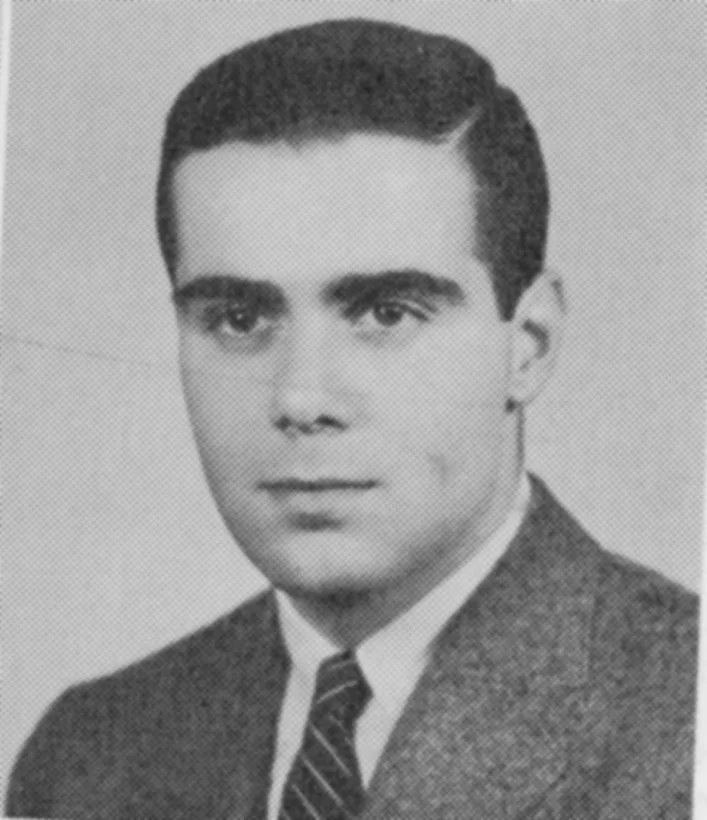
As acknowledged by Scalia himself, his father’s focused career, which began with a blue collar job and ended with a professorship, taught him how to be disciplined, driven, and never careless with his own skill set. Interestingly enough, becoming a lawyer was not an early hope for Scalia. By the end of university studies, Scalia considered law school the logical next step, simply because he was interested in law and he believed his talents were best used as a lawyer.
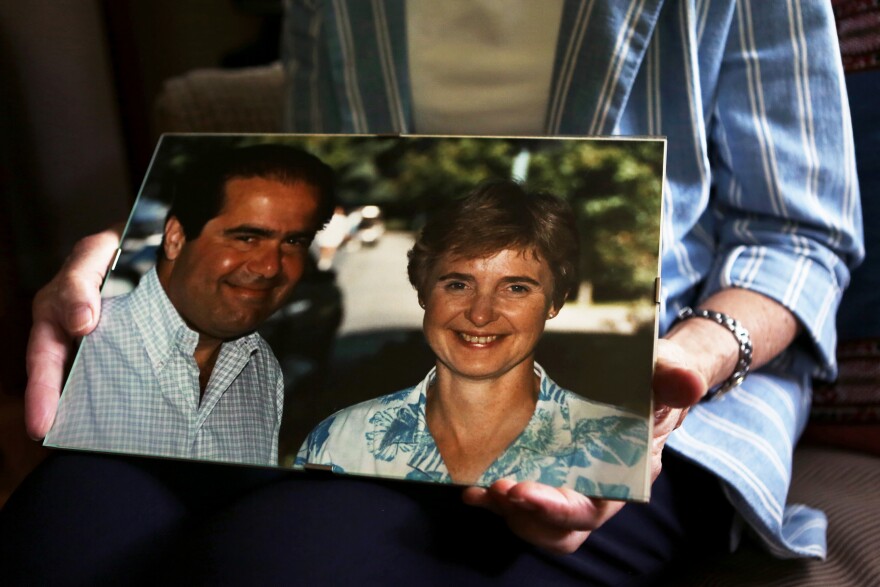
When Scalia studied at Harvard Law School, he met Maureen McCarthy, his wife-to-be. She was studying at Radcliffe College, the women’s college at Harvard. During Scalia’s last semester of law school in the Spring of 1960, they were engaged. Antonin and Maureen the beautiful, as Scalia would call her, married the same year. While Scalia had Harvard’s Sheldon Fellowship, a traveling fellowship, the newly-married couple traveled and lived in Italy, Germany, Poland, Czechoslovakia, and Austria, all while the Berlin Wall emerged.
Upon return to the states, the Scalias moved to Cleveland, Ohio, where he practiced law until 1967. Scalia was a Professor of Law at the University of Virginia from 1967 to 1971 and then at the University of Chicago from 1977 to 1982. Scalia worked in the federal government in this period between 1971 and 1977, which ended with Scalia serving as the Assistant Attorney General for the Office of Legal Counsel. In 1982, President Ronald Reagan appointed Scalia as a Judge of the United States Court of Appeals for the District of Columbia Circuit. On June 17, 1986, President Reagan nominated Scalia as an Associate Justice of the Supreme Court. Justice Scalia joined the Supreme Court in September of the same year.
It was well-known that Justice Scalia always kept a photograph of his wife, a portrait of Saint Thomas More, and the Federalist Papers on his desk, which displayed his love for his wife and the founding fathers, as well as his Catholic faith and patron.
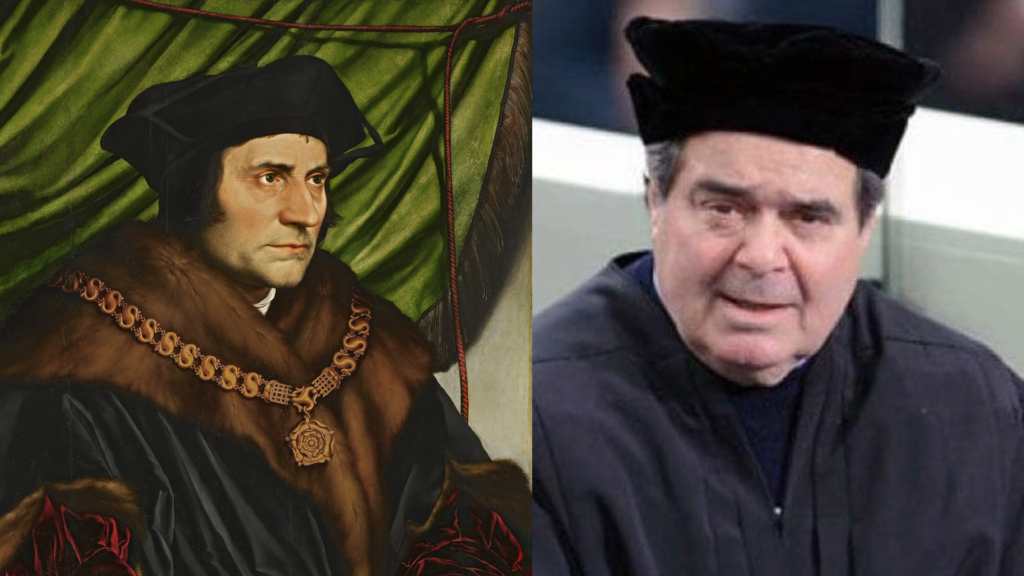
In his speech–“The Two Thomases”–Justice Scalia shed light on his admiration for the Saint. Thomas More, seen by fellow scholars as one of the greatest lawyers, scholars, and statesmen before execution, was thereafter viewed as a fool by his wife, friends, and intellectual contemporaries for, as Scalia explained, dying “to support the proposition that only the Pope of Rome could bind or loose the marriage of Henry VIII.” Even though Saint Thomas More himself was critical of Pope Clement VII’s past political decisions, he held onto the Church doctrine that the Pope was the Vicar of Christ. He accepted death, knowing his martyrdom would be referred to as the death of a fool by his very own friends and family.
Justice Scalia exhorted to his own contemporaries, “For the courage to suffer the contempt of the sophisticated world for these seeming failings of ours, we lawyers and intellectuals — who do not like to be regarded as unsophisticated — can have no greater model than . . . the great, intellectual, urbane, foolish, childish man that he was. St. Thomas More, pray for us.”
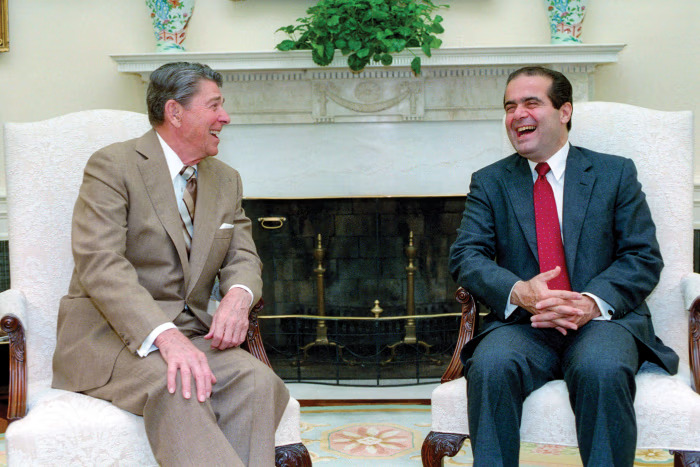
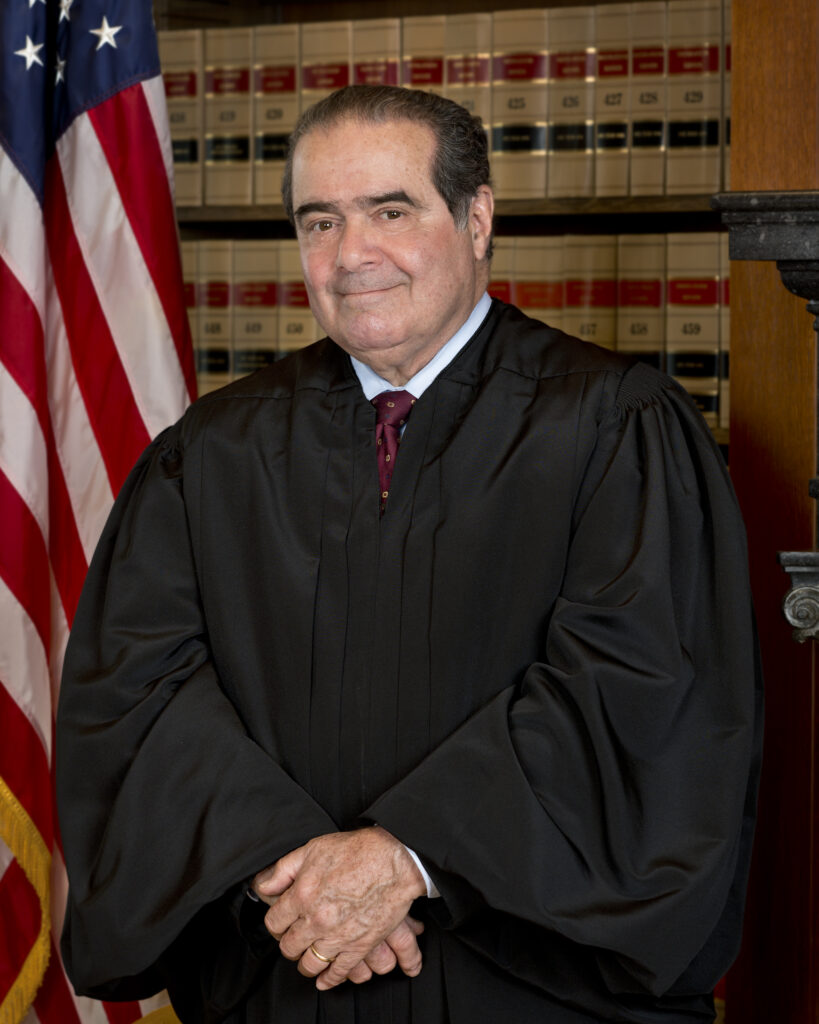
Justice Scalia was a self-proclaimed originalist, one who interprets the Constitution with its original public meaning, that is, how the founding fathers understood it. Of the 282 majority opinions Justice Scalia wrote, the most well-known one was that of District of Columbia v. Heller, which ensured that the Second Amendment does protect citizens’ rights to bear arms for self-defense. His famous dissents in cases such as Planned Parenthood v. Casey and Obergefell v. Hodges, in which he declared that the Constitution does not protect rights to abortion and same-sex marriage, resulted in American Catholics’ admiration of him.
However, Justice Scalia insisted, “I don’t think there’s any such thing as a Catholic judge.” As a Catholic, Scalia understood that to be Catholic is to be different from the world. He believed his Catholic principles informed his worldview. But, Justice Scalia stated, “How one’s faith affects one’s work depends upon what one’s work happens to be.” As Scalia cited Chief Justice John Marshall in Marbury v. Madison, “it is emphatically the province and duty of the Court to say what the law is,” not to make law. According to Scalia, the only Catholic way to be a Supreme Court Justice was to complete his work as “honestly and perfectly” as he could on this earth.
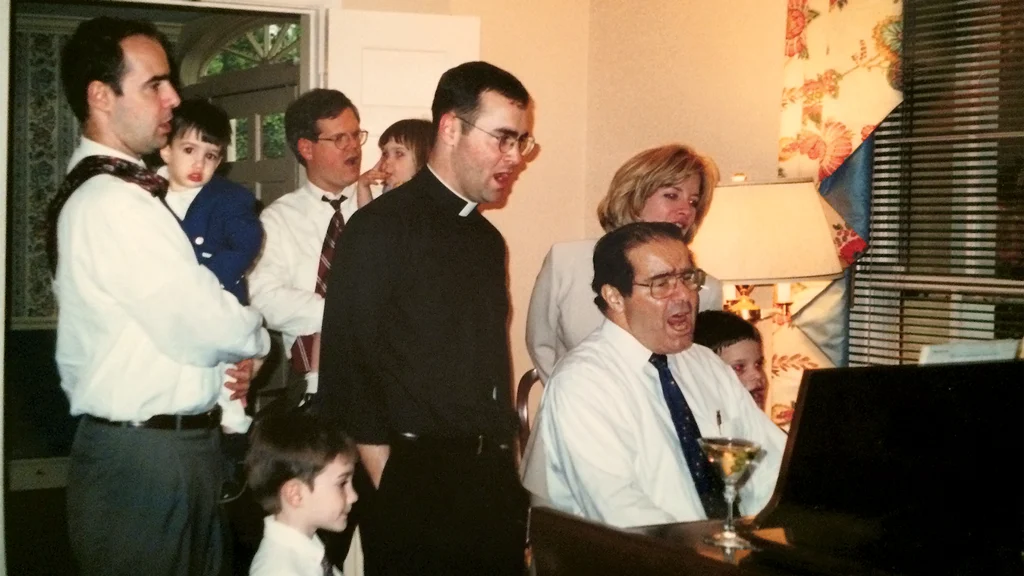
The Scalias had nine children, of which two became lawyers and one became a Catholic priest. Regarding their family life, Scalia once said, “We sort of joke about, especially since I’ve been on this Court, our family joke is that I take care of the Constitution and she takes care of everything else.” But, he did affirm, “I’ve always been, in all the jobs I’ve had, whether it was in the federal government, or teaching, or in practice, I’ve always been home for dinner, family dinner every night so the kids always know that their father is there if they need anything and if they want to talk to me about anything, I’m there.”
On February 13, 2016, Justice Scalia passed away at the age of seventy-nine. Seven days later, his funeral Mass took place at the Basilica of the National Shrine of the Immaculate Conception. His son, Father Scalia, spoke of his father’s love for His God and His Country. He said,
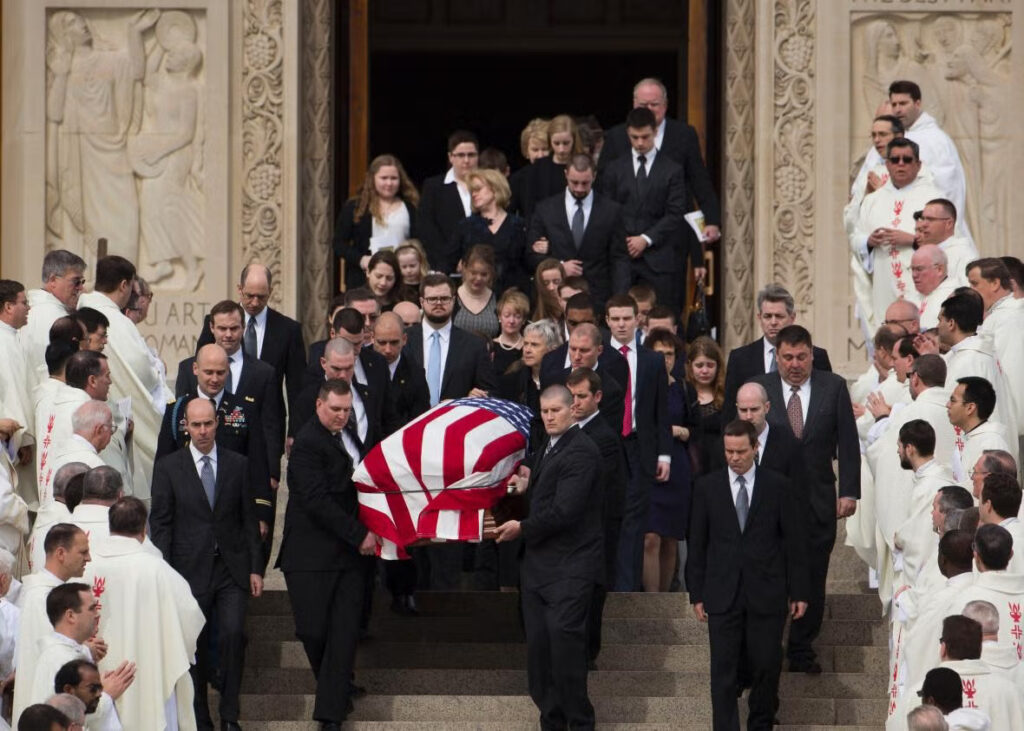
God blessed Dad, as is well known, with a love for his country. He knew well what a close-run thing the founding of our nation was. And he saw in that founding, as did the founders themselves, a blessing, a blessing quickly lost when faith is banned from the public square, or when we refuse to bring it there. So he understood that there is no conflict between loving God and loving one’s country, between one’s faith and one’s public service. Dad understood that the deeper he went in his Catholic faith, the better a citizen and public servant he became. God blessed him with the desire to be the country’s good servant because he was God’s first.
For more Catholic Patriotic Minutes, visit CATHOLICUSA.COM
Save and Share This Catholic Patriotic Minute!