The Catholic Patriotic Minute #50: Phyllis Schlafly
Catholics For Catholics Special Edition | June 15th, 2026
Phyllis Schlafly: Defender of Traditional Values Against Communism and Feminism
Phyllis Stewart was born on August 15, 1924– the Feast of the Assumption of the Blessed Virgin Mary–in St. Louis, Missouri. Raised in the years leading up to the Great Depression, Phyllis observed her father, John Bruce Stewart, losing his job as a sales engineer and struggling to find sustaining work. Her mother, Odile Stewart, had to end her time as a full-time homemaker to work as the librarian of the St. Louis Art Museum.
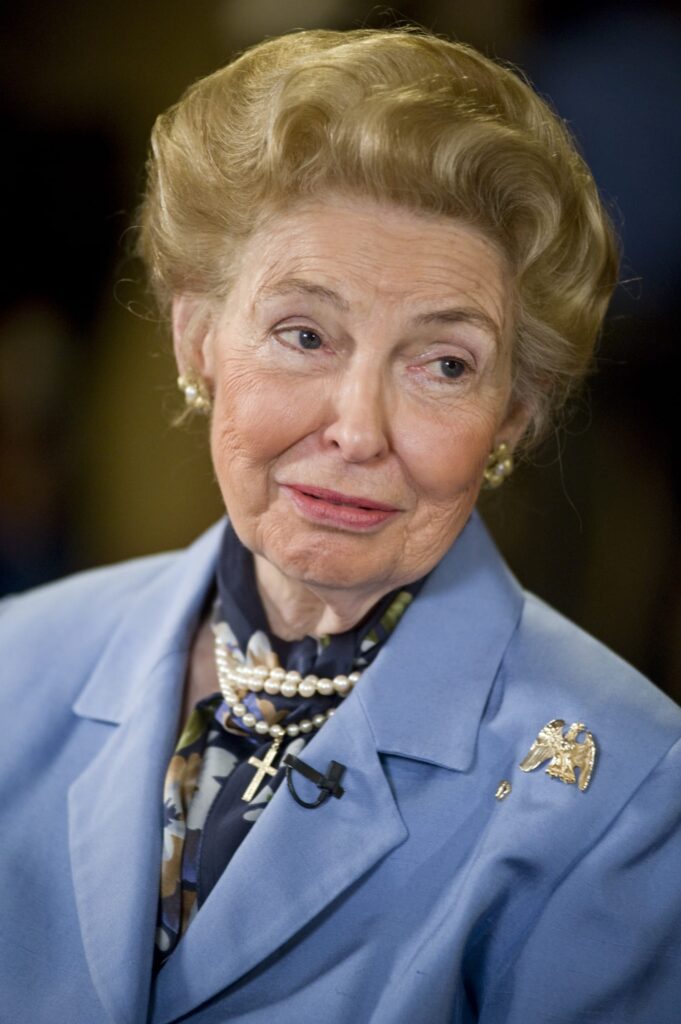
The Stewarts could not afford their apartment and subsequently lived with their extended family. Eventually, they moved into a small apartment with Phyllis’s grandmother. Of her family’s period of financial hardship, Schafley later maintained, “we did not feel sorry for ourselves.” She said, “we never had a feeling of being oppressed or mistreated or discriminated against or unjustly treated. That’s the way it was.”
The Stewarts were dedicated to their Catholic faith. In order to secure a Catholic education for Phyllis without paying tuition, her mother cataloged the library at the Academy of the Sacred Heart, where Phyllis studied during middle school and high school.
As a child, Phyllis delighted in her studies. She was the editor for her school newspaper, Roosevelt Rocket. In high school, Phyllis wrote pieces for essay contests, of which she won a couple. While her family was made up of Republicans, the Stewarts never spoke of politics.
There was never a doubt in Phyllis’s mind that she would attend college. Having accepted a scholarship to Maryville College in St. Louis, Phyllis began her college studies in 1941. She hoped to transfer to Washington University, and the only way to afford the tuition was for Phyllis to work eight-hour shifts at the St. Louis Ordinance Plant, either from four to midnight or from midnight to eight. For six days a week, Phyllis worked as a gunner, testing ammunition.
Her busy schedule led Phyllis to participating in political science courses, as they tended to take place in the late morning, and eventually majoring in political science because of her interest in the subject. She attended graduate school at Radcliffe, the women’s college at Harvard, and received her master’s degree in government just as the Second World War was coming to an end.
Phyllis took a train to Washington D.C., searching for a job and ending up employed at, what is now known as, the American Enterprise Institute, where she completed administrative work. But, Phyllis wanted to go back home to St. Louis. There, she provided research for St. Louis Union Trust Company’s vice president, who wrote monthly newsletters on the dangers of Socialism and Communism, much like her newsletter, the Phyllis Schlafly Report, that arose in years to come.
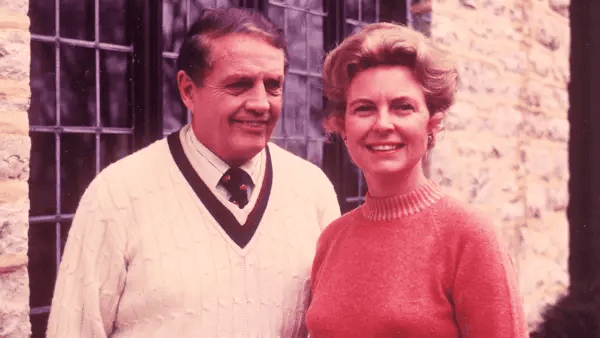
One day, her husband-to-be, Fred Schlafly, arrived at her place of work to ask about a section of the newsletter she wrote. Fred and Phyllis went on their first date in March of 1949 and married in October of the same year. The two shared political beliefs and their Catholic faith. They moved to Alton, Illinois, and Phyllis became a full-time homemaker, planning on serving her husband and children primarily and also working as a volunteer at the YWCA and Red Cross.
The turning point in Phyllis Schlafly’s life took place in 1952. With her husband’s support, she ran for Congress at the age of twenty-six. Phyllis wrote her own press releases and speeches, advocating for a departure from Roosevelt and Truman. She won her Republican primary but lost to the Democratic candidate. Despite this loss, Schlafly became an active participant in Republican circles thereafter, especially through the Republican National Conventions.
All while raising six children, Schlafly delivered speeches and became heavily involved with the Daughters of the American Revolution and the Illinois Federation of Republican Women. Together, Phyllis and Fred wrote and presented a report, “Report on Communist Tactics, Strategy, and Objectives,” at the American Bar Association in London in 1957. Millions of copies of this report were distributed. In 1958, they founded the Cardinal Mindszenty Foundation–a Catholic anti-Communism organization.
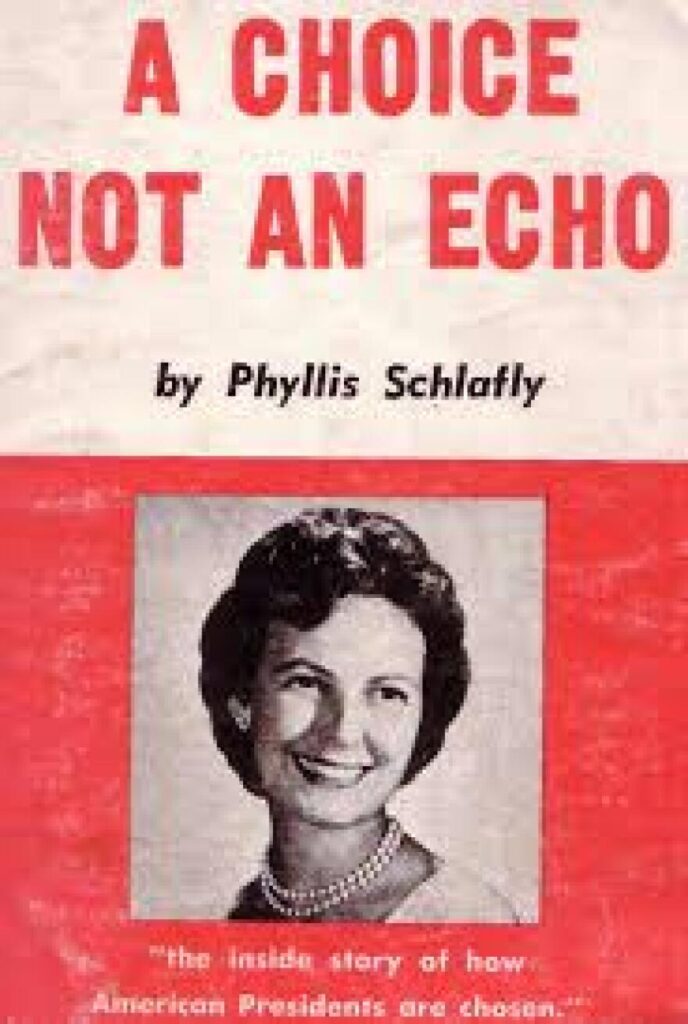
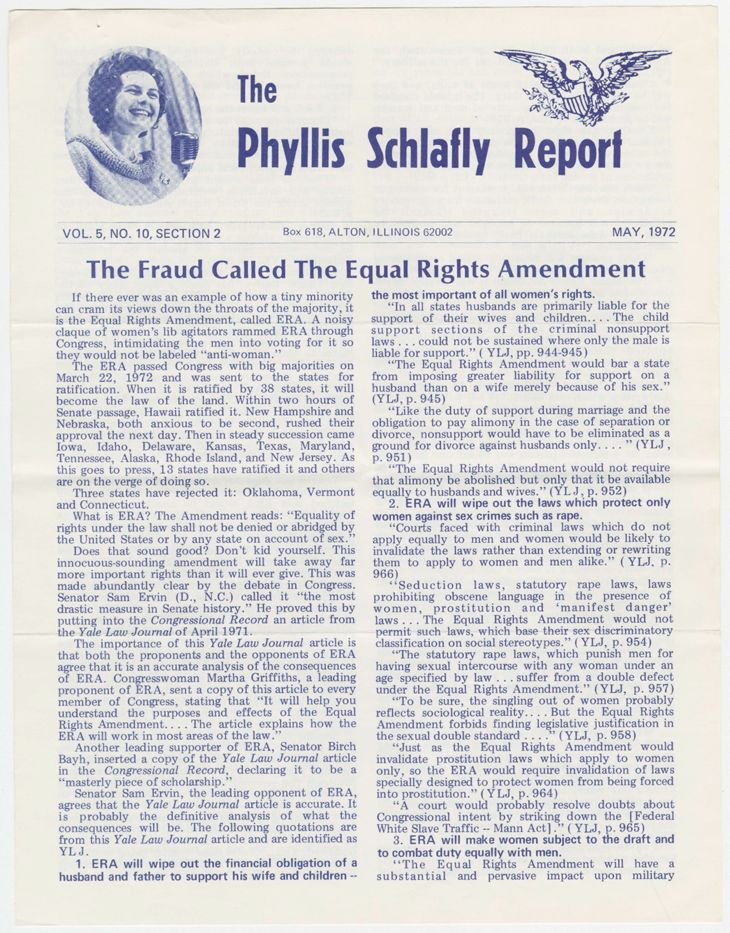
What truly made Phyllis Schlafly known on the national level was her 1964 book A Choice Not an Echo, which helped secure the Republican nomination of Senator Barry Goldwater. She sold three million copies of her book before Goldwater was nominated at the Republican National Convention. By the end of her life, Schlafly published twenty-seven books on topics such as politics, family, religion, nuclear strategy, education, and feminism. She also published a monthly newsletter, called The Phyllis Schlafly Report, from 1967 until her death in 2016.
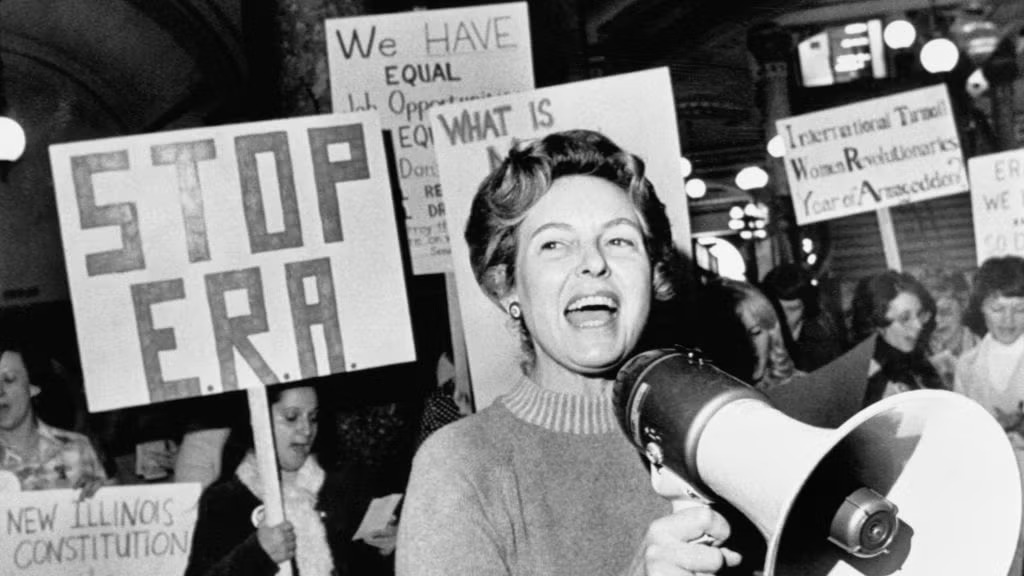
Schlafly’s most well-known achievement was her influence in stopping the Equal Rights Amendment. By 1972, thirty states had ratified it, and only eight more states were needed. But, Schlafly started the campaign STOP ERA, which advocated blocking the amendment’s ratification. Her main argument was the Equal Rights Amendment would take away women’s privileges on the federal and state level. She often questioned, “[w]hy should we lower ourselves to ‘equal rights’ when we already have the status of special privilege?”. With the ratification of the amendment, women would have been subject to the draft, husbands would no longer be required to provide for their families, as it was in 1972, and women would lose their privileges when Courts determined custody, alimony, and child support in the case of divorce.
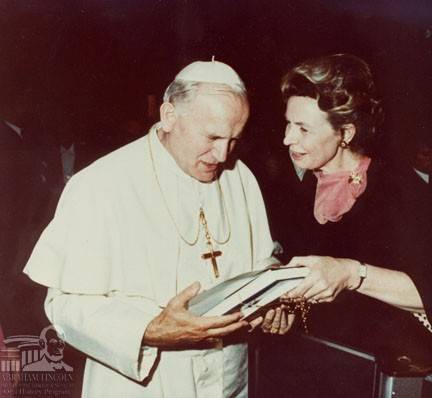
Schlafly traveled to state hearings about the proposed amendment and rebutted the arguments for it. Her debates reached college campuses and television programs. Feminists were outraged at her. Famously, Betty Friedan–author of The Feminine Mystique–asserted to Schlafly at a debate, “I’d like to burn you at the stake.” But, Schlafly’s understanding of womanhood was informed by the Catholic Church, not The Feminine Mystique. She agreed with Pope John Paul II’s writings on the feminine genius, in his apostolic letter, Mulieris Dignitatem.
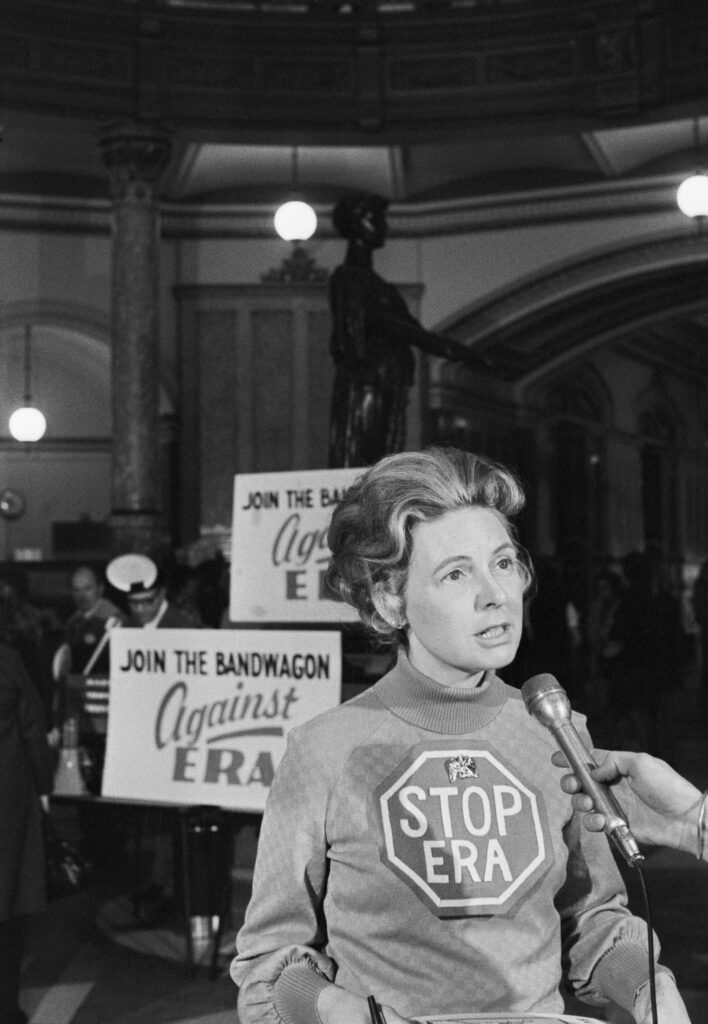
Schlafly even attended Washington University Law School and received her Juris Doctor in 1978 to assist her arguments against the Equal Rights Amendment. Her voice and the movement of her supporters stopped the President, Congress, and the media’s overwhelming support for this amendment from convincing the remaining states to ratify it before the 1982 deadline.
In 1975, she renamed STOP ERA to the Eagle Forum, a grassroots organization advocating for pro-family, traditional values. Leading up to the 1980 election of President Ronald Reagan, Schlafly successfully argued for the Republican Party to embrace the pro-life platform. To make sure the Republican Party remained pro-life thereafter, Schlafly established the Republican National Coalition for Life in 1990. President Reagan appointed her to the Commission on the Bicentennial of the U.S. Constitution, on which she testified on family, constitutional, and national defense issues.
According to Phyllis Schlafly, her major lesson from her political life was, in her own words, “the belief that conservatives can win.” She explained further,
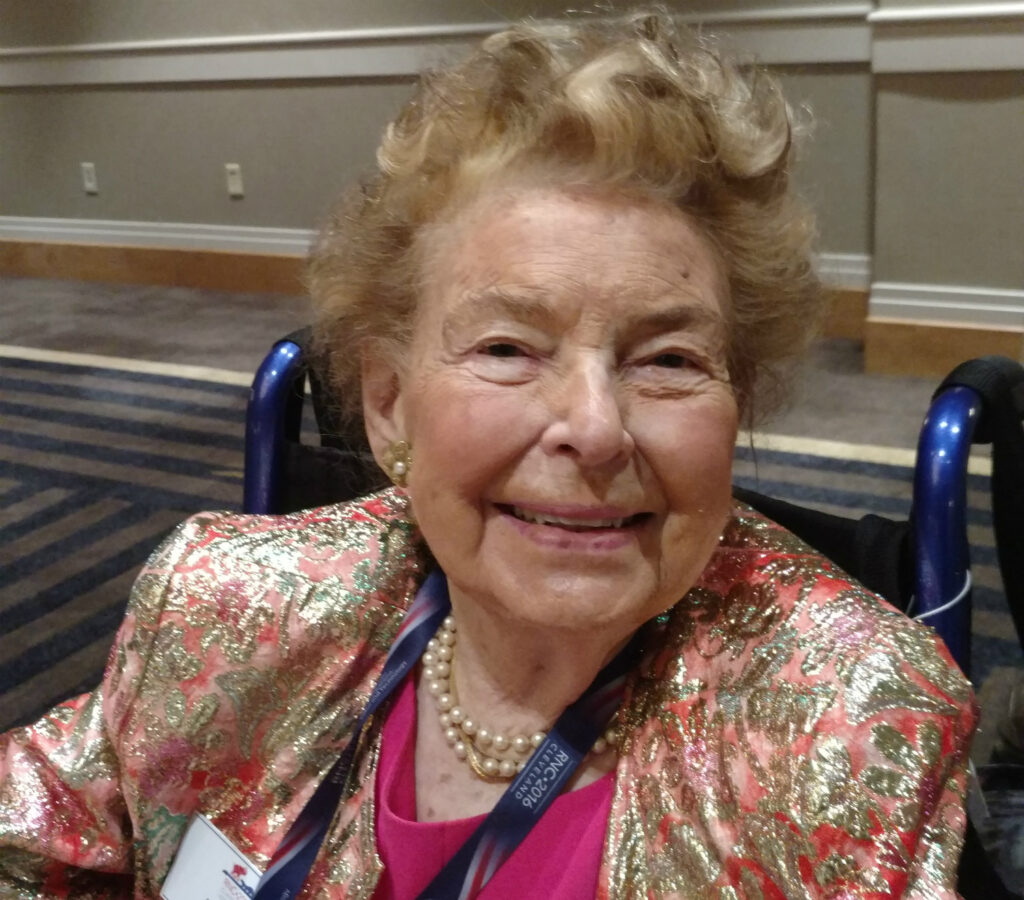
[W]hen I started out as a young woman, nobody believed that conservatives could win. And of course, when we fought the Equal Rights Amendment, nobody but me believed that we could win. It’s a big change from just thinking you’re doing your thing, passing out your literature, you’re the God’s remnant that’s keeping the faith, but of course you’re going to lose . . .This change, from believing you were destined for defeat, to believing that you really can win, is a tremendous leap.
Schlafly’s whole life was a tremendous leap, powered by the dedication to hard work she learned from her parents and her courage to serve Americans through her pen and speech. Relentlessly, Schlafly’s early writing evolved into writing and public speaking, warning against the dangers of Socialism and Communism and advocating for the life of homemakers, the natural distinctions between man and woman, and the dignity of human life. Phyllis Schlafly passed away on September 5, 2016.
For more Catholic Patriotic Minutes, visit CATHOLICUSA.COM
Save and Share This Catholic Patriotic Minute!