The Catholic Patriotic Minute #51: Phyllis Schlafly
Catholics For Catholics Special Edition | June 22nd, 2026
Venerable Pierre Toussaint: A Catholic Slave, Hairdresser, and Benefactor
On June 27, 1766, Pierre Toussaint was born in the French colony of Saint-Domingue, modern-day Haiti. His mother, Ursule, was a slave to the Bérard family, and therefore Pierre was born into slavery, belonging to the Bérards, a Catholic family.
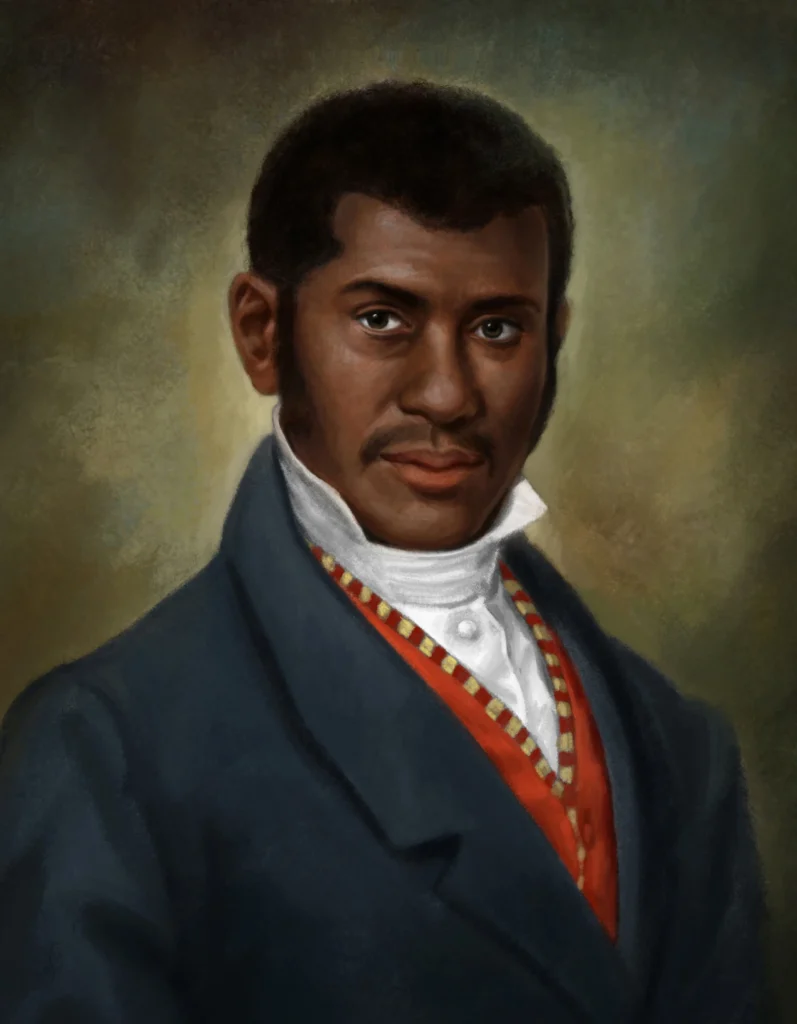
As an infant, Pierre Toussaint was baptized a Catholic, with his master’s daughter, Aurora, as his godmother. He grew up devoted to Aurora, following her everywhere. He also gained a sister, Rosalie. He was taught to read and write alongside the Bérard children. The year 1787 brought the beginnings of civil unrest to Haiti as slaves were fighting for their independence. Therefore, the Bérards left for New York City, bringing Pierre and Rosalie with them.
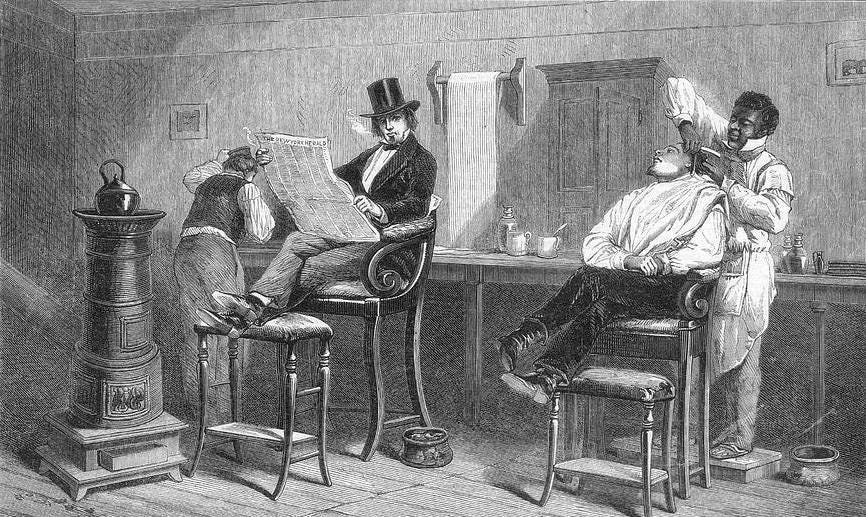
At the age of twenty-one, Pierre became trained as a “coiffeur,” a hairdresser, at the recommendation of Mr. Bérard. He was the apprentice to one of New York City’s premier hairdressers, Mr. Merchant, soon to become one of the City’s chief hairdressers among the well-to-do himself. And, he was able to keep his pay.
However, once Mr. Bérard returned to Haiti to check on his property, only to be faced with his financial ruin and his last days on earth, Mrs. Bérard became a widow, left with debts. Without any request from Mrs. Bérard herself, Pierre supported her financially until she remarried.
Pierre cared for Mrs. Bérard affectionately, all the way to her last days. Mrs. Bérard’s reciprocated care for Pierre was made clear when she freed him on her death bed, demanding to sign the documents to do so before she received Last Rites.
Freed at the age of forty-five, Pierre changed his last name, as “Bérard” was his legal last name. He picked “Toussaint” to honor Toussaint Louverture, the leader of the Haitian Revolution which led to slavery being abolished in Haiti in 1804.
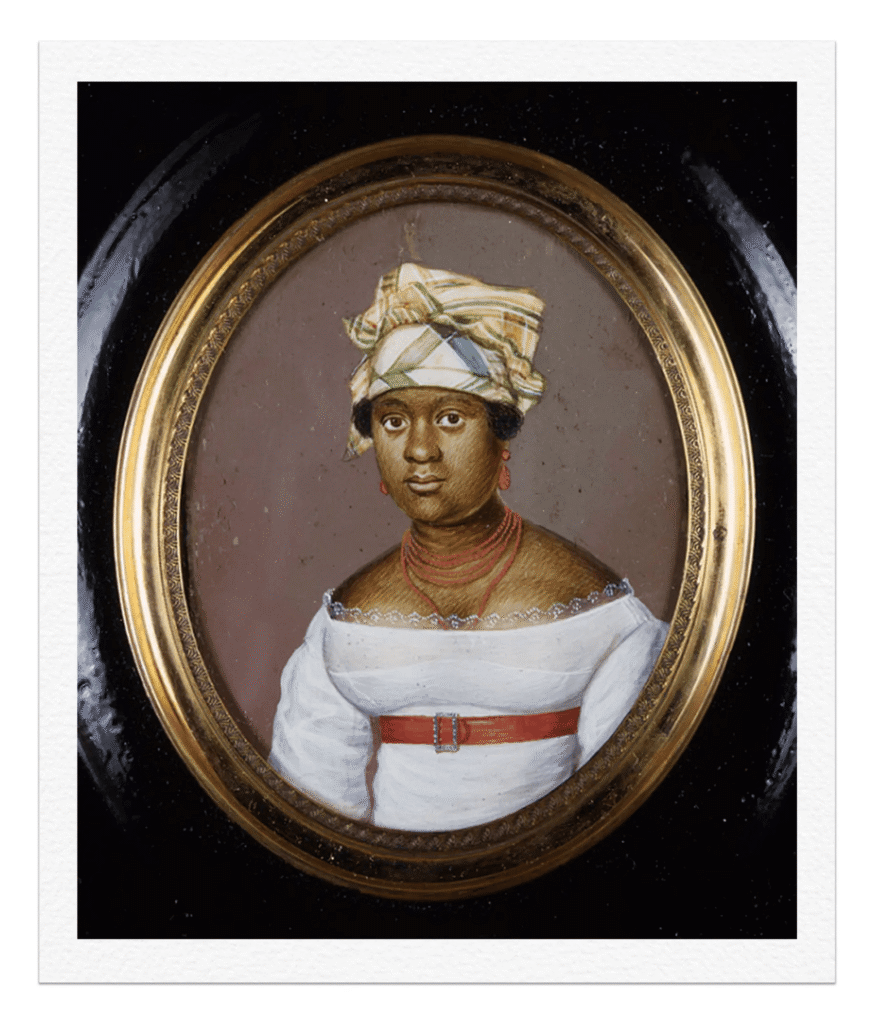
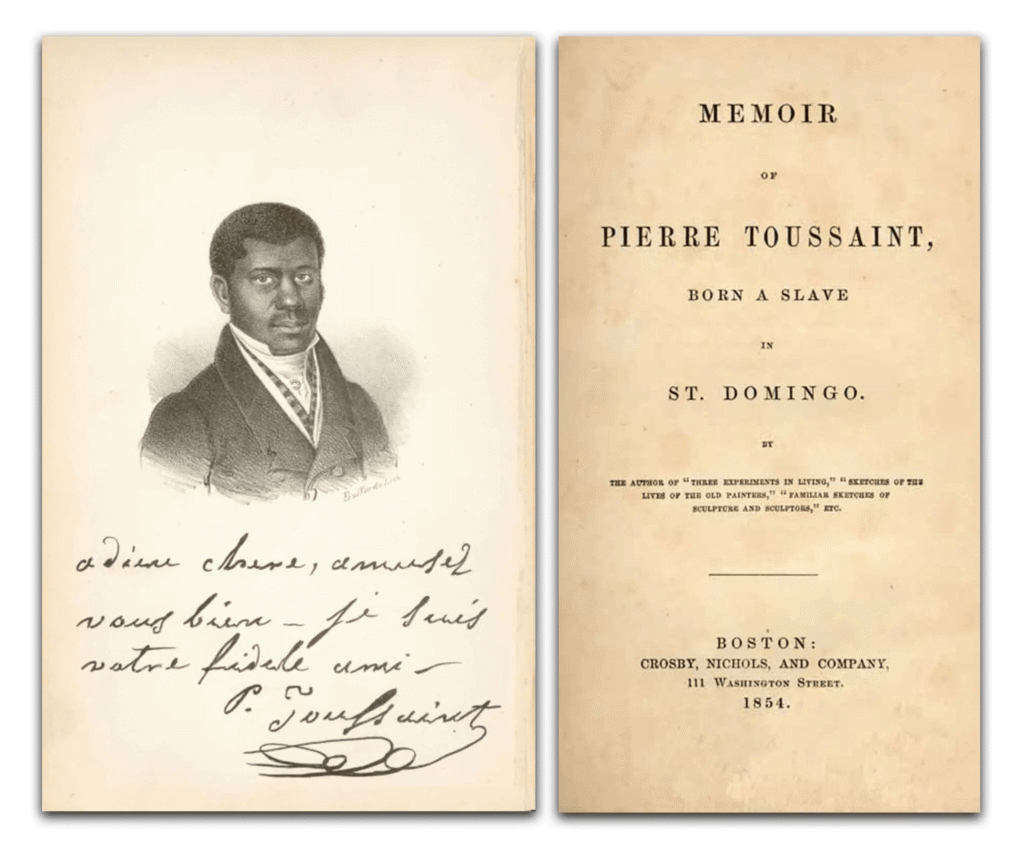
Toussaint immediately freed his sister, Rosalie, and woman, Juliette, who soon became his wife. He afforded the purchasing of their freedom due to becoming financially comfortable as a hairdresser for the likes of Eliza Schuyler Hamilton–the wife of Alexander Hamilton–and her sisters. He adapted to the changes in American and French styles and never gossiped about other families, making him beloved and trusted by the well-to-do. In fact, Hannah Farnham Sawyer Lee, the sister-in-law of the Schuylers, even wrote a memoir of Toussaint after his passing, titled Memoir of Pierre Toussaint, Born a Slave in St. Domingo.
As he became more wealthy, Toussaint and his wife became more generous. Their Catholic faith shaped the Toussaints’ charity, especially Pierre’s. One of his clients, Mrs. Mary Ann Sawyer Schulyer, once wrote of Pierre, “He is a Catholic, full in the faith of his Church, liberal, enlightened, and always acting from the principle that God is our common Father, and mankind our brethren.” Pierre Toussaint was known to live by the Beatitudes, often quoting from the Sermon on the Mount in his native language, French.
Toussaint served his brethren as a philanthropist. He funded the lodging of newly freed slaves and set them up with jobs. He donated to Catholic orphanages, including one founded by Saint Elizabeth Ann Seton. Pierre fundraised for the establishment of St. Vincent de Paul, the first Catholic school for free black children in New York. He supported the Oblate Sisters of Providence, a religious order of black women, and provided lodging for traveling priests. He also raised money for the Basilica of Old St. Patrick’s Cathedral. He even sent money to his godmother Aurora Bérard, who lived in Paris.
The Toussaints cared for those sick with yellow fever and choleria. Unable to have their own children, they opened their own home to orphans, who were then provided with an education and a trade. When Pierre’s sister Rosalia passed away, the Toussaints adopted their niece, Euphemia.
They adored their niece. Toussaint’s primary priority was Euphemia’s religious education. It was crucial to foster generosity for others in Euphemia’s heart. Once, he said, “On Euphemia’s saint’s day, I always took her with me to the cake shop, and we filled a large basket with buns, jumbles, and gingerbread, which we carried to the Orphan Asylum.”
At the age of fourteen, Euphemia passed away from tuberculosis. The Toussaints were devastated. Yet, Toussaint asserted, “God is good; we know that here on earth, but my Euphemia will know it first there,” as he pointed upwards.
After decades of serving others, Juliette became ill. A friend of hers, who visited Juliette while she was sick, noted later “Between [Juliette’s] chamber and her husband’s there was a small room, which was fitted up with a crucifix, a prie-dieu, and many beautiful emblems of the Catholic faith, gifts to Toussaint, which he carefully treasured.” Juliette told her friend, “he prays for me there, — it is all the comfort he has; he will soon be alone.” Upon her passing, Toussaint repeated, “It is the will of God.”
He found peace in the Catholic Church. Toussaint attended Mass daily at St. Peter’s Church in Lower Manhattan for the last sixty years of his life. Saint Elizabeth Ann Seton and Venerable Pierre Toussaint attended the same church from 1805 to 1808. He never missed matins prayers, and his prayer-book was always with him. Toussaint mentioned sections of Thomas à Kempis’s book, Imitation of Christ, frequently in conversation. To explain his devotion to Mary to a Protestant, Toussaint compared keeping a portrait of Mary in one’s home to displaying a portrait of a loved one. He said, “You like to look at this: it makes you think of her, love her more; try to do what she likes you to do.”
Pierre Toussaint worked as a hairdresser for the rest of his life. Concerning his reason for not retiring, he said, “I have enough for myself, but if I stop work, I have not enough for others.”
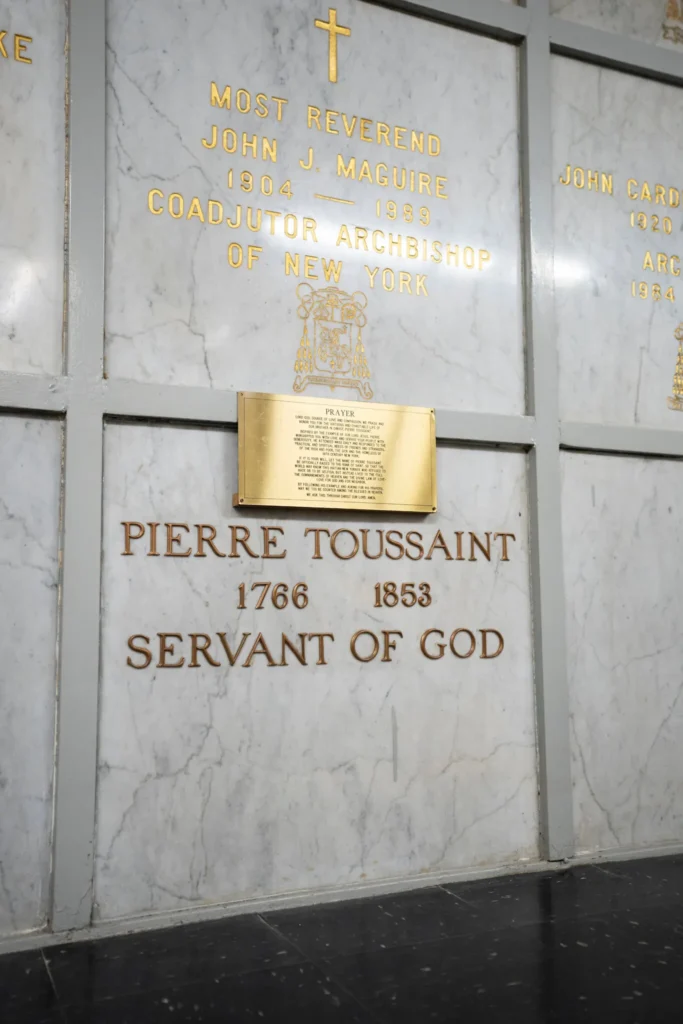
Work and daily Mass only came to an end for Toussaint a few months before his death on June 30, 1853, at the age of eighty-seven. His funeral was attended by the rich and the poor, both affected by Toussaint’s kindness and charity. He was buried at the Basilica of Old St. Patrick’s Cathedral. His remains were later buried at the new St. Patrick’s Cathedral, where he is the only layman buried. Pope St. John Paul II declared Pierre Toussaint Venerable in 1996.
For more Catholic Patriotic Minutes, visit CATHOLICUSA.COM
Save and Share This Catholic Patriotic Minute!