The Catholic Patriotic Minute #55: Cardinal James Gibbons
Catholics For Catholics Special Edition | July 20th, 2026
Cardinal James Gibbons: Advocate of Catholicism to the American Public
On July 23, 1834, James Gibbons was born to Thomas and Bridget Gibbons, both Irish immigrants, in Baltimore, Maryland. James was baptized at the Cathedral of the Assumption of the Blessed Virgin Mary–the same cathedral where Gibbons would later be ordained a priest, serve as an archbishop for forty-four years, and be buried.
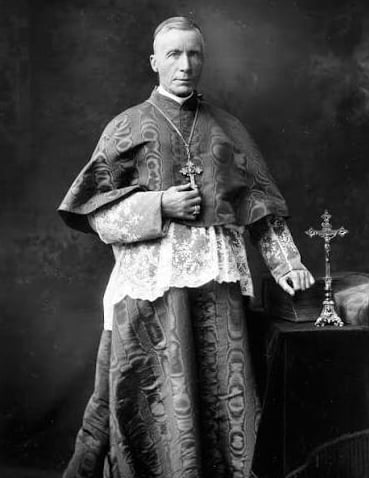
In 1837, the Gibbons returned back home to Ireland, where James’s father managed a grocery store in Ballinrobe, County Mayo. After his father died ten years later, James and his family moved back to the United States in 1853. New Orleans, Louisiana, became their new home. There, he was employed as a clerk at a grocery store, that is, until he discerned the vocation of the priesthood after a Redemptorist retreat.
Once Gibbons studied at St. Mary’s Seminary in Baltimore, Maryland, he was ordained on June 30, 1861. During his first appointment as the pastor at St. Bridget’s, Father Gibbons volunteered as a chaplain for Fort McHenry and Fort Marshall in Baltimore throughout the Civil War, serving both Union and Confederate soldiers.
Father Gibbons adopted the role of secretary to Archbishop Martin J. Spalding in 1865, and as secretary, Gibbons assisted the preparations for the Second Plenary Council of Baltimore. At the Council, he was recommended for the vicariate apostolic of North Carolina.
Pope Leo XIII named Gibbons as Apostolic Vicar of North Carolina and Titular Bishop of Adramyttium in 1868. At the age of thirty-four, Bishop James Gibbons was the youngest bishop in the world, meriting the nickname, the “Boy Bishop.” At the First Vatican Council in the following two years, the young Bishop Gibbons voted for papal infallibility, a significant factor to remember for his later years.
Bishop Gibbons shepherded nearly seven hundred Catholics in the state of North Carolina. He also became the bishop of Richmond in 1872, although he still remained the vicar for North Carolina. He observed the absence in books of apologetics for Americans of other religions.
And so, Bishop Gibbons published his 1876 book, The Faith of Our Fathers, which explained to the American public the pillars of the Catholic faith–such as, priestly celibacy, sacred images, the Church and the Bible, the primacy of Peter, Communion under one kind, invocation of the Saints, and other topics that usually confuse or distance Protestants. Between the years 1876 and 1939, The Faith of Our Fathers was a bestseller, with 1.4 million copies sold in its first four decades and reprints done 110 times. Gibbons’s writing still inspires conversions today, as it is one of the books that influenced renowned apologist Dr. Scott Hahn, a former Presbyterian pastor who converted to Catholicism.
By the decision of Archbishop Bayley of Baltimore, Gibbons became the archbishop of Baltimore after Bayley’s death in 1877. The Archdiocese of Baltimore was already flourishing under Archbishop Bayley’s guidance, setting up Gibbons well for his next forty-four years as archbishop. His main task was integrating the wave of Catholic immigrants–the Bohemians, Poles, Lithuanians, and Italians–into the diocese.
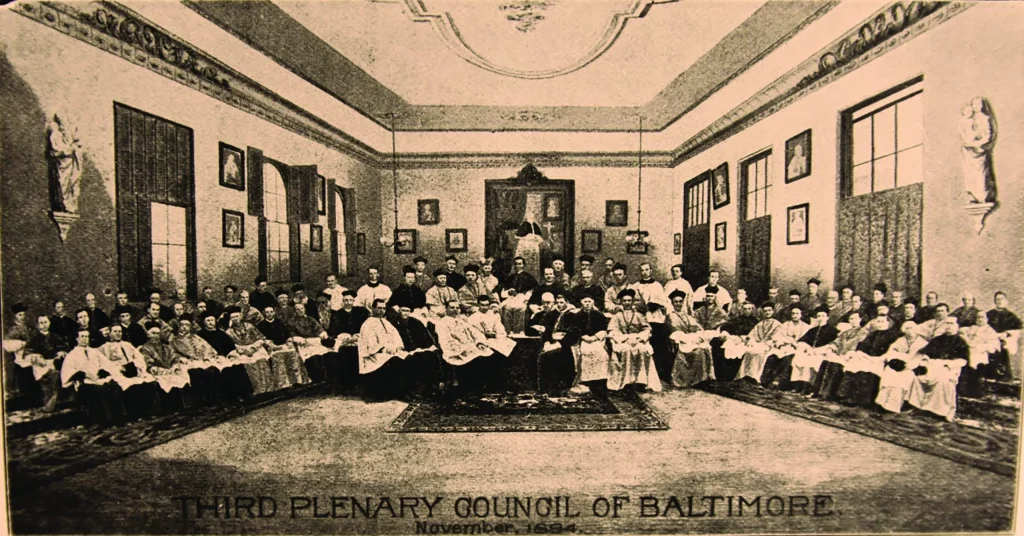
In 1884, Archbishop Gibbons presided over the Third Plenary Council of Baltimore. At this Council, he led the bishops’ resolutions to commission the Baltimore Catechism, to install parochial schools in every diocese, to support missions for African Americans and Native Americans, and to advocate for what would later become The Catholic University of America.
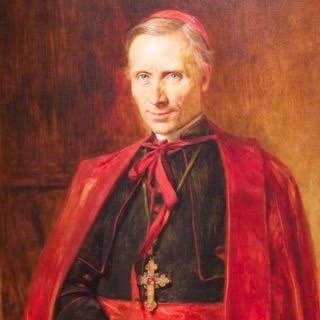
On June 7, 1886, Pope Leo XIII named Gibbons cardinal, making him the second American to become a cardinal. When he first spoke at his titular church of Santa Maria in Trastevere, Rome, Italy in 1887, he defended the liberty that the United States championed. He said,
For [the Church in America’s] great progress under God and the fostering care of the Holy See, we are indebted in no small degree to the civil liberty we enjoy in our enlightened republic… I proclaim, with a deep sense of pride and gratitude, and in this great capital of Christendom, that I belong to a country where the civil government holds over us the aegis of its protection without interfering in the legitimate exercise of our sublime mission as ministers of the Gospel of Jesus Christ.
Further, Cardinal Gibbons asserted, “in the genial atmosphere of liberty [the Church] blossoms like a rose.”
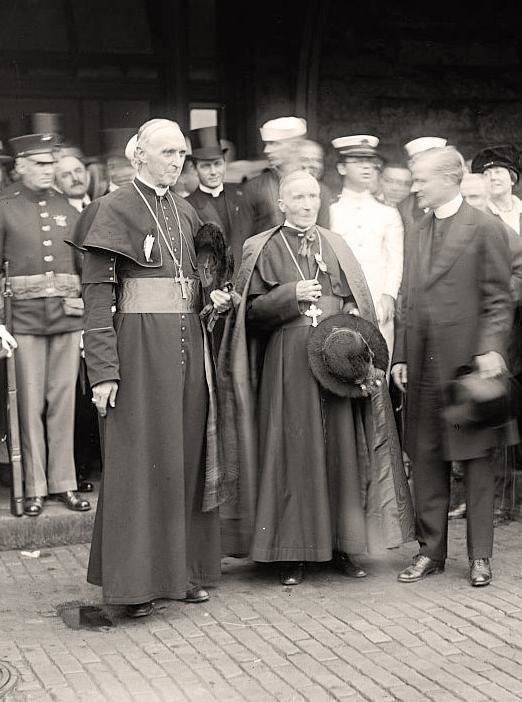
As cardinal, Gibbons was a key figure in the advocacy for The Catholic University of America and the founding itself in 1889. Also, Cardinal Gibbons persuaded Pope Leo XIII not to condemn the Knights of Labor, a labor union of 600,000, made up mostly of Catholics. Gibbons spoke of the state of workers and incorporations, of which the Pope reiterated in part four years later in his encyclical Rerum Novarum. Because of Gibbons, the Holy Father approved of the Knights of Labor, as long as it remained void of socialist and communist sentiments.
Cardinal Gibbons became known as a national figure by the American public, primarily due to his writings. Protestant Americans often took to Gibbons’s writings, especially his book The Faith of Our Fathers, to understand the beliefs of the Catholic Church. As cardinal, Gibbons also published the books, Our Christian Heritage, Ambassador of Christ, Discourse and Sermons, and A Retrospect of Fifty Years.
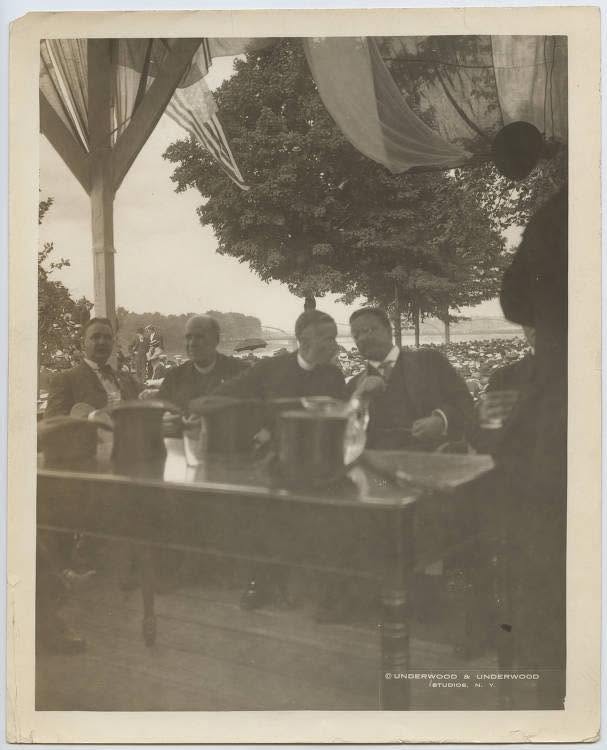
He fostered friendships with U.S. presidents, including William Howard Taft and particularly Theodore Roosevelt, who was the keynote speaker at Cardinal Gibbons’s 1911 Jubilee honoring for his fifty years as a priest.
The Cardinal governed the National Catholic War Council during the First World War and its aftermath, and shortly before his death, he directed its transformation into the National Catholic Welfare Council in 1919.
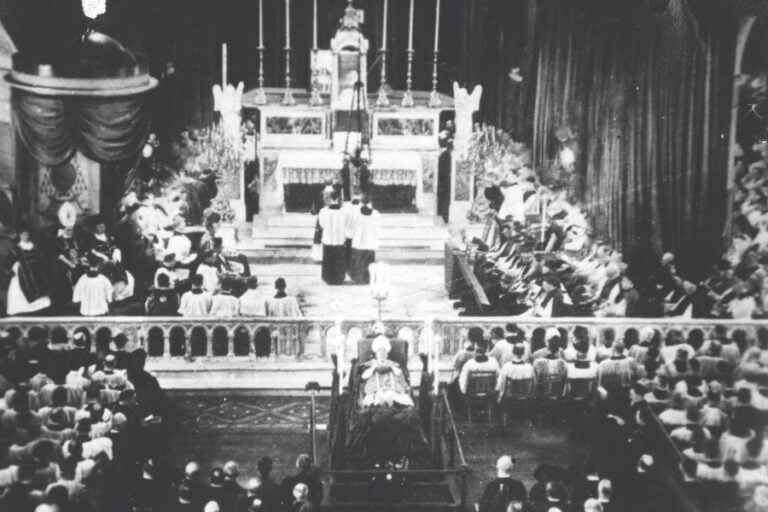
Cardinal James Gibbons passed away on March 24, 1921. Nearly 300,000 Americans visited the Cathedral, now the Basilica, of the National Shrine of the Assumption of the Blessed Virgin Mary to honor the Cardinal, emphasizing Gibbons’s impact on the nation. He was buried in the cathedral’s crypt, opposite Archbishop John Carroll, America’s first bishop and Gibbons’s confessor.
For more Catholic Patriotic Minutes, visit CATHOLICUSA.COM
Save and Share This Catholic Patriotic Minute!