The Catholic Patriotic Minute #53: Daniel Carroll
Catholics For Catholics Special Edition | July 7th, 2026
Daniel Carroll: America’s First Catholic Congressman
The Carroll family is known as the United States’s founding Catholic family. Charles Carroll was the only Catholic signer of the Declaration of Independence. His cousin, Archbishop John Carroll, was America’s first bishop and an essential character in integrating Catholics in a new nation full of people with anti-Catholic sentiments. In 1792, it was Archbishop Carroll, who consecrated the United States to Mary under her title of The Immaculate Conception.
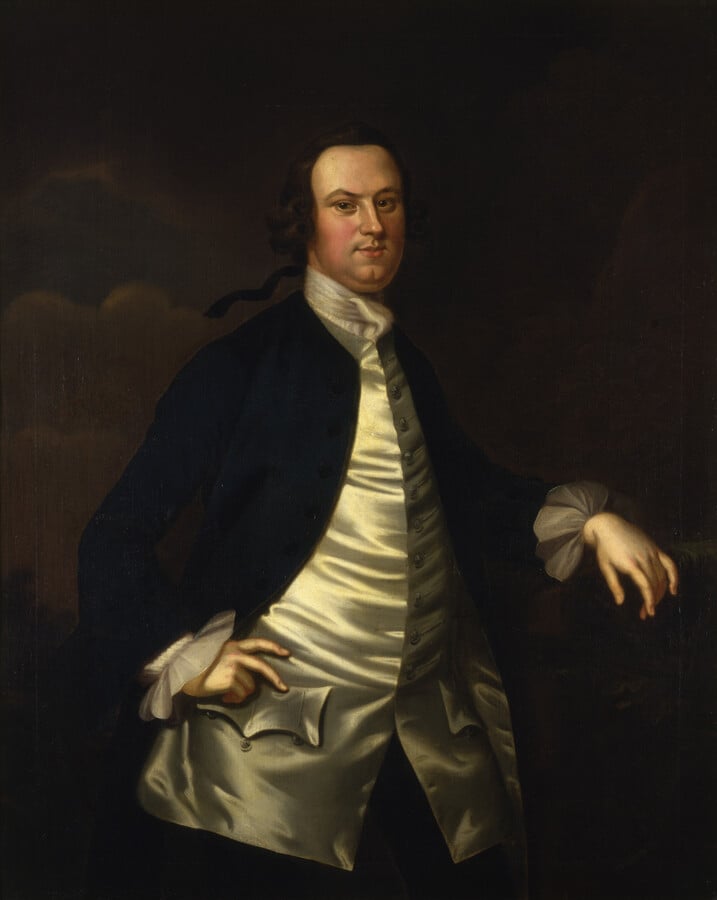
Bishop Carroll’s older brother, Daniel Carroll, carved his own legacy in the larger picture of American Catholic history by being one of only two Catholic signers of the U.S. Constitution and by being elected the first Catholic U.S. Congressman.
In 1730 , Daniel Carroll II was born into his Irish family in their new homeland, in Upper Marlboro, Maryland. At first, Daniel was educated by his mother at home.
When he turned twelve, Daniel moved abroad to study at the Collège de St. Omer in French Flanders, a renowned Catholic Institution. The Carrolls fully understood they would be punished financially for this decision. A colonial enactment enforced,
Whoever shall be convicted of sending any child, or other person beyond the seas, out of the King’s obedience to the intent that such child or person shall be educated in the Roman religion, shall forfeit £100 for the sole use and benefit of him who shall discover any person so offending.
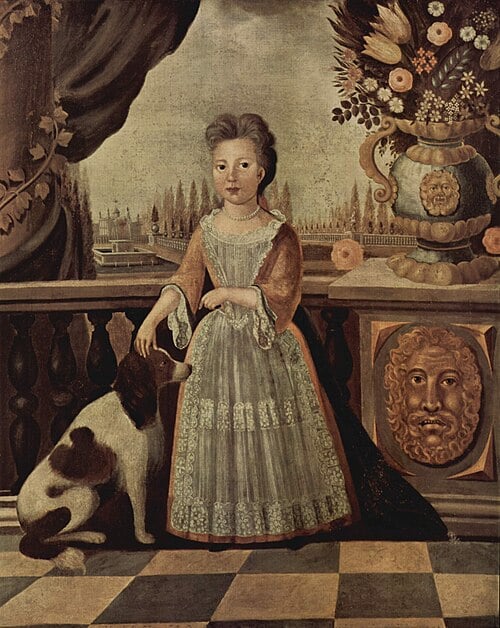
One hundred pounds in the year 1740 would have been worth twenty thousand pounds today. But, a Catholic education for Daniel was a priority, in spite of the fine and the subsequent suspicion held by the larger Protestant society. After receiving a liberal arts education and becoming skilled in public speaking, a skill he used later, Daniel returned to Maryland six years later, in 1748 when his brother John and his cousin Charles left home for St. Omer themselves.
When Daniel’s father passed away in 1751, Carroll managed the paternal estate and plantation, spanning thousands of acres, he was willed. Daniel married his wife Eleanor Carroll, with whom he shared two children before Eleanor’s death in 1763. Up until 1776, Carroll lived a quiet life as a gentleman planter at his Rock Creek estate, close to where his brother Father John Carroll and his mother lived. In fact, Daniel built a chapel for his brother to celebrate Mass.
Carroll participated in a meeting alongside George Washington to discuss the opening of the Potomac River. He was one of twenty trustees “to adjust and settle all matters relating to the movement to open the Potomac.” Serving his country was of interest to Carroll, but holding political office was prohibited for Catholics until 1776 when the Maryland Constitution was ratified, giving Catholics the right to vote and the freedom to hold political office.
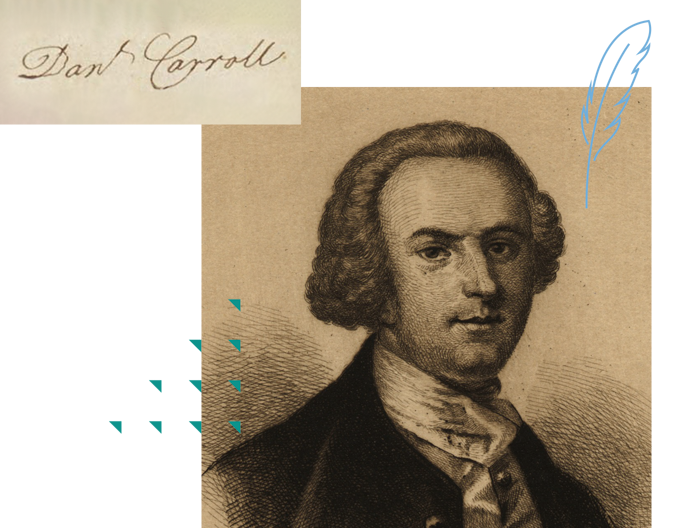
Carroll was elected to the Maryland Senate the following year. In this role, he assisted the efforts to fundraise money and gather troops for the Revolutionary War. Carroll was elected to the Continental Congress as a delegate of Maryland in 1781. He advocated for states with claims of western land to cede their claims to Congress before Maryland’s state assembly signed the Articles of Confederation. On behalf of Maryland, the last of the thirteen states to ratify it, Carroll signed the Articles–the national government’s first guiding document–in Philadelphia in 1781, upon Virginia agreeing to cede their western land claims to Congress.
In 1787, Carroll was appointed as a delegate of Maryland for the Constitutional Convention but arrived in Philadelphia on July 9, halfway into the Convention, due to illness. He differed from two Maryland delegates in his preference for a national government with more power over a confederation of state governments possessing more power.
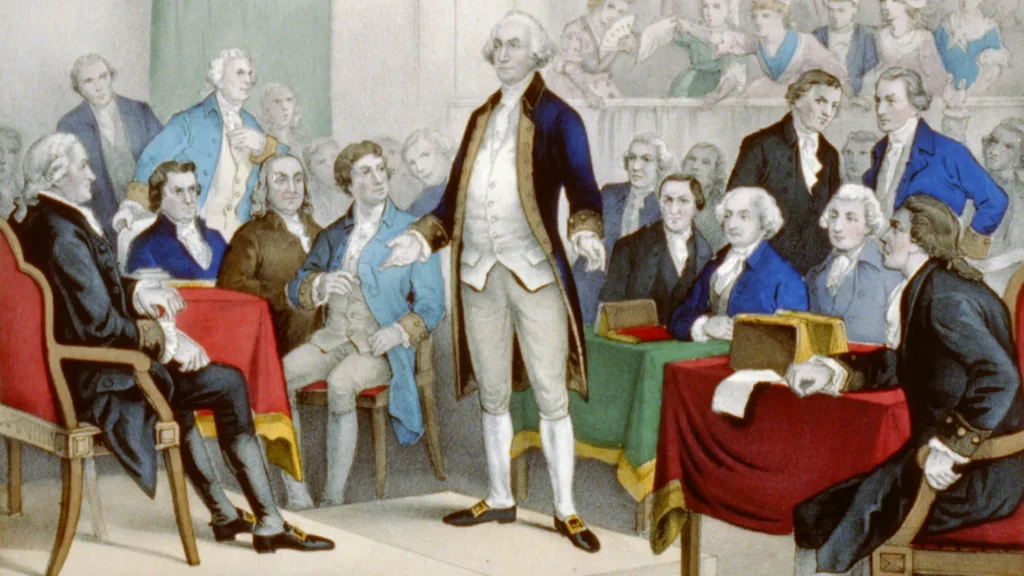
He served on the Committee of Postponed Matters, and one of these “postponed matters” was the manner in which the president was to be elected. Daniel Carroll was the strongest supporter of James Wilson’s stance of the people, not Congress, electing the president. Together, Wilson and Carroll held to the principle of popular sovereignty, and in the last days of the Convention, the Convention favored their proposal.
On September 17, 1787, two Catholics out of thirty-nine delegates signed the U.S. Constitution at Independence Hall in Philadelphia. One was Thomas Fitzsimmons, and the other was Daniel Carroll. Carroll was one of five founding fathers to have signed both the Articles of Confederation and the U.S. Constitution. Once he returned to Maryland, Carroll campaigned for ratification of the U.S. Constitution by writing articles in support of the document in the Maryland Journal. Maryland ratified the Constitution in April of 1788.
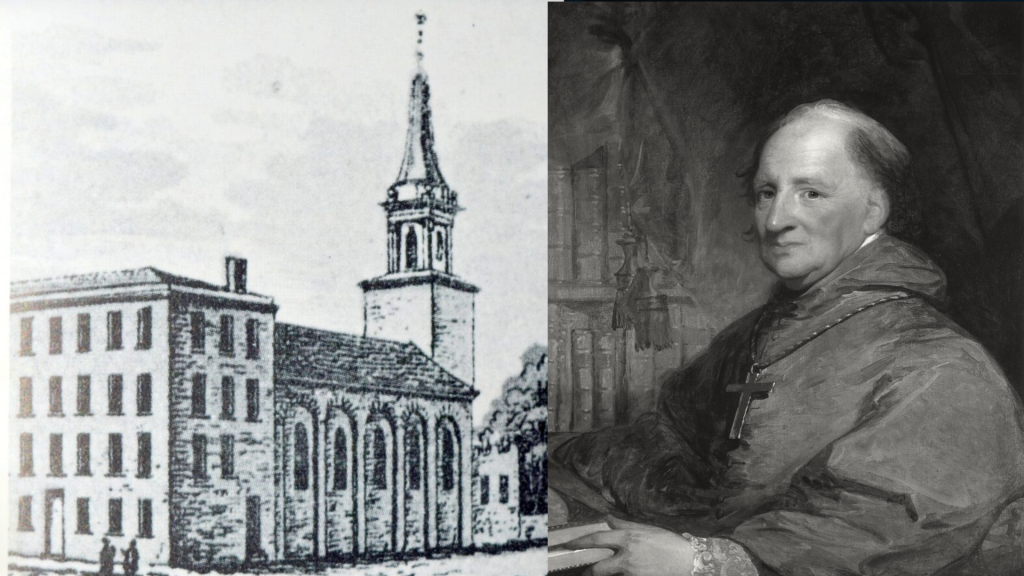
Elected to the U.S. House of Representatives in 1789, Daniel Carroll became the first Catholic Congressman. His equivalent position in the House of Commons in Great Britain had been refused to Catholics ever since the sixteenth century. On the feast day of the Assumption of the Blessed Virgin Mary, August 15, 1789, Daniel Carroll participated in Congress’s debate over the First Amendment. Carroll was the only congressman to support James Madison’s original draft of the First Amendment, especially the clauses regarding religion. As a Catholic, finally allowed to participate politically, Carroll used his voice to call for religious freedom for all.
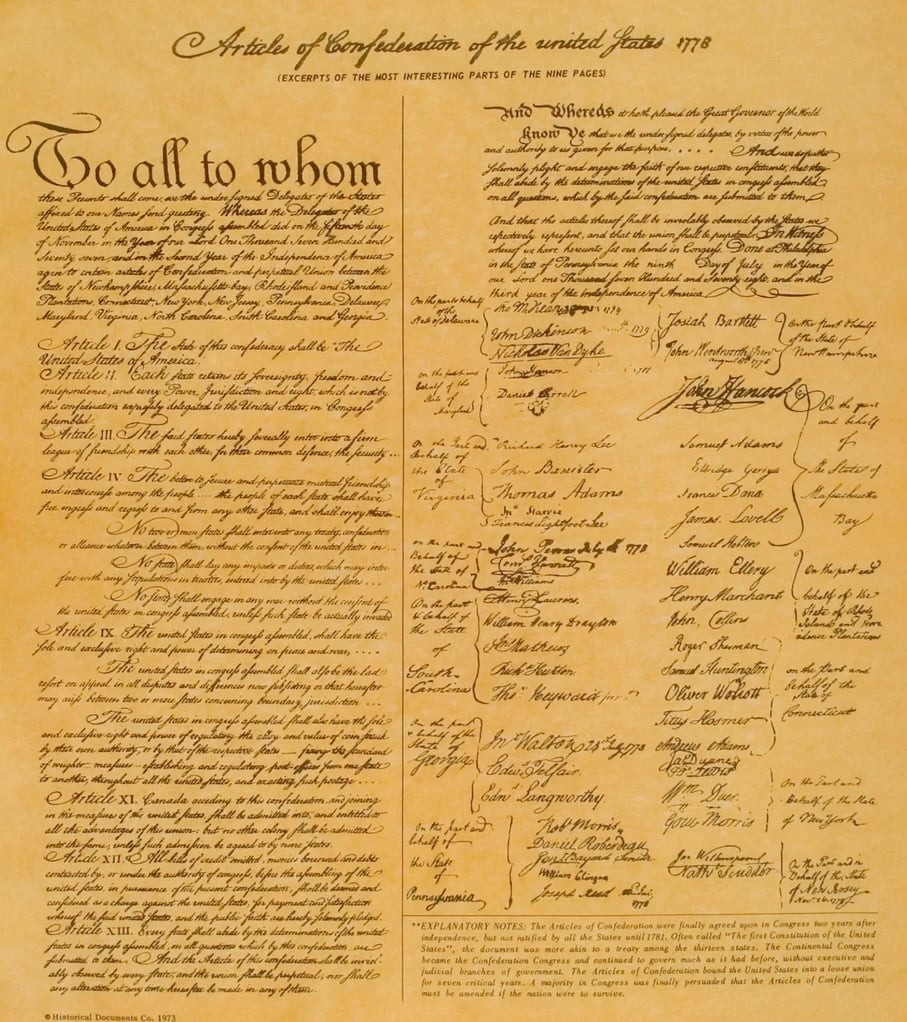
Letters between Carroll and Madison reveal that the two worked together to mend the growing rift between the Federalists and the Anti-Federalists. As a congressman, Carroll’s most known achievements are supporting Hamilton’s plan for the federal government adopting the states’ debts and for voting in favor of settling the nation’s capital along the Potomac. In 1791, President Washington selected Carroll as one of three commissioners, whose task was to outline the District of Columbia.
Due to decline in his health, Carroll resigned from his position in the House in 1795. During his last year of life, Carroll partnered with President Washington at the Patowmack Company, which aimed to unite the central United States with the Potomac River Canal. In 1796, at the age of sixty-five, Daniel Carroll passed away at his estate. He was buried at the cemetery at Saint John the Evangelist Catholic Church, the church founded by his brother Father John Carroll, in Forest Glen, Maryland.
From the very year that voting and holding political office were allowed for Catholic Marylanders, Daniel Carroll sought to shape a nation in which Catholics could honor Jesus Christ, their family, and their country.
For more Catholic Patriotic Minutes, visit CATHOLICUSA.COM
Save and Share This Catholic Patriotic Minute!