The Catholic Patriotic Minute #58: St. Marianne Cope
Catholics For Catholics Special Edition | August 10th, 2026
Saint Marianne Cope: Hawaii’s Second Saint
Saint Marianne was born Barbara Koop (now Cope) on January 23, 1838, in Southeast Hesse, West Germany, and she was baptized the next day. There were five children in the Koop family before they moved to the United States a year after Barbara’s birth.
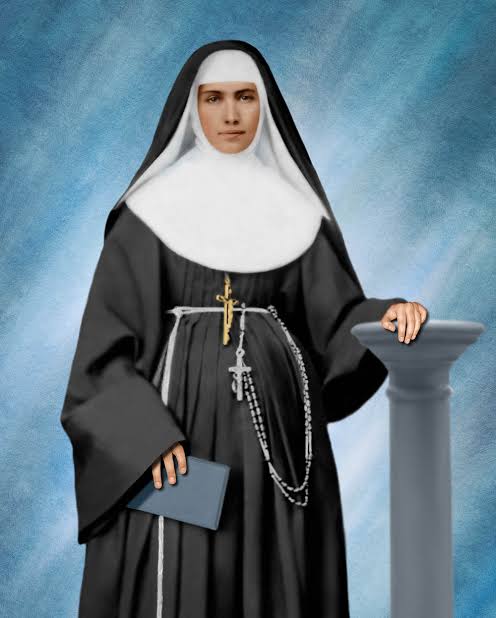
America was the Koop family’s new homeland. The Koop children and their father became naturalized citizens later in the 1850s. Barbara gained five younger siblings in America.
In Utica, New York, the Koop family belonged to St. Joseph’s Parish, where Barbara also went to school. At a young age, Barbara recognized her desire and vocation for religious life. But, when her father became an invalid, Barbara knew she could not leave home so early.
Having completed the eighth grade, Barbara worked at a factory to help support the family, in her father’s stead. Only when her siblings were old enough to care for themselves and after her father’s death did Barbara feel at peace with leaving her home. She was twenty-four at this time.
Barba joined the Sisters of St Francis in Syracuse, New York, in the summer of 1862. On November 19 of the same year, she adopted the name “Sister Marianne.” As she had hoped to do in religious life, Sister Marianne served as a teacher and principal in schools across New York. However, soon thereafter God diverted her from this path to another.
Being a part of the governing board of the Sisters of St. Francis, Sister Marianne partook in founding two of the first hospitals in the central New York area. St. Elizabeth Hospital was established in Utica in 1866, as was St. Joseph’s Hospital in Syracuse in 1869.
What made these two hospitals unlike others at the time was their care for all sick regardless of religion, color, or nationality. Both St. Elizabeth Hospital and St. Joseph’s Hospital were among the first fifty general hospitals in the whole country.
In 1870, Sister Marianne became the nurse-administrator at St. Joseph’s Hospital, working as the hospital’s head administrator for six years. She was mentored by doctors because there were no nursing schools yet. At a time where there were not extensive regulations concerning the care of patients, Sister Marianne held her own high standards of cleanliness.
She was often critiqued for accepting alcoholics or other “social outcasts” as patients. But, God’s love for all his children, including those rooted in vice, was reflected in Sister Marianne’s care for her patients.
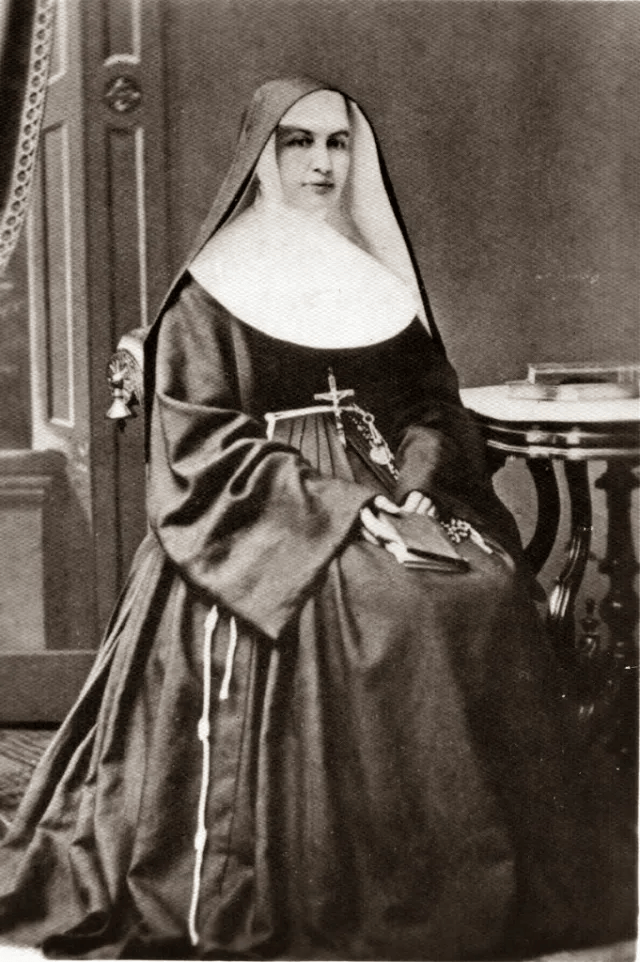
By 1883, Mother Marianne had become the Provincial Mother of her congregation. In this year, she received a letter from a Catholic priest, searching for assistance in overseeing hospitals and schools in the Hawaiian Islands and in caring for those sick with Hansen’s disease, which was known then as leprosy.
By letter, Mother Marianne’s response reads, “I am hungry for the work and I wish with all my heart to be one of the chosen ones, whose privilege it will be to sacrifice themselves for the salvation of the souls of the poor Islanders…. I am not afraid of any disease, hence, it would be my greatest delight even to minister to the abandoned ‘lepers.’”
Mother Marianne and six sisters arrived in Honolulu on November 8, 1883. In the following year, she founded Malulani Hospital, the first general hospital in Maui. She traveled to the Branch Hospital at Kaka´ako in Oahu, where, she learned, a government administrator was harming patients with Hansen’s disease. She demanded his removal, threatening to return to New York with her six sisters if the government did not do so.
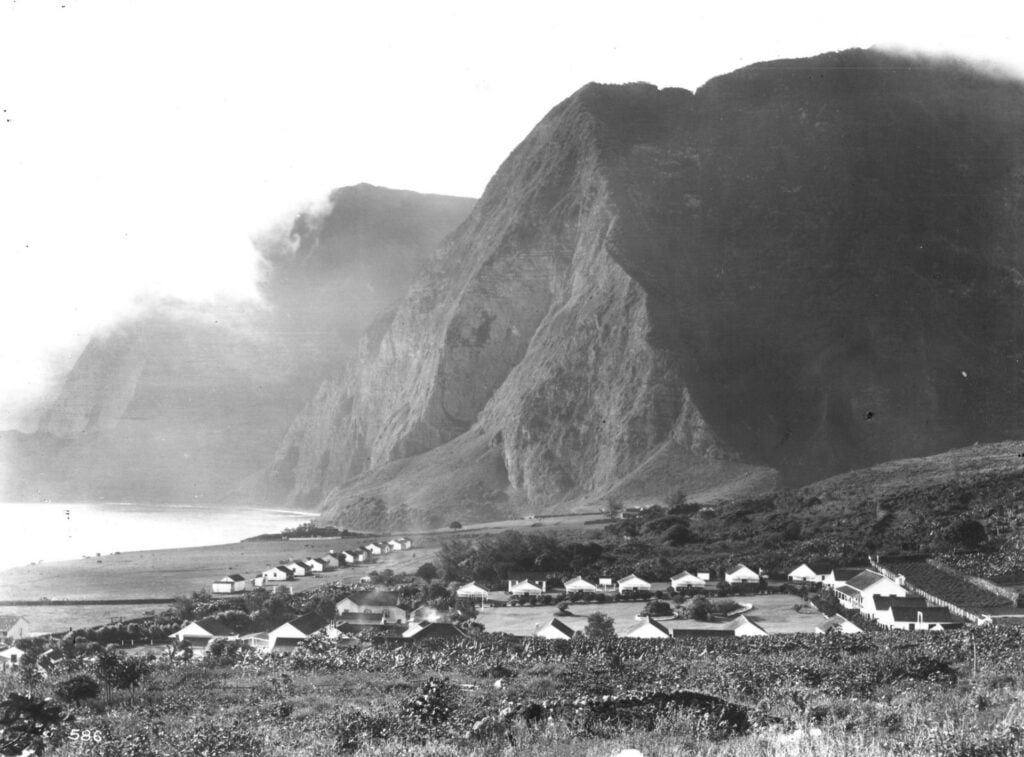
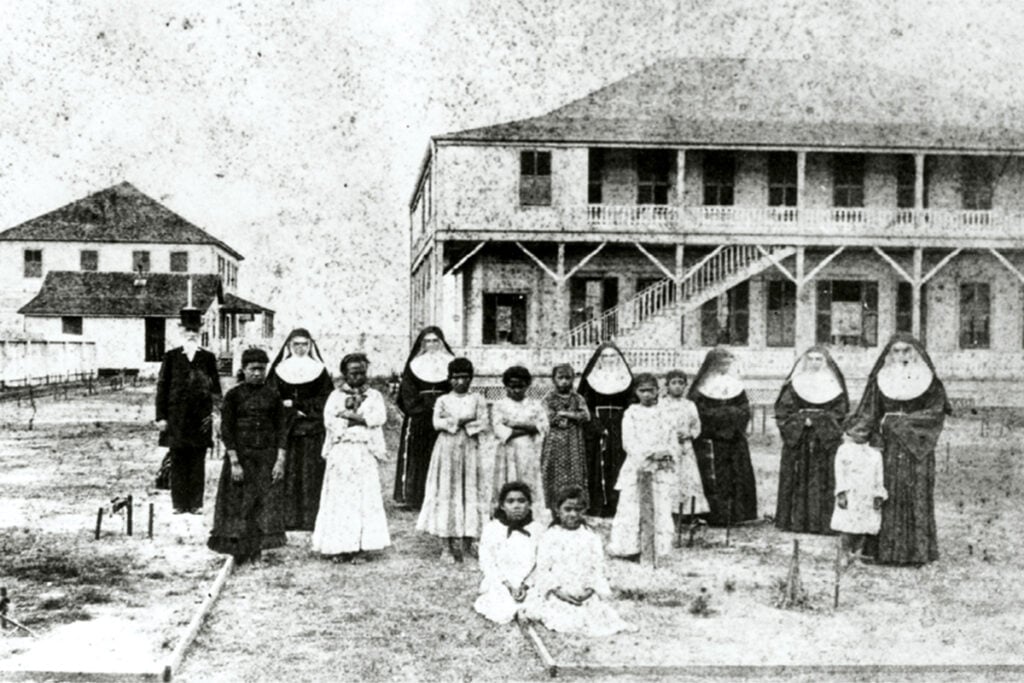
As a result, Mother Marianne became the administrator of the Branch Hospital, which was the main recipient of those sick with Hansen’s disease from all the Hawaiian islands. The Franciscan sisters cleaned the hospital from top to bottom and served about two-hundred patients there.
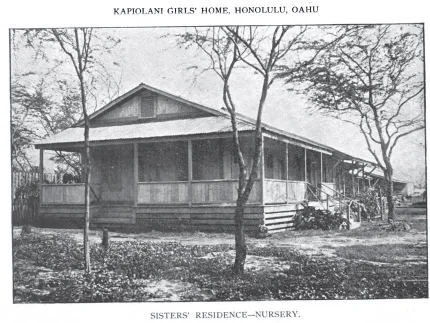
In November of 1885, Mother Marianne opened the Kapi’olani Home, a home near the hospital where the healthy, female children of patients could live. Such a home could only exist because only Mother Marianne and her six sisters were willing to care for them. Others were fearful of their proximity to Hansen’s disease.
For her service in the islands, the King Kalakaua of Hawaii honored Mother Marianne with the medal of the Royal Order of Kapiolani. Even though the plan for the Franciscans sisters was for them to eventually return to New York, that expectation became more and more unlikely.
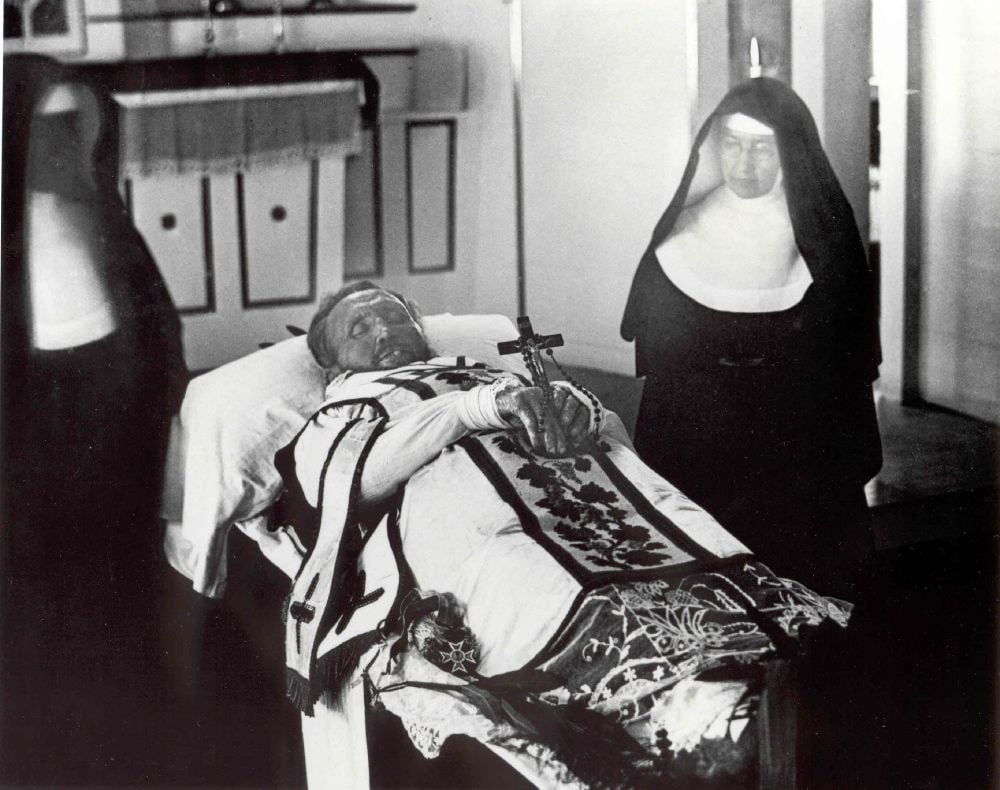
In 1886, Saint Damien of Molokai–a Catholic priest who primarily cared for the patients with Hansen’s disease in Molokai–himself became sick with the disease and was transferred to Oahu. Only Mother Marianne attended to Father Damien, all while listening to his plans for his patients that were yet to be completed.
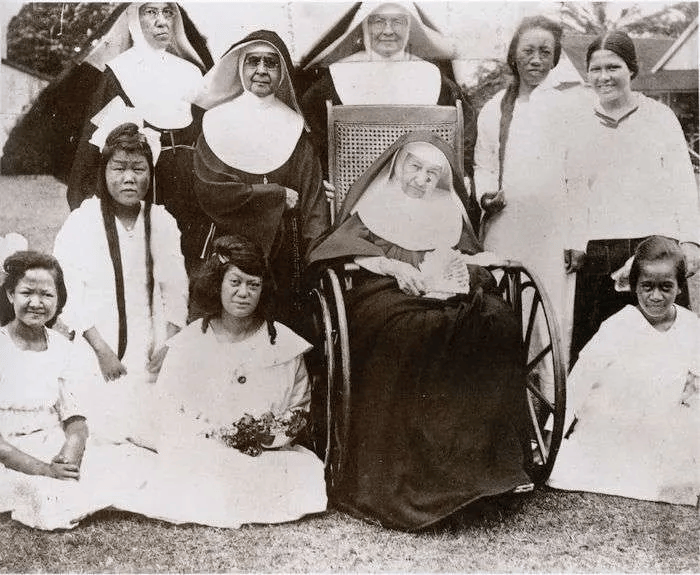
When a new government took charge of the Hawaiian islands in 1887, it exiled all patients with Hansen’s disease to the Kalaupapa Peninsula on Molokai. Volunteering to serve the exiled, Mother Marianne, Sister Leopoldina Burns, and Sister Vincentia McCormick moved to Kalaupapa. They led the Bishop Home for girls and women. Mother Marianne oversaw the founding of the Baldwin Home for boys and men, inspired by Saint Damien’s hopes for the home. The sisters worked alongside Blessed Joseph Dutton, who soon thereafter managed the Baldwin Home for boys and men.
Mother Marianne taught her sisters “to make life as pleasant and as comfortable as possible for those of our fellow creatures whom God has chosen to afflict with this terrible disease.” She never left Molokai to return home. On August 9, 1918, Mother Marianne passed away of natural causes. She was buried at the Bishop Home.
In 1976, Mother Viola Kiernan of the Sisters of St. Francis appointed Sister Mary Laurence as the Director of the Cause of Mother Marianne. Guided by Mother Marianne’s example of courage and compassion, Sister Mary Laurence championed Mother Marianne’s cause for thirty-five years, the same period of time in which Mother Marianne served the sick in Hawaii. Just three weeks before her canonization was announced, Sister Mary Laurence died. Her parting words were, “[m]y work is done, and Mother Marianne is going to be a saint.”
Pope Benedict XVI canonized Saint Marianne Cope, as well as Saint Kateri Tekakwitha, on October 21, 2012, in St. Peter’s Square. Of Saint Marianne Cope, the Holy Father said, “[a]t a time when little could be done for those suffering from this terrible disease, Marianne Cope showed the highest love, courage and enthusiasm. She is a shining and energetic example of the best of the tradition of Catholic nursing sisters and of the spirit of her beloved Saint Francis.”
For more Catholic Patriotic Minutes, visit CATHOLICUSA.COM
Save and Share This Catholic Patriotic Minute!