The Catholic Patriotic Minute #60: Margaret Mary Healy-Murphy
Catholics For Catholics Special Edition | August 24th, 2026
Servant of God Margaret Mary Healy-Murphy: Christ’s Servant in the American South
On May 4, 1833, Margaret Mary Healy was born in Cahersiveen, County Kerry, Ireland. While her father worked as a doctor, Margaret Mary’s mother cared for her family of six until her death in 1835. Margaret Mary was only five when her mother passed away.
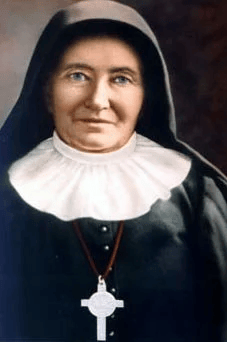
As Dr. Healy continued to work and now had to care for his children, Margaret Mary’s younger sister moved to some extended family’s home to lighten Dr. Healy’s load. But, Margaret Mary refused to leave. She attended school, becoming skilled in knitting, embroidery, and lace making, and she helped her father tend to his ill patients.
By the year 1845, Margaret Mary and her family moved to America, due to the Potato Famine raging through Ireland. At first, the Healys lived in Virginia, but the Catholic community was limited in size there in the 1840’s. Their spiritual needs could be met in New Orleans, as they discovered, and so they moved south. However, after they settled down, Dr. Healy became sick, passed away, and was buried at St. Patrick’s Church.
Left in the care of their aunts and uncles, the Healys searched for work, looking beyond New Orleans because the city did not have enough employment opportunities for the Irish immigrants. They joined General Zachary Taylor’s forces in traveling to Matamoros, Mexico. They ran a successful hotel, the Healy Hotel, in Matamoros throughout the duration of the Mexican-American War. And yet, when the War ended upon the signing of the Treaty of Guadalupe-Hidalgo in 1848, the U.S. forces left, which in turn financially hurt the Healy Hotel.
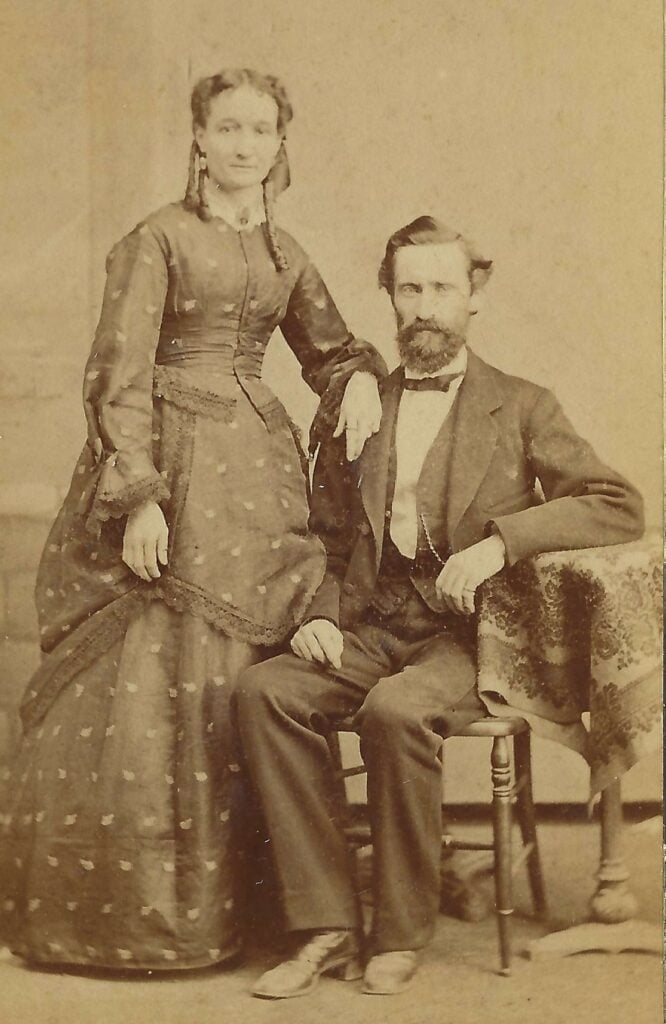
In the same year, Margaret Mary met her husband-to-be, John Bernard Murphy, in Brownsville, Texas. Murphy was also an Irish immigrant, having arrived in America in the same year as Margaret Mary. The two married on May 4, 1849, in the Cathedral of Matamoros.
In the 1850s, the Murphys lived on ranches, first, near Nuecestown, Texas, and then in San Patricio, Texas. At the time, yellow fever swept through Texas, all while ranches were often plundered. Many Texans were left poor and ill, and frequently Margaret Mary visited them. She travelled thirty-five miles on horseback to Corpus Christi to retrieve medicine, food, and clothes for them.
Margaret Mary helped others with their house tasks, including preserving their food. She even arranged the religious education and the administration of the Holy Sacraments with the surrounding families and the priest. She hosted travelling missionaries at her home often.
Soon after their move to Corpus Christi in 1861, the Civil War began. Margaret Mary continued the work she had done ever since she was a child in Ireland–ministering to those around her. She regularly brought milk from her cows and homemade soup to the soldiers often. At the end of the war, she founded her own clinic and oversaw a soup kitchen. With the outbreak of yellow fever in 1867, she administered to patients at St. Patrick’s Church.
After a major hurricane in Corpus Christi in 1874, Margaret Mary recognized the city’s need for a hospital, so she opened a Marine Hospital, with its mission being to serve Anglo, Hispanic, and African Americans. But, the sentiments of the time made her pursuit unsuccessful.
John Bernard was elected mayor of Corpus Christi, a position he held from 1880 till 1884. On July 4, 1884, he died. Soon thereafter, her two aunts died. Years before, her two uncles and brothers had died. Margaret Mary was alone, excluding her sister in Waco as well as her niece and nephew Lizzie and Frank Murphy. By herself, Margaret Mary established another hospital, “Mrs. Murphy’s hospital for the poor” the following year.
By 1887, Margaret Mary moved to San Antonio. She attended old St. Mary’s Church for Mass on Pentecost Sunday in 1887, where she listened to the priest read aloud a letter from the Plenary Council of Baltimore asking for Catholic Americans to reach out and care for Black Americans in their community. After Mass, she confided in someone, “this will be my work some day; it is the great need of this time. The Holy Spirit has helped me to make this decision.”
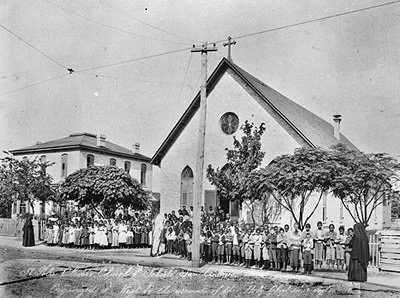
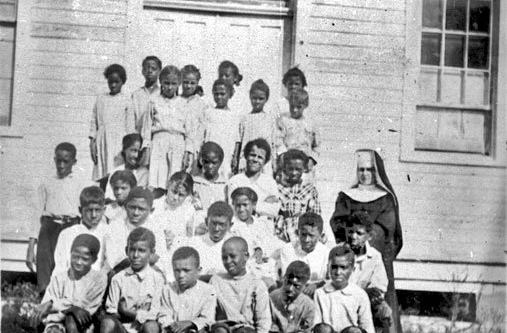
Bishop Neraz approved her plans to open a school for African Americans. In October of 1887, she purchased land to build a school for African Americans. By September of the next year, she built the first Catholic church for African Americans in the State of Texas and the second free school for African Americans in the state as well. She picked Saint Peter Claver as the namesake of both the church and school, as he was a missionary who served the African slaves on Spanish slave ships.
There was already local pushback before the building of this school and church, but the resistance increased even more after the school began. Staff turnover was high. The wealthy figures in Margaret Mary’s social circle refused to donate funds to help her feed, clothe, and board the students, an expense she took upon herself in large part. Even a bank manager offered all the funds needed for the school, as long as she did not accept African Americans as students. Margaret Mary refused. Bishop Neraz recommended asking for religious sisters to teach at her school, but the sisters of surrounding congregations were not able to leave their posts.
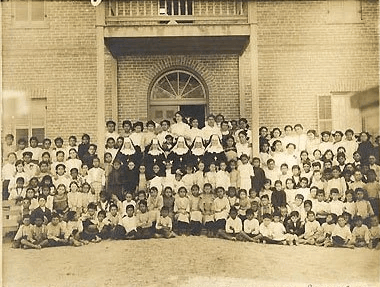
Margaret Mary decided the only path was to start her own religious congregation. Three women wanted to enter Religious Life and teach at her school. In the fall of 1891, the school opened for 178 students. Bishop Neraz received the four ladies, including Margaret Mary, as novices in the new congregation, Sisters of the Holy Ghost, in 1892, and they made their first public profession of perpetual vows in 1896.
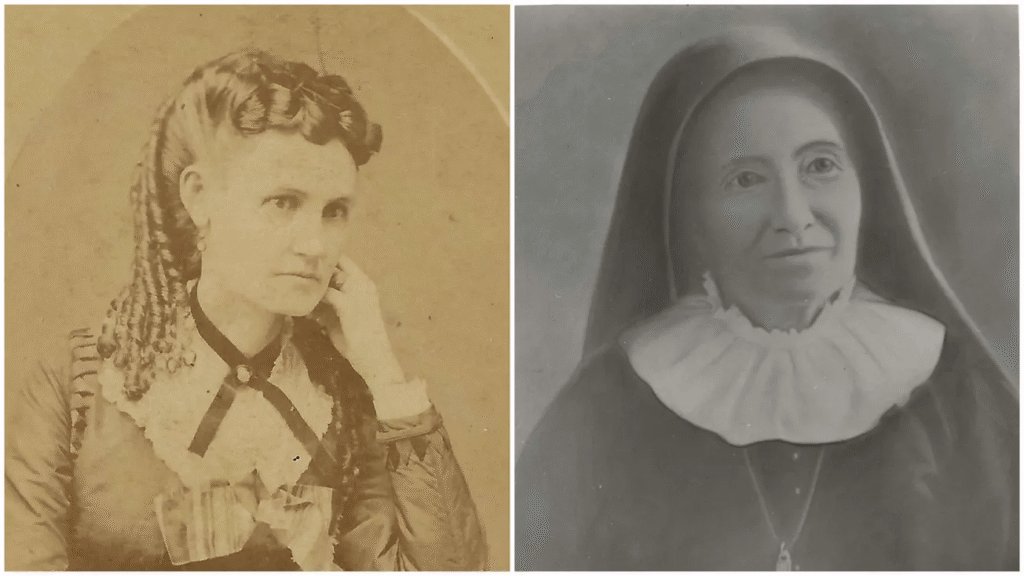
The last decade of Mother Margaret Mary’s life included four trips to Ireland, to find women, who desired to join her congregation and teach the African American students. She also managed the founding of Our Lady of Guadalupe School in Laredo, Texas, a boarding school for Mexican-American students. She depleted her own finances to secure her congregation’s finances and to pay for her four international trips, to ensure vocations for the order.
By the time of her death on August 25, 1907, at the age of seventy-four, fifteen women belonged to the Sisters of the Holy Spirit and Mary Immaculate, which remains the oldest religious order of sisters in the State of Texas. Starting in her early childhood in Ireland, persisting throughout her adulthood on Texas ranch land, and coming to a fruition in her role founding schools and a religious order, Mother Margaret Mary always served the ill, poor, and vulnerable.
It is even more commendable, considering how almost all those close to her died by the time she was fifty-one. Rather than living the last twenty-three years of life alone with no family, she chose to be the spiritual mother of many. In 2022, the Archbishop of San Antonio opened the cause of beatification and canonization for Servant of God Mother Margaret Mary Healy-Murphy, inspired by her unrelenting courage to serve the poor, ill, vulnerable, and disregarded.
For more Catholic Patriotic Minutes, visit CATHOLICUSA.COM
Save and Share This Catholic Patriotic Minute!