The Catholic Patriotic Minute #22: Father Verbis Lafleur
Catholics For Catholics Special Edition | December 8th, 2025
Father Verbis Lafleur: America’s Heroic World War II Chaplain
On December 8, 1941–one day after Japan issued an attack on Pearl Harbor in the midst of World War II–Japan bombed Clark Field in the Philippines, where Father Verbis Lafleur was stationed. Rather than fleeing the bombs, Father Lafleur stayed to administer absolution to the targeted soldiers, of whom 93 died and 143 wounded.
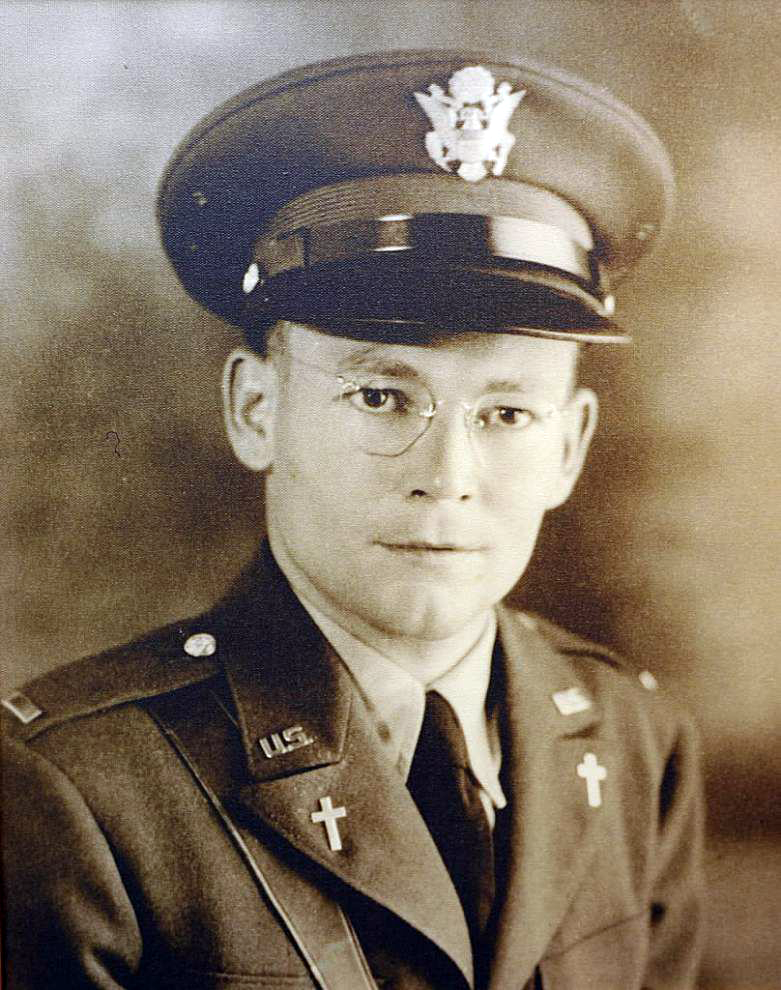
The constant disposition of the chaplain consisted of being fearless of death and only occupied with the well-being of his soldiers. It was his disposition the day he was killed as a Japanese prisoner-of-war.
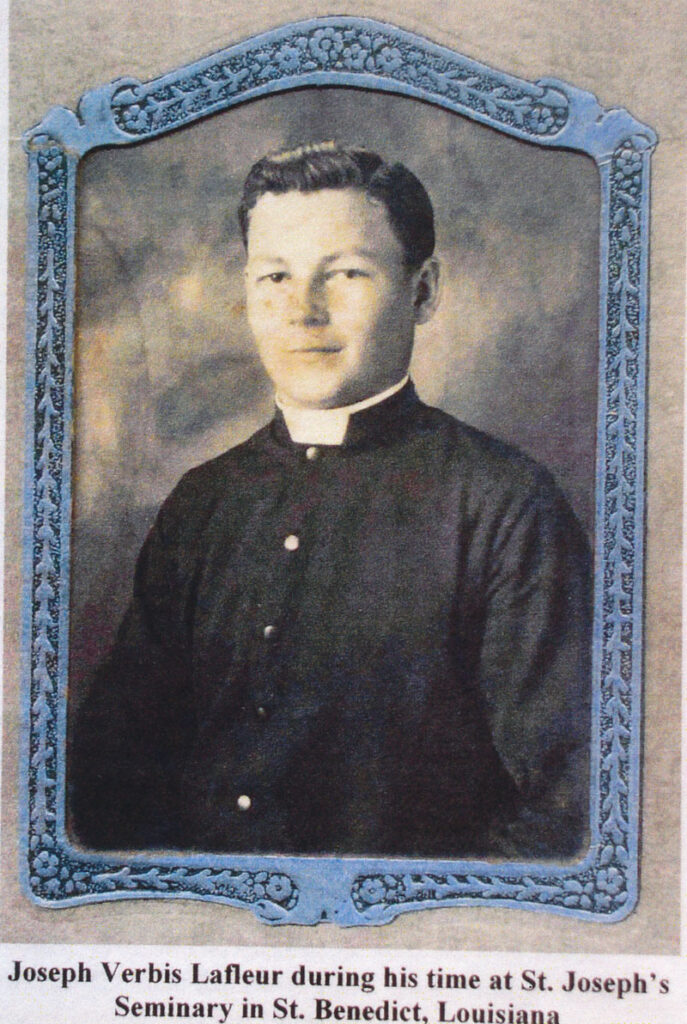
Born in Ville Platte, Louisiana, on January 24, 1912, Joseph knew as a young boy that he would one day be a priest. He became an altar server at age seven because of this early desire for the priesthood. When Joseph was fourteen, he asked his priest Father Colliard, “Father, I want to become a priest. Can you help me?”.
A year later, Father Colliard helped him join St. Joseph’s Minor Seminary in Saint Benedict, Louisiana. After six years at the minor seminary, Joseph completed his last five years of theological studies at Notre Dame Seminary in New Orleans, Louisiana. On April 2, 1938, Father Joseph Verbis Lafleur was ordained at the Cathedral of Saint John the Evangelist in Lafayette, Louisiana. His first assignment was at Saint Mary Magdalen Catholic Church in Abbeville, Louisiana.
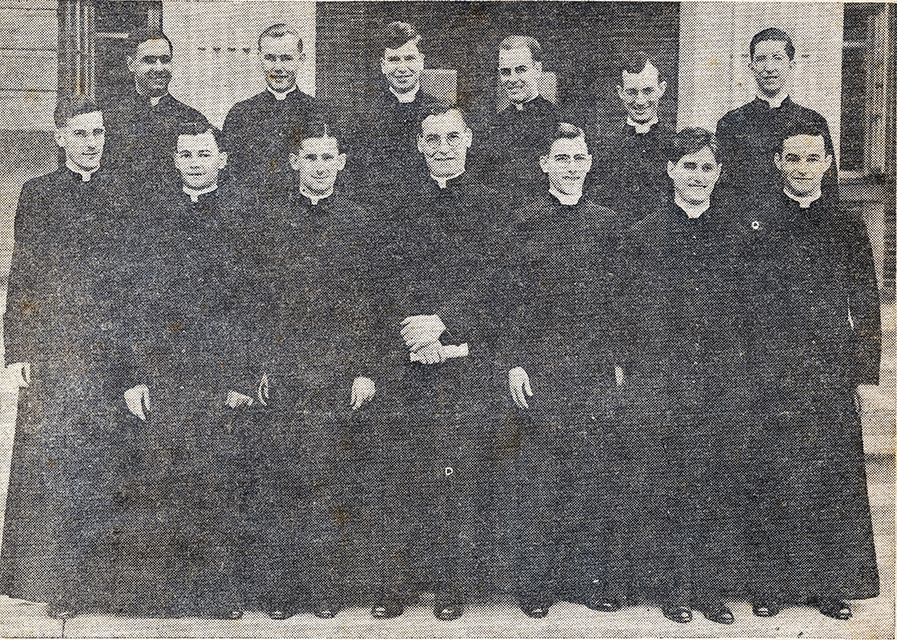
However, three years after his ordination, the United States was on the brink of entering the World War. Although he was exempt from the United States’ first peacetime draft, the Selective Training and Service Act of 1940, since he was a priest, Father Lafleur asked to enter the U.S. Army Air Corps as a chaplain in 1941. In his own words, Lafleur reasoned, “I am volunteering for the military service because the other men do not have a choice … I hope they send me to the farthest away places.”
Father Lafleur practiced with his 19th Bombardment Group in New Mexico for a few months. They were assigned to Clark Field in the Philippine Islands from October to December 1941. When bombs dropped on Clark Field, Father Lafleur sought out soldiers to care for their wounds or give them Last Rites, rather than his own safety.
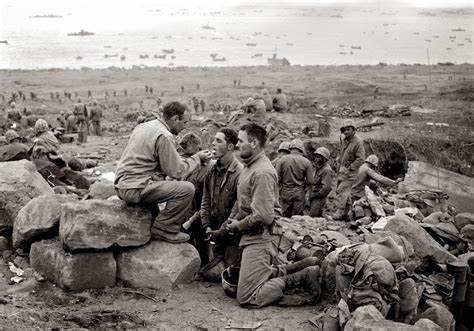
By the end of December 1941, Father Lafleur had evacuated Clark Field and joined soldiers on the steamship Mayon. But, the steamship was also bombed. Lafleur did not immediately escape. Rather, he was the last man on the sinking steamship as he was ensuring all the soldiers were off first.
The 19th Bombardment group found refuge on the Philippine island, Mindanao, by February 1942. When Lafleur was given the opportunity to leave Mindanao before Japan bombed the island, he refused. He decided, “”I shall stay here. My place is with the men.”
The United States surrendered their soldiers in the Philippines to Japan, leaving Father Lafleur tens of thousands to be taken as prisoners-of-war. Lafleur was moved to the Malaybalay prison camp. Then, he was taken to the Davao Penal Colony in October 1942. Here, Father established St. Peter in Chains Chapel, where he administered the Holy Sacraments and celebrated daily Mass, with a bottle of Sacramental wine and an eye dropper.
In March 1944, the Japanese sent 650 soldiers to the Lasang labor camp. Although Lafleur was not ordered to go, he volunteered. Before he left, he wrote his last letter home on a label of a milk can. Father Lafleur wrote to his mother,
Momma, ever since I heard about this detail [at Lasang], I’ve had a feeling that something would happen and that a Chaplain should go. I’ve tried and tried to get this out of my head, but it is constantly there, and I feel that I should go. I do not have to go, but if I didn’t and something would happen, I would never go back to the States as I could never face any of you again. I would feel as though I had not done my duty. So that is why I am going. And it won’t be many more years before there will be two of us at the Alter. On that day, if I am here, I will give him my blessing. And if I am not, I will be with you anyway and I will have a reserved seat up in Heaven. I am sure Our Lord will let me roll back just one little cloud so I can look down. And from up there I will have a more beautiful view and a more perfect understanding of what is going on. So, until that day, may God bless all of you. Love, Verbis.
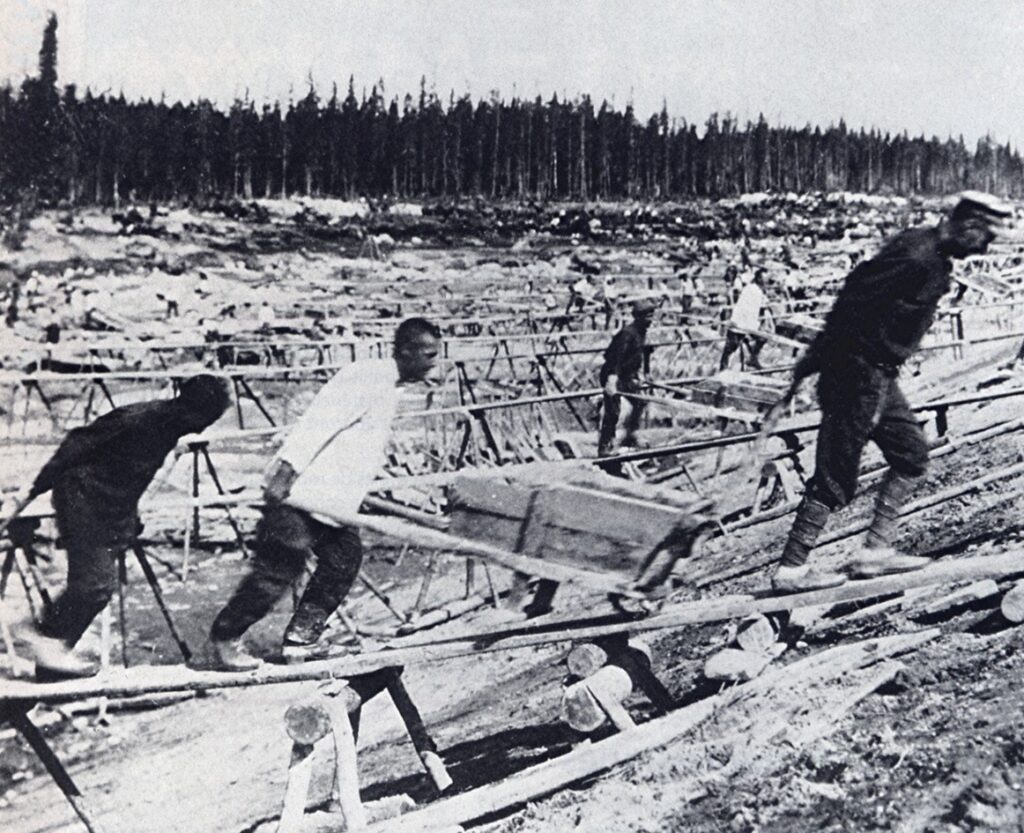
At Lasang, Father continued to provide the Holy Sacraments in secret.
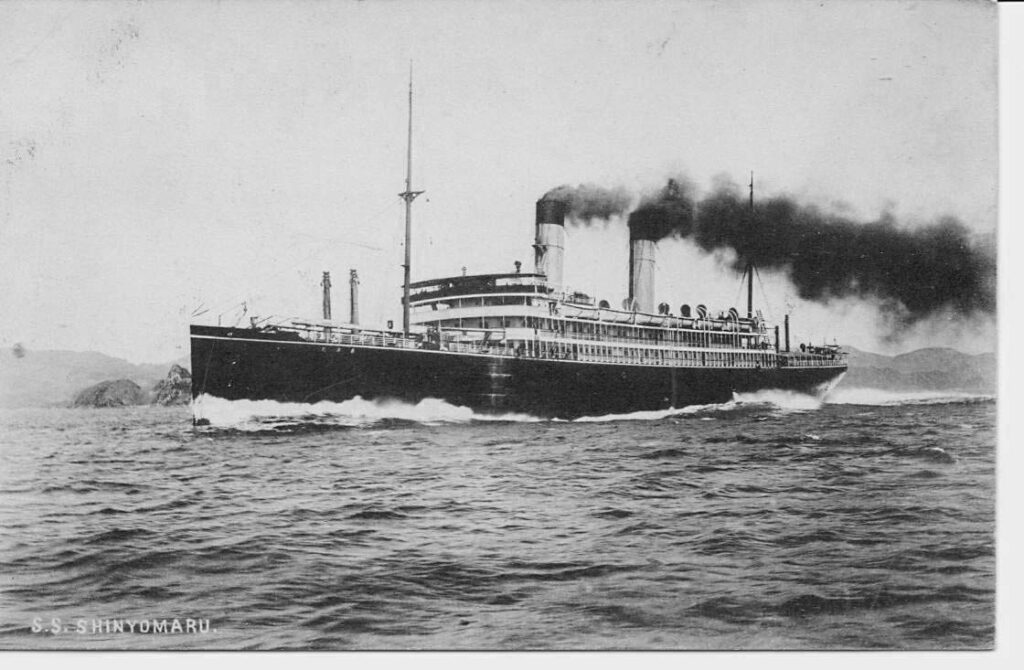
Father Lafleur and 750 other prisoners-of-war were forced onto the Shinyo Maru ship in August 1944. They were contained in the ship with standing room only for three weeks until an American submarine found it on September 7, 1944. The Shinyo Maru was not waving a white flag, signaling that there were prisoners-of-war on board, and so the American forces attacked it.
As the Shinyo Maru started to sink, the prisoners asked Lafleur to be the first to flee, but again he declined. He remained in the sinking ship to help eighty-three soldiers up the exit ladder and to absolve them. The last set of eyes on Lafleur caught him helping the soldier out of the ship and blessing him. Lafleur was among the 667 prisoners to die on the Shinyo Maru.
Posthumously, Father Joseph Verbis Lafleur was honored with the Distinguished Service Cross, Purple Heart, and the Bronze Award for his valor. The testimonies of his fellow soldiers revealed that nearly two-hundred men converted to Catholicism because of Father Lafleur. In 2020, the cause for his canonization was opened, and in 2021, about three-hundred U.S. bishops advanced it.
For more Catholic Patriotic Minutes, visit CATHOLICUSA.COM
Save and Share This Catholic Patriotic Minute!