The Catholic Patriotic Minute #25: John Fitzgerald: George Washington’s Catholic Friend and Secretary
Catholics For Catholics Special Edition | December 22nd, 2025
John Fitzgerald: George Washington’s Catholic Friend and Secretary
‘Twas the night after Christmas in the year 1776, when George Washington crossed the Delaware River. The Commander and nearly 2,500 of his men sailed across the icy river at night, in hopes that they would surprise the Hessian mercenaries in Trenton, New Jersey, in the morning.
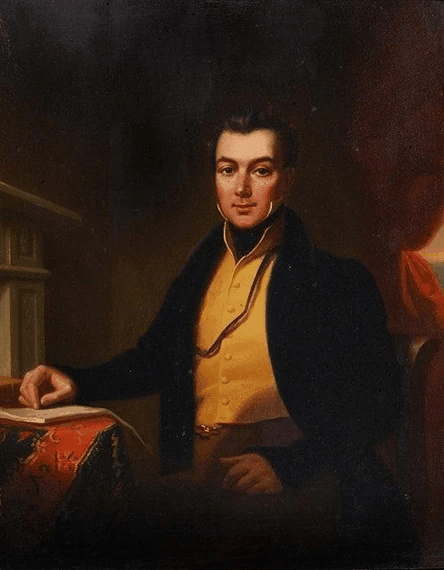
Amongst these 2,500 men was John Fitzgerald, Washington’s trusted secretary during the Revolutionary War. He was one of a few Catholics in Washington’s circle. In fact, Fitzgerald was the intermediary when President Washington donated to the funding of Virginia’s first Catholic parish.
Not much is known about Fitzgerald’s childhood, except that he was born in County Wicklow, near Dublin, Ireland. By the early 1770’s, he left Ireland, which was ruled by Protestant Great Britain and enslaved by their Penal Laws forbidding and punishing Catholic worship.
He moved to Virginia. Yet, public Catholic Masses were not allowed in Virginia till the establishment of the 1786 Virginia Statute for Religious Freedom, which protected Virginians’ rights to worship. But until then, Mass was celebrated in the privacy of Fitzgerald’s home.
Fitzgerald became a successful merchant in Alexandria. Historian Martin Griffin noted that “[Fitzgerald] must have been a man of culture, refinement and education, as well as possessing means enabling him to enter into mercantile life, and also to be permitted to enter the social circle. . . In youthful manhood, he had the reputation of being one of the rising business men and a favorite, even in the social life of the town.”
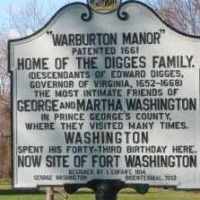
Rather than courting a lady in town, Fitzgerald courted a Catholic named Jane Digges, who lived at Warburton Manor in Maryland. As Warburton Manor was opposite Mount Vernon, Fitzgerald and Dr. Digges, Jane’s father, would dine with Washington often. His friendship with Washington was the basis for Fitzgerald later becoming Washington’s trusted secretary. Interestingly enough, Stephen Moylan–the only other Irish Catholic secretary for Washington–was introduced to the Commander by Fitzgerald at one of these dinners at Mount Vernon.
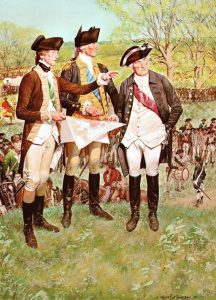
In 1774, Fitzgerald joined as an officer in the Fairfax County Independent Company. A year later, Washington took on the command of the Continental Army, and the war began. In February 1776, Fitzgerald was commissioned a Captain of the 3rd Virginia Regiment and in October 1776 was promoted to Major. A few weeks after, Washington selected Fitzgerald as one of his aides-de-camp.
Aides-de-camp had to be men that Washington fully trusted. In his 1776 letter to Congress asking for the pay of aide-de-camps to be increased, Washington explained the nature of secretaries like Fitzgerald. He wrote,
Aides-de-Camp are persons in whom entire confidence must be placed : it requires men of abilities to execute the duties with propriety and despatch. . . and persuaded I am that nothing but the zeal of those gentlemen who live with me and act in this capacity, for the great American cause and personal attachment to me, have induced them to undergo the trouble and confinement they have experienced since they became members of my family. I give in to no amusements myself, and consequently those about me can have none, but are confined from morning till evening, hearing and answering the applications and letters of one and another. . . But to have the mind always on the stretch, scarce ever unbent, and no hours for recreation.
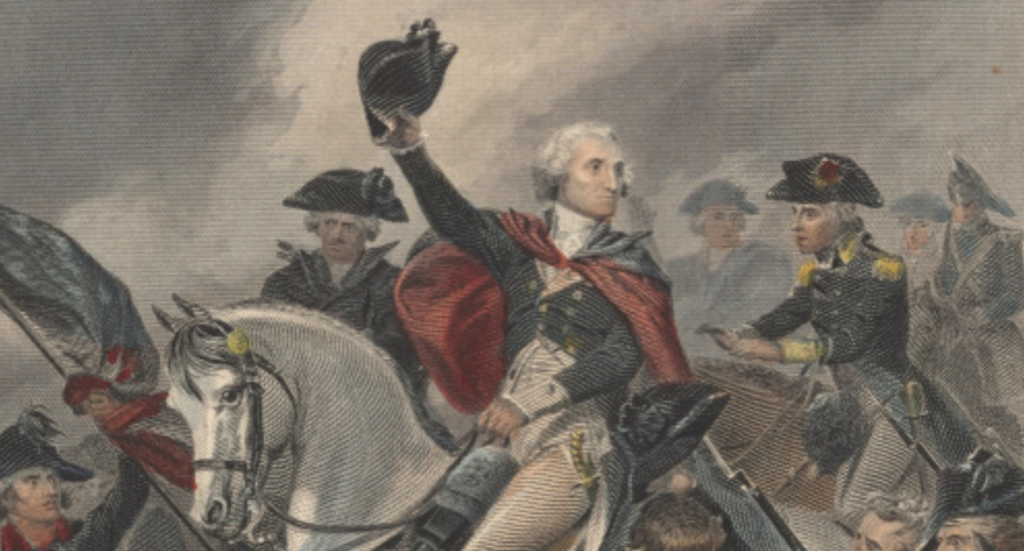
The life of delivering orders from Washington to commanders on battlefields was Fitzgerald’s life for the next two years.
Once Fitzgerald became his aide-de-camp, he crossed the Delaware on Christmas Day and assisted in the Continental Army’s victories at the Battles of Trenton, Second Trenton, and Princeton. Fitzgerald would later tell a story of Washington at Princeton to Washington’s stepson, George Washington Parke Custis, who wrote of it in his memoirs.At one point, Fitzgerald was convinced Washington was about to die, but, as Custis wrote,
Colonel Fitzgerald, celebrated as one of the finest horsemen in the American army, now dashed his rowels in his charger’s flanks, and, heedless of the dead and dying in his way, flew to the side of his chief, exclaiming, ‘Thank God! your excellency is safe!’ The favorite aid, a gallant and warm-hearted son of Erin, a man of thews and sinews, and ‘albeit unused to the melting mood,’ now gave loose rein to his feelings, and wept like a child, for joy.
Fitzgerald recounted that Washington’s response was, “Away, my dear colonel, and bring up the troops — the day is our own!
Throughout the following winter of 1777-1778, Washington and his men were encamped at Valley Forge. It was a low point for the Continental Army. Food and supplies were low. Nearly a quarter of the twelve-thousand men passed away from illnesses. To add to these problems, Washington received word that a group of military leaders, known today as the Conway Cabal, were conspiring to replace Washington with Major General Horatio Gates, hero of the Battle of Saratoga. While on leave in Alexandria, Fitzgerald was informed of this conspiracy against Washington and warned Washington of it. A few weeks later, Washington responded in a letter, “I thank you sincerely for the part you acted at York respecting C[onwa]y’s Letter; & believe with you, that matters have, & will, turn out very different to what that Party expected.”
At the Battle of Monmouth, Fitzgerald was injured and was sent home in June 1778. He finally married Jane Digges and continued his mercantile business, fostering commerce in Alexandria. Fitzgerald protected the city of Alexandria well in April 1781 when a British naval force arrived in the city to burn it down. He gathered some men, and they successfully frightened and warded the enemy off. In May 1785, he was elected one of the four directors of the Potomac Company, which was founded and presided over by Washington. Fitzgerald was later elected the president in 1793. The aim of the Potomac Company was to shape the Potomac River for interstate commerce.
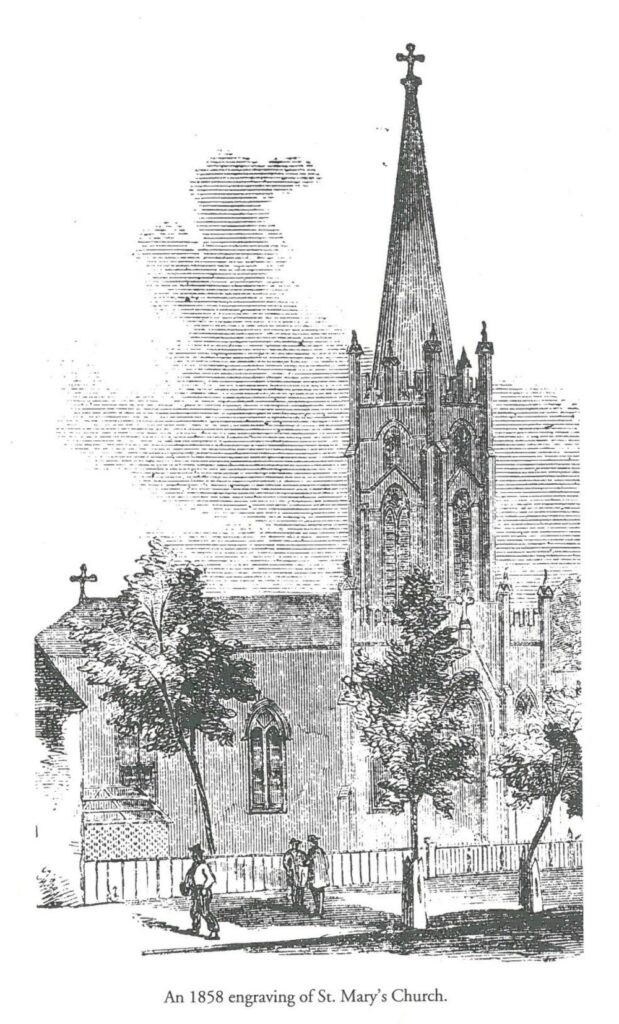
Washington and Fitzgerald’s friendship remained strong through the following years of their business venture and multiple dinner parties. At Fitzgerald’s dinner party on St. Patrick’s Day in 1788, the two discussed the plans for the first Catholic parish in Virginia. Fitzgerald was one of the founders of the Basilica of Saint Mary. George Washington himself was the basilica’s first benefactor.
Their last dinner together, which would be Washington’s last public appearance, was in Alexandria in November of 1799. Fitzgerald passed away on December 2, 1799, and twelve days later, Washington passed away on December 14, 1799.
For more Catholic Patriotic Minutes, visit CATHOLICUSA.COM
Save and Share This Catholic Patriotic Minute!