The Catholic Patriotic Minute #28: Professor John Senior
Catholics For Catholics Special Edition | January 12th, 2026
Professor John Senior: A Cowboy, Classicist, and Catholic
On January 11 of this year, the Catholic Church celebrates the Feast of the Baptism of the Lord. One of America’s Catholic professors was responsible for nearly two-hundred conversions and reversions to the Catholic Church. John Senior’s young self aspired to be a cowboy and later an academic, but his most complete self discovered joy in being a Catholic. For Senior, the most fitting position to gaze at all that is good and beautiful in the world was in the Catholic Church.
On February 21, 1923, John was born in Stamford, Connecticut, and a few years later his family moved to Long Island, New York. He grew up reading cowboy stories and books written by Charles Dickens and Robert Louis Stevenson. Lassoing, cycling, and swimming were his childhood pastimes. When factories were replacing farms in Long Island during the Great Depression, John longed for the wild country of his cowboy stories. At the age of thirteen, John left home for South Dakota to be a cowboy. John’s father brought him back to Long Island, but allowed him to work out west during the summers of his high school years.
Although he began his studies at Hofstra, a small liberal arts college, Senior completed his studies at Columbia University after serving in the U.S. Army during the Second World War. He received his PhD from Columbia in 1957 and, two years prior, became a faculty member of the English Department at Cornell University, where he would encounter Catholicism.
One missing part of his childhood was religion. By the time he began teaching at Cornell, Senior had studied Marxism, Agnosticism, Occultism, Symbolism, and Hinduism. Faced with a broken America after the Great Depression, Senior realized “something was not right between the world and [himself],” as he wrote in his final essays. He studied these ideologies in order to grapple with this realization, which he later called the first step towards his conversion.
But, Thomas Aquinas was consistently quoted in the writings of Eastern philosophies Senior read, and Senior found it necessary to read Aquinas’s Summa Theologica. His study of Aquinas was Senior’s final step towards conversion. One of Senior’s students, Father Francis Bethel, recounted, Senior departed from the “Occultist, the Symbolist and the Hindu thought that one must flee this world and eschew rationality in order to break into the spiritual world,” and rather embraced a Thomistic understanding of the world. Bethel wrote, “[Aquinas] brought before Senior’s gaze the riches of being, the fact that being includes beauty, goodness, and all values.”
In 1960, Senior informed the Catholic chaplain at Cornell he desired to join the Catholic Church, listing Saints Augustine, Thomas Aquinas, and John Henry Newman as his religious formation. The chaplain gave Senior a copy of The Baltimore Catechism and thereafter led Senior and his family into the Church. Later, Senior remarked on his conversion, “It was a miracle. . . No one could have been farther from the Catholic Church than I was.”
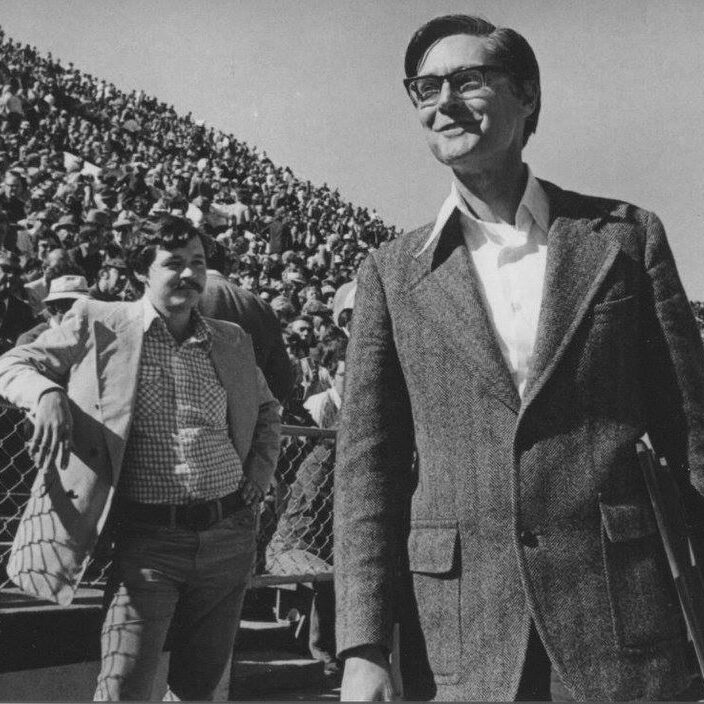
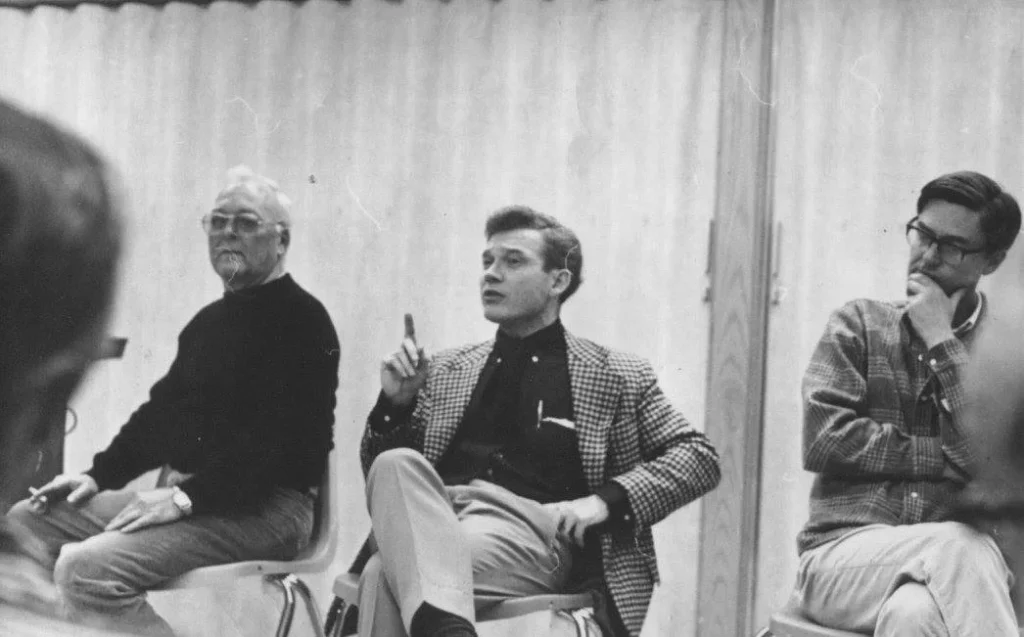
Because of his conversion and rejection of the ideologies wreaking havoc in the Ivy Leagues, Senior left Cornell University for the University of Wyoming in 1960, leaving the east for the west just as his thirteen-year-old self did. Six years later, Senior was invited to the Classics Department at the University of Kansas. At first, Senior did not find any like-minded colleagues until students realized that Senior’s views often aligned with two other professors, Frank Nelick and Dennis Quinn. They all read the Great Books and embraced the Western Tradition. Quinn was a Catholic convert, and Nelick was an Anglican, soon-to-be Catholic in 1973. Little did they know their friendship would lead to conversions.
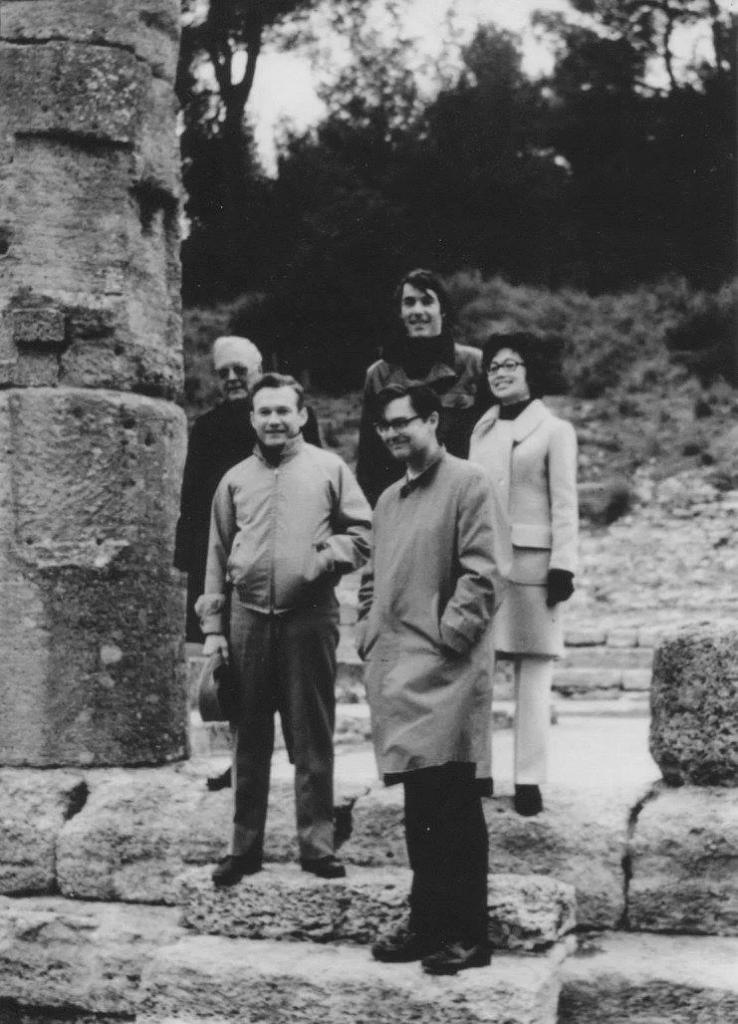
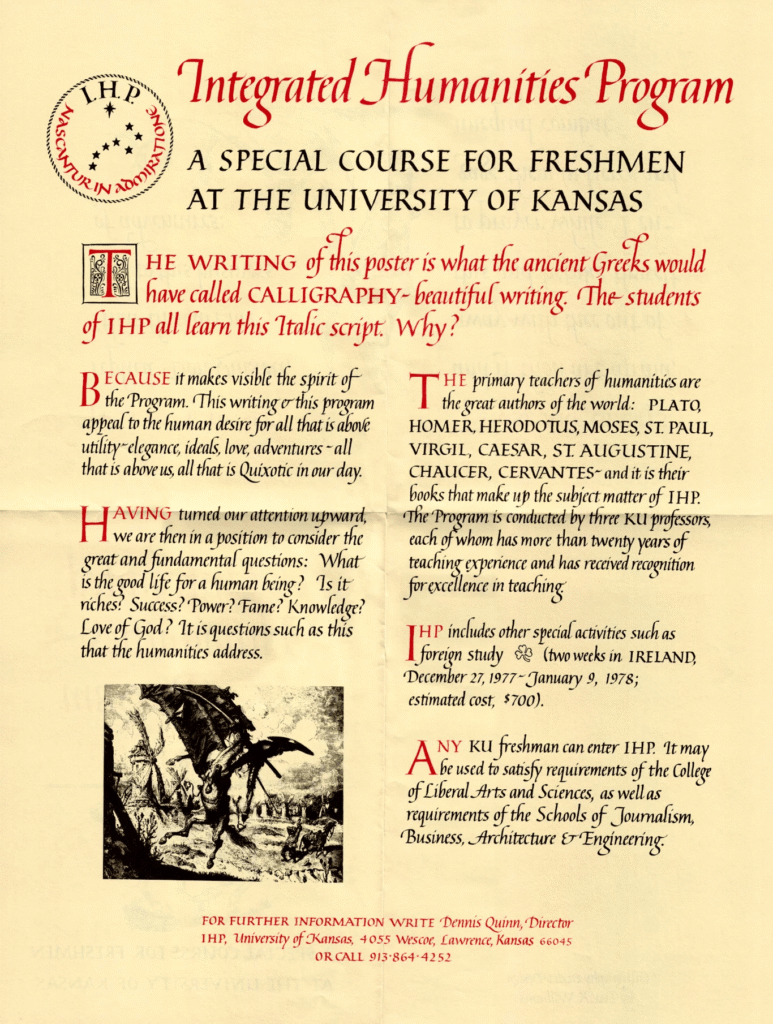
After Quinn was asked to lead a program within the College of Liberal Arts at the University of Kansas, all three professors established the Pearson Integrated Humanities Program [IHP]. The shared objective amongst the professors was to reawaken their students’ imaginations and help them discover how to live well, rather than to prepare students to get a job after university as if the students were machines. Senior explained the program was an attempt “to read what the greatest minds of all generations have thought about what must be done if each man’s life is to be lived with intelligence and refinement.” IHP was a two-year program with courses on history, literature, philosophy, and fine arts. According to Senior, “[i]n an integrated program of studies every subject is seen in the light of each and all, and especially of the good, the true and the beautiful.” IHP’s motto was “Nascantur in admiratione (“Let them be born in wonder”).”
Their classes consisted of lectures and discussions between the professor and the students, as well as learning poetry, speaking in Latin, star-gazing, playing music, and dancing. The professors took students to Italy, Greece, and Ireland to encounter the roots of Western Tradition. The program grew from 20 students in 1970 to 140 students in 1971. Senior, Quinn, and Nelick would touch the hearts of hundreds before the program’s end in 1979. One student reflected on the reason for the program’s success, stating “Thanks to Nelick, the man of experience, the students realize there is a truth; getting to know Quinn, the just, virtuous man, they recognize there is a God; Senior, the spiritual and contemplative, converts ‘em.”
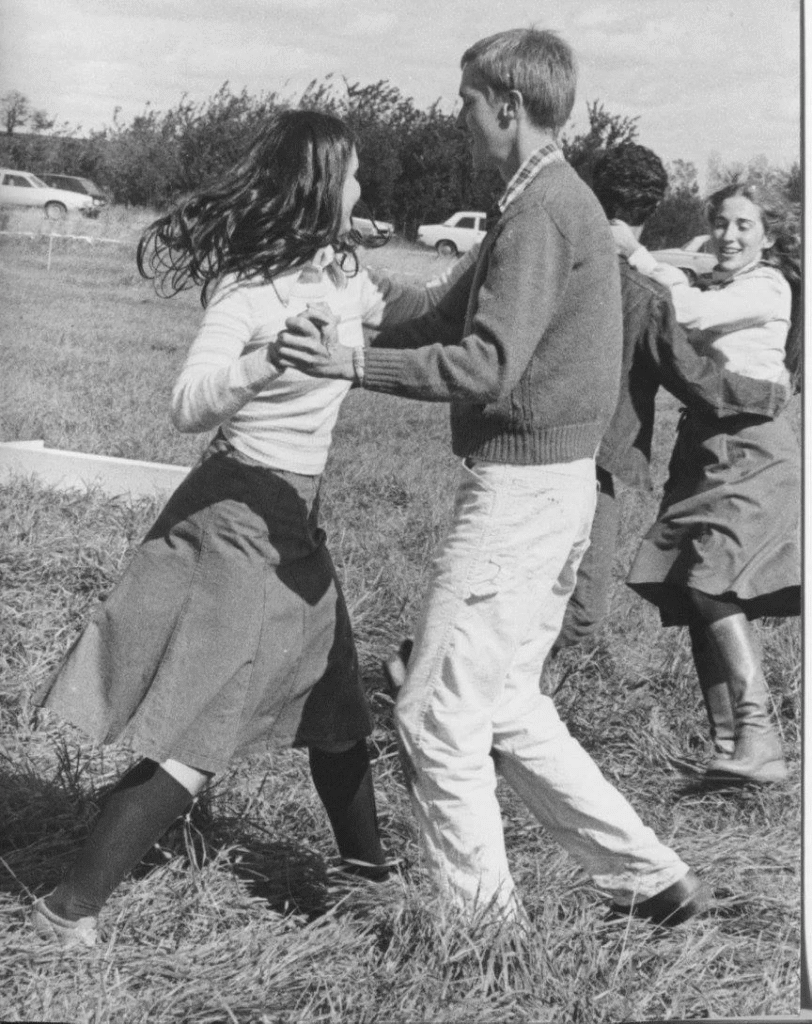
Studying the natural world, poetry, literature, and human history–especially of the Middle Ages– naturally led students to wondering about a Creator. In addition, their students admired the three professors and discovered that all three were Catholic converts. The professors guided students to the local priest, Father Michael Moriarty, if they asked for direction. Eventually, a few conversions became about 150 conversions. And not only were there conversions, but religious vocations came out of the IHP Program.
These conversions and vocations frightened parents, who partnered with organizations like the American Civil Liberties Union, Jewish Community Relations Bureau, and the Committee for Academic and Religious Liberty, to put pressure on the university administration to dissolve the IHP Program. In 1979, the committee investigating Senior, Quinn, and Nelick determined “[i]n the face of charges of religious indoctrination and proselytizing, the Committee has found no evidence that the professors of the program have engaged in such activities in the classroom.” Even with this decision, the University of Kansas did end the IHP Program. Senior kept on teaching in Kansas until 1983, resigning after a heart attack.
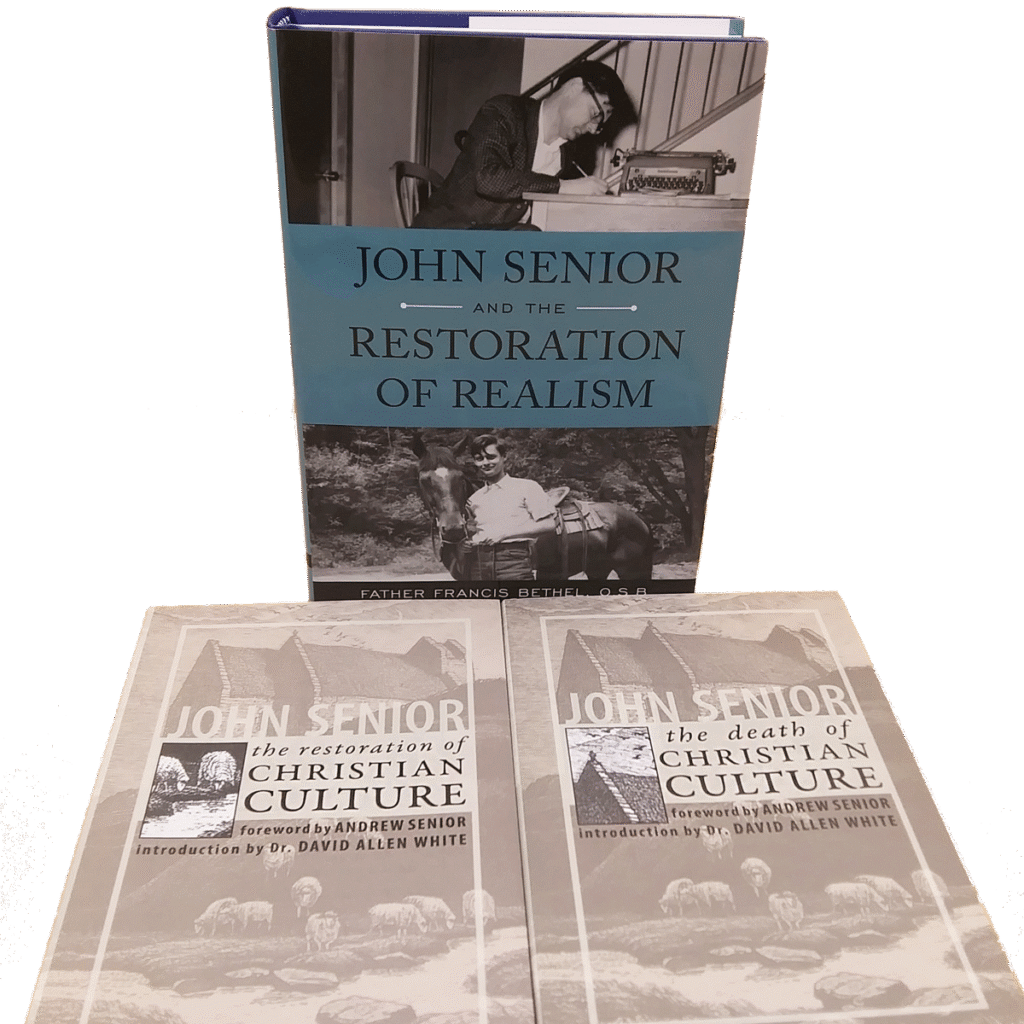
Retirement did not stop Senior from being a professor though. He published two books, The Death of Christian Culture and The Restoration of Christian Culture, in 1978 and 1983 respectively. His former students of the IHP Program began “The Belloc Society,” and Senior attended their meetings. He wrote of these hundred or more students, “we love one another, despite our deplorable manners, and talk of nothing else but all the true, good, and beautiful things that come from Him, the One in whom we live, (and love) and have our being.” 150 of his students saw him as their professor for the last time at the 25th anniversary of the IHP Program.
Senior’s remaining years consisted of praying the Rosary and the Benedictine Office, reading, walking, writing articles, delivering a few talks, and meeting with and writing letters to his past students. In 1998, Senior found out he had cancer. Chemotherapy did not work, and so he requested to live out his last days at home. Leading up to his last moments, he continually prayed the penitential psalms and the Litanies of Saint Joseph, who is the patron saint of those dying. On April 8, 1999, he was reciting the Rosary with his wife and asked her to recite the next decade without him. By the end of the decade, John Senior had passed away.
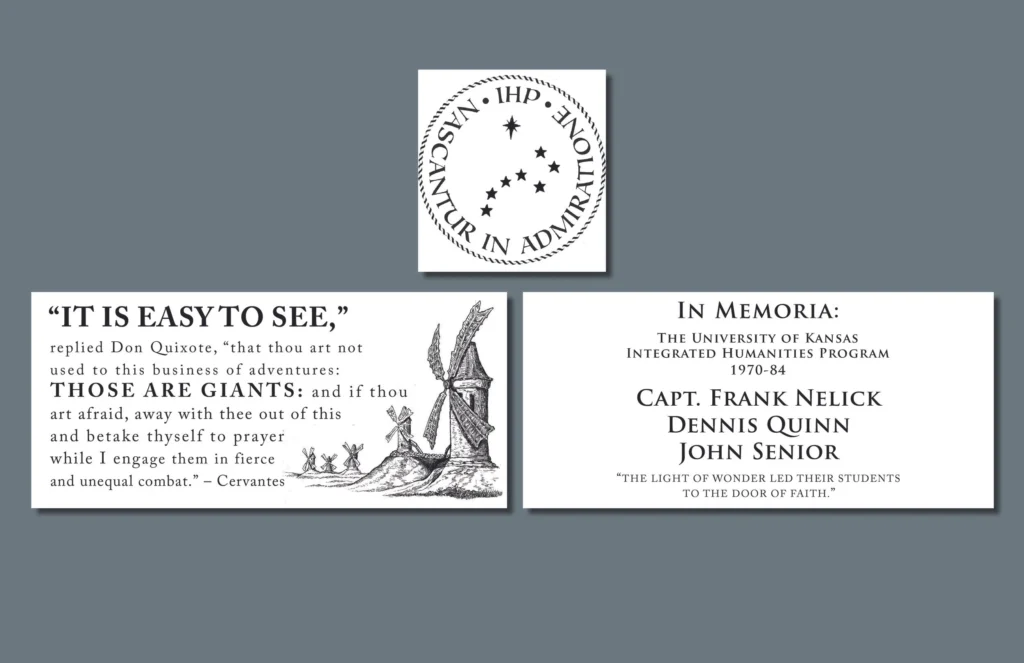
Senior’s legacy perseveres today. He inspired Catholic schools, such as Gregory the Great Academy in Pennsylvania, Saint Martin’s Academy in Kansas, and St. Andrew’s Academy in Kentucky. He even inspired an international bestselling novel The Awakening of Miss Prim, written by Natalia Sanmartin Fenollera! One of his students, Dr. Robert Carlson, was one of the three founders of Wyoming Catholic College, which was heavily influenced by Senior. Bishop James D. Conley of Lincoln, Nebraska, and Archbishop Paul S. Coakley of Oklahoma City, Oklahoma, were students of the IHP Program. Conley attributes his conversion largely to Senior, and Coakley ascribes becoming a priest to the IHP Program. In the 1970’s, Senior inspired a group of students to visit Notre-Dame de Fontgombault Abbey in France. And a year before his death, Senior received news from Fontgombault Abbey that a few of his former students, Fathers Philip Anderson and Francis Bethel, were establishing a monastery in Oklahoma, now known as Our Lady of Clear Creek Abbey. John Senior’s life was a life lived well, inviting hundreds to gaze at all that is good and beautiful, at God Himself.
Notes:
John Senior and the Restoration of Realism, by Father Francis Bethel, O.S.B
For more Catholic Patriotic Minutes, visit CATHOLICUSA.COM
Save and Share This Catholic Patriotic Minute!