The Catholic Patriotic Minute #32: Saint John Neumann
Catholics For Catholics Special Edition | February 9th, 2026
Saint John Neumann: The First Male U.S. Citizen Canonized a Saint
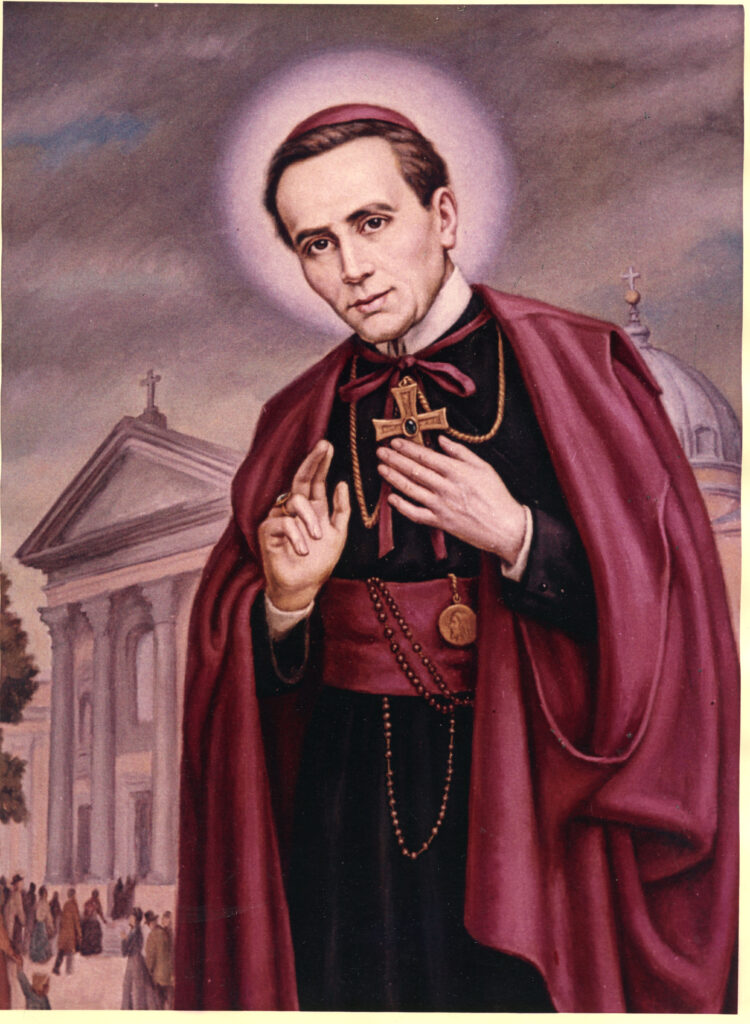
In 1977, Saint John Neumann became the first male U.S. citizen to be canonized. Having become a U.S. citizen on February 10, 1848, Neumann immigrated to America from Bohemia.
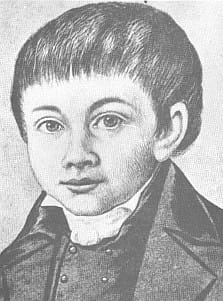
On March 28, 1811, John was born in Prachatice, Bohemia, which was a part of the Austrian Empire but now belongs to the Czech Republic. Named after Bohemia’s patron saint, he was baptized John Nepomucene. John became a bookworm at an early age, dedicating his attention to the books on his bookcase after he finished his schoolwork. Long after teaching John, his teacher Father Peter Schmidt attested to John’s wonder for the natural world around him, from the insects crawling on the ground to the planets far, far away.
As a young child, John was devoted to attending Daily Mass with his mother, praying for the intercession of his guardian angel, saying the Rosary, and reciting the Anima Christi prayer. Saint John Neumann later wrote of his early view of priesthood, “I cannot say I felt a decided inclination to the priesthood in my childhood. It is true that I had an altar made of lead and that I served Mass almost every day, but the idea of being a priest was so exalted that it did not seem within my reach.”
John’s parents allowed him to continue his education in Budweis, unlike most ten-year-old boys in Prachatice. Equal to four years of high school and the first two years of university, his education involved the studies of Latin, Greek, and Christian Doctrine. Although he remained a practicing Catholic in his teenage years, John’s religious zeal was dampened, in comparison to his earlier years. After graduating, he did consider the life of a priest, in addition to the careers of a doctor and a lawyer. John was convinced he would not be accepted into the Budweis seminary, which could only accept twenty out of ninety applicants. But, his mother asked him to apply, and the seminary accepted him.
As a seminarian, Neumann’s favorite area of study was Sacred Scripture. His quick grasp of different languages, such as Latin, Greek, and then Italian, would serve him well. Neumann read the Leopoldinen Berichte, reports that highlighted the lack of priests in the United States, specifically for the German-speaking immigrants. Inspired by a class on Saint Paul and his pursuit of the salvation of souls through the missionary life, Neumann determined that he felt called to be a missionary priest in the United States. To be ready, he transferred to another seminary in Prague, so that he may properly learn English and French.
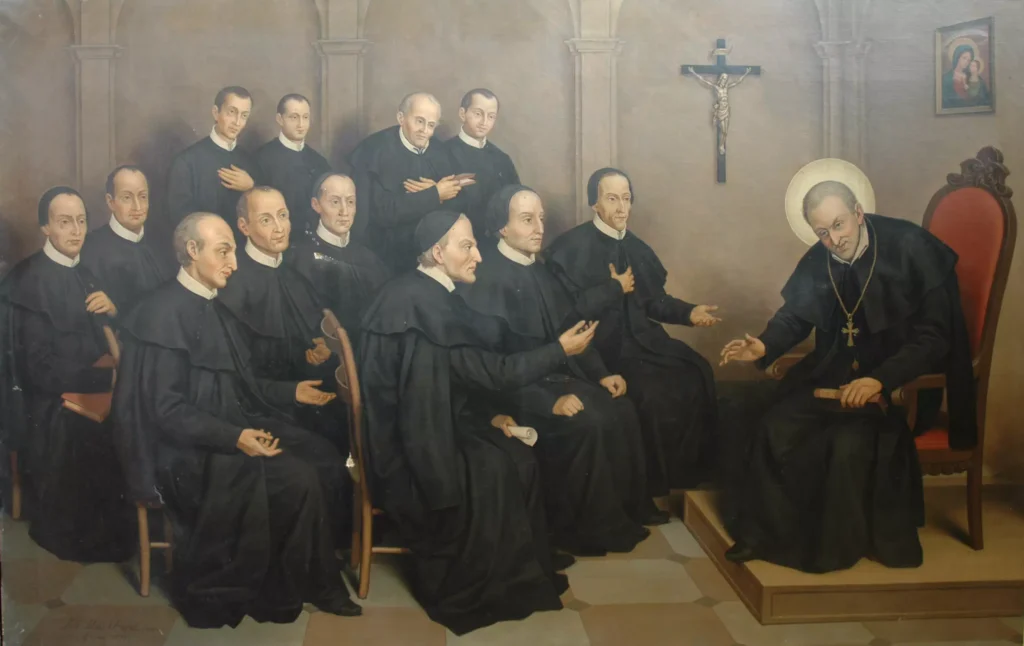
During this period before his ordination, Neumann struggled often with doubts and temptations. Just as priesthood felt out of reach for Neumann as a child, the holiness of the saints felt even further away from him as a seminarian. Yet, his constant recommitment to God’s Will is clear in his diary. He filled it with exhortations to his Heavenly Mother, “Mother, I am a sinner but wish to perfect myself!”. He repeatedly wrote to his Heavenly Father the sentiment, “I will endeavor to perfect myself for such is Your Holy Will!”
His ordination was postponed because the bishop of Budweis was severely ill and there was an overabundance of priests in Budweis. Because overseas communication with U.S. bishops became practically impossible for Neumann, he made the risky decision to sail to America without an assignment. During his forty-day voyage to America, Neumann read the Imitation of Christ and Philothea, preparing himself to begin his work saving souls. In 1836, he landed on Staten Island, New York, with only a dollar and his clothes.
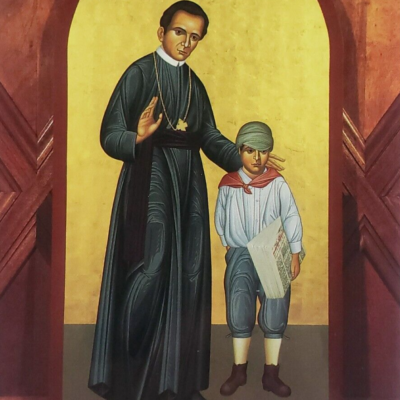
Quickly, the bishop of New York ordained Father Neumann in June of 1836. Now a part of a diocese with 36 priests attending to 200,000 Catholics, Neumann was assigned to the area between Lake Ontario and Pennsylvania, near Niagara Falls. On horse or foot, he travelled to his flock to administer the Holy Sacraments.
Father Neumann entered the Redemptorist Order–a missionary order–in 1842 and served as their vice-provincial superior from 1846 to 1949. Then, he was the parish priest of St. Alphonsus Church in Baltimore, Maryland, until 1852, when he became the bishop of Philadelphia. At the time, the diocese of Philadelphia included over a million people, of which 170,000 were Catholic.
While he was bishop, Neumann founded 89 churches and multiple hospitals and orphanages. Bishop Neumann founded the first diocesean Catholic school system in the United States. He established the Third Order of Saint Francis of Glen Riddle in 1855. At the age of 48, on January 5, 1860, he died of a heart attack. Bishop Neumann was beatified on October 13, 1963. On June 19, 1977, Pope Paul VI canonized Saint John Neumann.
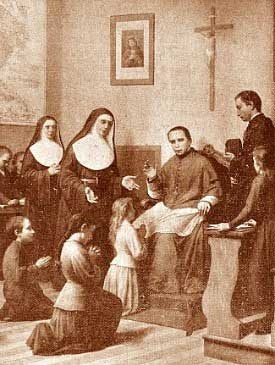
In his homily for the canonization, the Pope Paul VI spoke of Saint John Neumann’s arduous pursuit of saving souls, “love meant giving; love meant effort; love meant sacrifice. And in his sacrifice, Bishop Neumann’s service was complete. He led his people along the paths of holiness. He was indeed an effective witness, in his generation, to God’s love for his Church and the world.”
As a child and a seminarian, the life of a saint seemed almost impossible to Saint John Neumann. However, recommitting his life to God’s Will through Mary daily not only sanctified Neumann himself, but it allowed him to invite others to seek out the same life of holiness.
For more Catholic Patriotic Minutes, visit CATHOLICUSA.COM
Save and Share This Catholic Patriotic Minute!