The Catholic Patriotic Minute #36: Cardinal John McCloskey
Catholics For Catholics Special Edition | March 9th, 2026
America’s First Cardinal: John McCloskey
Pope Pius IX’s elevation of Archbishop John McCloskey to Cardinal is a cornerstone in Catholic American History. Cardinal McCloskey became the first American Cardinal on March 15, 1875. Even though he preferred to be a quiet priest without promotions to bishop, archbishop, and cardinal, Cardinal McCloskey considered each elevation an honor for the United States.
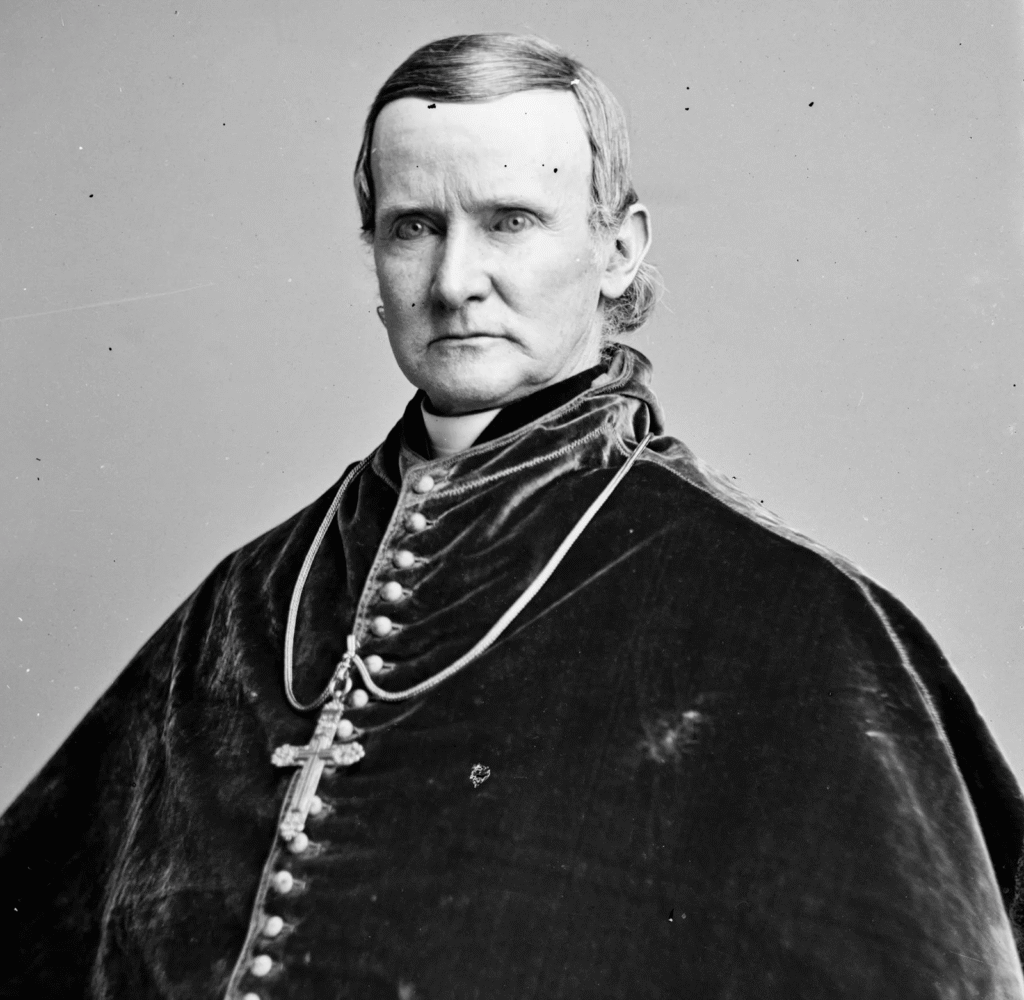
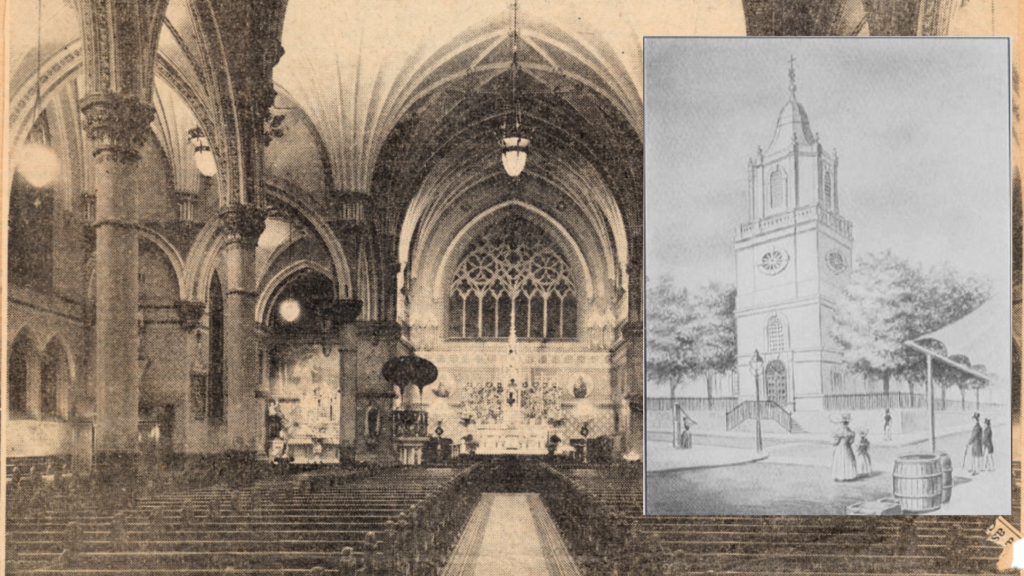
On March 20, 1810, John McCloskey was born in Brooklyn, New York. The McCloskeys were among the Irish Catholics, who immigrated to New York Harbor in the early nineteenth century and made New York their home. John was baptized at the Church of St. Peter’s, one of only two Catholic churches in the Diocese of New York, with the other being the Basilica of St. Patrick’s Old Cathedral. At the age of seven, John studied at a classical school run by Thomas Brady. After John’s father passed away when John was ten, he was sent to Mt. St. Mary’s College in Emmitsburg, Maryland, two years later.
When he was fifteen, he wrote and delivered a Speech on Patriotism, which reveals his thoughts on the relatively new nation that was his home. He asserted, “[f]or without patriotism, our freedom cannot long exist. By it America has obtained that liberty which she now enjoys, by it she has arrived at that height of glory in which she is now stationed, and by the cultivation of it alone has she caused herself to be looked upon as the equal of the most powerful nations of the universe.” Even without a family history in the new nation of the United States, young John honored the civic virtue of American patriotism.
Upon graduating from Mt. St. Mary’s College, McCloskey moved back to his family farm in Bedford, New York. He was unsure about what career path he would choose. He was advised by his previous teacher Thomas Brady to study law, and his mother found a spot in a counting house for John without his knowledge. However, a severe accident would help McCloskey decide.
In the summer of 1827, McCloskey discovered an unattended wagon full of logs with an ox-team attached. He tried to direct the ox-team, but the oxen pulled the wagon over. He found himself underneath the logs. For multiple days later, he was unconscious and blind. McCloskey recounted later, “Divine Providence seems to have brought about the accident in order to prevent my entering the world.”
While he recovered, McCloskey discerned the vocation of the priesthood. He attributed his discernment first, to God’s grace, and secondly, to two priests. According to McCloskey, Rev. Dr. Pise “often spoke to [him] of the great benefit it would be to the Church in America, if the young men born or brought up in the country would devote themselves in larger numbers to the service of the altar.” He also never forgot Rev. Mr. Egan’s warning, “Remember this, John: if you once had a vocation and lose it through your own fault, you will have to answer for it.”
McCloskey made his return back to Mt. St. Mary’s College for seminary in the fall of 1827. As a seminarian, he was very attentive to his daily habits and how he could improve them. In addition to his listed efforts to pray and study fully rather than half-heartedly, to consecrate himself to the Blessed Mother, and to flee from indifference to God, another resolution of his, according to one of his notebooks, was to “never leave Church without earnestly begging for the virtues necessary for a good Priest, and pray that I may rather die than ever be guilty of sacrilege.”
On January 12, 1834, Father McCloskey was ordained a priest in St. Patrick’s Old Cathedral, in New York City, becoming the first native of the state of New York to become a priest. He studied abroad in Rome at the Pontifical Gregorian University, until he returned to New York City to become the pastor at St. Joseph’s. In 1841, he was made the first president of St. John’s College, now known as Fordham University.
He was consecrated as the Bishop of Albany on May 21, 1847. The diocese of about sixty-thousand Catholics only had about twenty-five churches and thirty-four priests in 1847. By 1864, under McCloskey’s episcopate, the diocese of Albany had 113 churches, eighty-four priests, eighty-five missionaries, and fifteen parochial schools. McCloskey introduced religious communities, like the Augustinians, Jesuits, Franciscans, Capuchins, and Oblates, to his diocese.
When the first Archbishop of New York died in 1864, bishops and priests recommended Bishop McCloskey to Rome, despite McCloskey’s opposing opinion. The Bishop even wrote to Cardinal Reisach, asking to not be considered. He wrote, “I possess neither the learning, nor prudence, nor energy, nor firmness, nor bodily health or strength which are requisite for such an arduous and highly responsible office as that of Archbishop of New York. . . I do most humbly trust that such a crushing load will not be placed upon my weak and unworthy shoulders.”
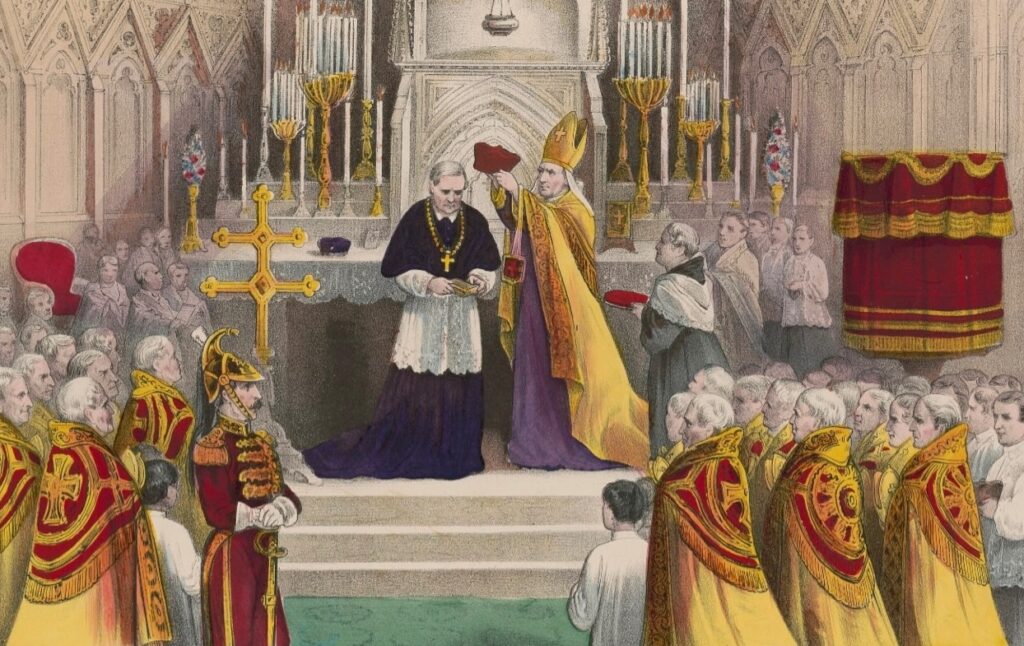
Nevertheless, the Holy See chose Bishop McCloskey. He was consecrated the Archbishop of New York on May 6, 1864. St. Patrick’s Old Cathedral became his home parish. His diocese of New York grew in numbers, with four-hundred priests, 229 churches and chapels, and ninety-seven academies by 1885. He spent fifteen years fund-raising for the building of Saint Patrick’s Cathedral, selecting windows and altars from Europe, and overseeing its construction before the cathedral’s dedication in May 1879. Newspapers called it, “the noblest temple ever raised in any land to the memory of Saint Patrick, and as the glory of Catholic America.”
Archbishop McCloskey attended the Second and Third Plenary Councils of Baltimore, in 1866 and 1884 respectively. He served as a member of the commission on Discipline at the First Vatican Council in 1870 and voted for the dogma of Papal infallibility.
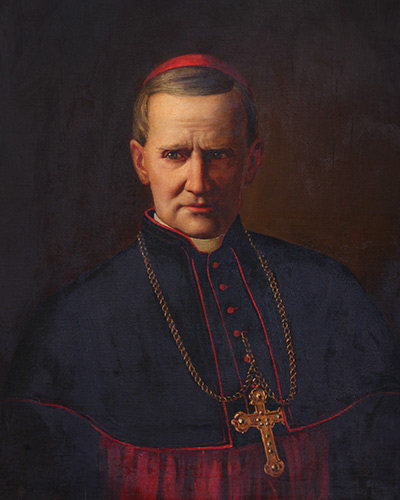
After Pope Pius IX promoted Archbishop McCloskey to the office of Cardinal on March 15, 1875, McCloskey dismissed that the honor was for him, but rather he claimed it was an honor for the United States. He stated, “Not to my poor merits but to those of the young and already vigorous and most flourishing Catholic Church of America has this honor been given by the Supreme Pontiff. . . [the Holy Father] had regard to the dignity of the See of New York, to the merits and devotion of the venerable clergy and numerous laity, and that he had in mind even the eminent rank of this great city and the glorious American nation.” Santa Maria sopra Minerva became his titular church. One of Cardinal McCloskey’s most well-known acts was successfully appealing to President Arthur to make sure the Italian Government did not follow through with their intentions to take the property of the North American College at Rome in March 1884.
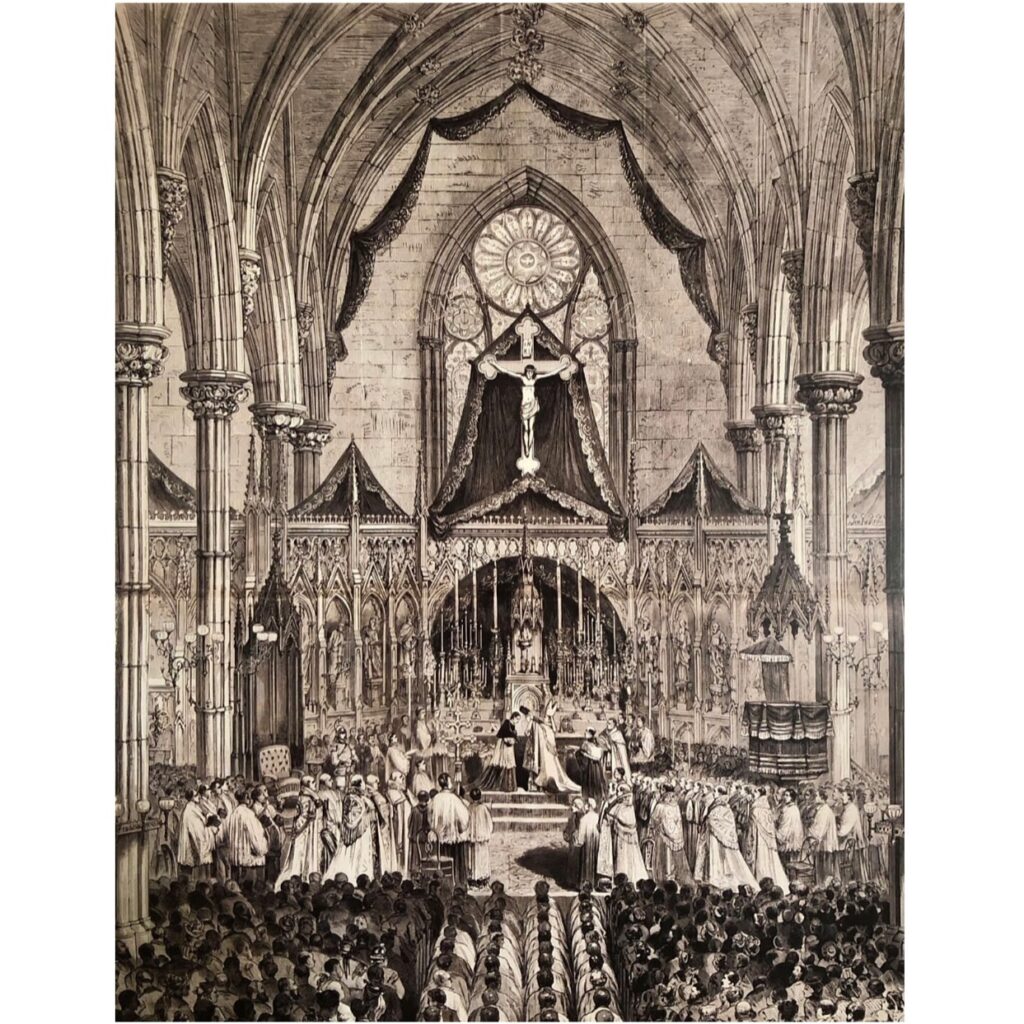
His last memorable public appearance was at the celebration of the fiftieth anniversary of his ordination, in January 1884. After hearing the priests and laity of his diocese thank him for his time as their shepherd, Cardinal McCloskey addressed his flock, saying “There is only one thing we desire — that you all stand together in unity — the priests reverencing the bishops, the laity loving and obeying the priests, and all, laity, priests and bishops continuing in communion with the august head of the church, the vicar of Christ. This is my prayer, and my hope, and my faith.”
Cardinal McCloskey became more weak and ill in the following year. Just two weeks before his death, the Cardinal told a priest, “God has been good to me all my life, and I hope He will be good enough now to take me home.” He passed away on October 10, 1885.
For more Catholic Patriotic Minutes, visit CATHOLICUSA.COM
Save and Share This Catholic Patriotic Minute!