The Catholic Patriotic Minute #35: General James Longstreet
Catholics For Catholics Special Edition | March 2nd, 2026
General James Longstreet: A U.S. Catholic Convert from the Confederacy and Episcopalianism
General James Longstreet was the highest-ranked Confederate official to become a proponent for the North, the Republican Party, and the rights of black Americans after the Civil War. But, he did not only undergo a political conversion. After being abandoned by his Southern friends in the Episcopalean Church, Longstreet turned to Catholicism and converted on March 7, 1877.
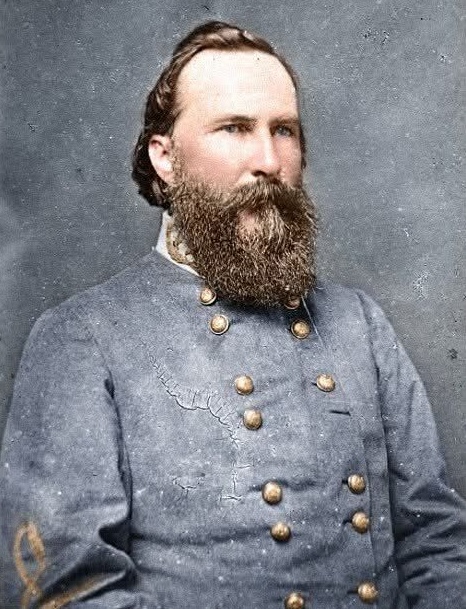
On January 8, 1821, James was born in South Carolina. Most of his youth took place in Augusta, Georgia, where he lived with his uncle, Augustus Baldwin Longstreet. Most likely, his uncle influenced James in his early advocacy for states’ rights. He grew up an Episcopalean.
In 1842, Longstreet graduated from the United States Military Academy at West Point, where he first made friends with Ulysses S. Grant. Upon graduation, both Longstreet and Grant had assignments at 4th U.S. Infantry, at Jefferson Barracks near St. Louis, Missouri. During this period, Longstreet introduced Grant to his cousin, Julia Dent–Grant’s future wife, at the time. Between the years 1846 and 1848, both men served in the Mexican War. Honored for his acts of courage in battles like those at Vera Cruz, Churubusco, and Chapultapec, Longstreet returned home to marry Maria Louisa Garland, with whom he had ten children. He continued his service during the Indian Wars and, by 1858, was promoted to the rank of Major.
When the Civil War erupted across the nation in 1861, Longstreet resigned from his commission and joined the Confederate forces in the role of Brigadier General in July. By October 1861, Longstreet rose to the rank of Major General, alongside Stonewall Jackson, and presided over the First Corps of the Army of Northern Virginia. Despite receiving news of the deaths of three of his children early on in 1862, Longstreet was a major figure during the Peninsula Campaign and the Battle of Williamsburg. After the Battle of Seven Pines, Longstreet’s superior, General Johnston, was replaced by General Robert E. Lee.
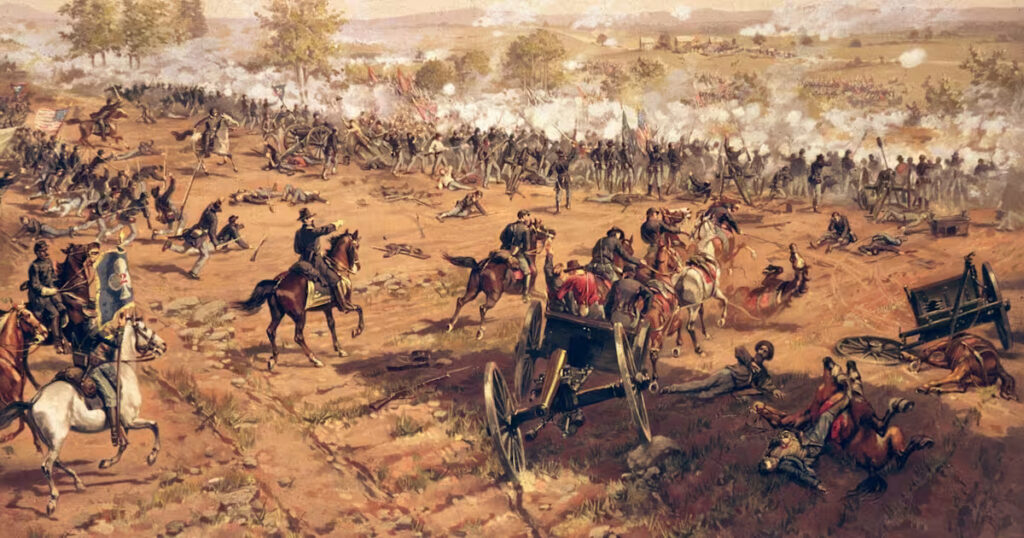
From here on out, Longstreet served in all of Lee’s crucial battles in 1862 and 1863, except the Battle of Chancellorsville. He was promoted to the rank of Lieutenant General in 1862. Once, after a battle defending Richmond, Lee declared that “Longstreet was the staff in [his] right hand.” Longstreet did advise Lee against his plans for the Battle of Gettysburg in July 1863. Even though Longstreet obeyed Lee’s order after their professional disagreement, despite most of Longstreet’s men dying and Longstreet himself nearly dying, Longstreet’ reputation would forever be tainted for opposing the South’s hero at such a turning point in the war.
In May 1864 at the Battle of the Wilderness, Longstreet was shot and did not return to battle until late 1864. Longstreet was present for the Confederate surrender to the Union in April 1865 at Appomattox because Lee requested Longstreet in case the surrender turned sour. When Longstreet saw Grant once again during the surrender, Grant immediately greeted him and asked, “Well, Old Pete, can’t we get back to the good old days by playing a game of brag?”. Due to the persistence of Grant, Longstreet later received amnesty from Congress.
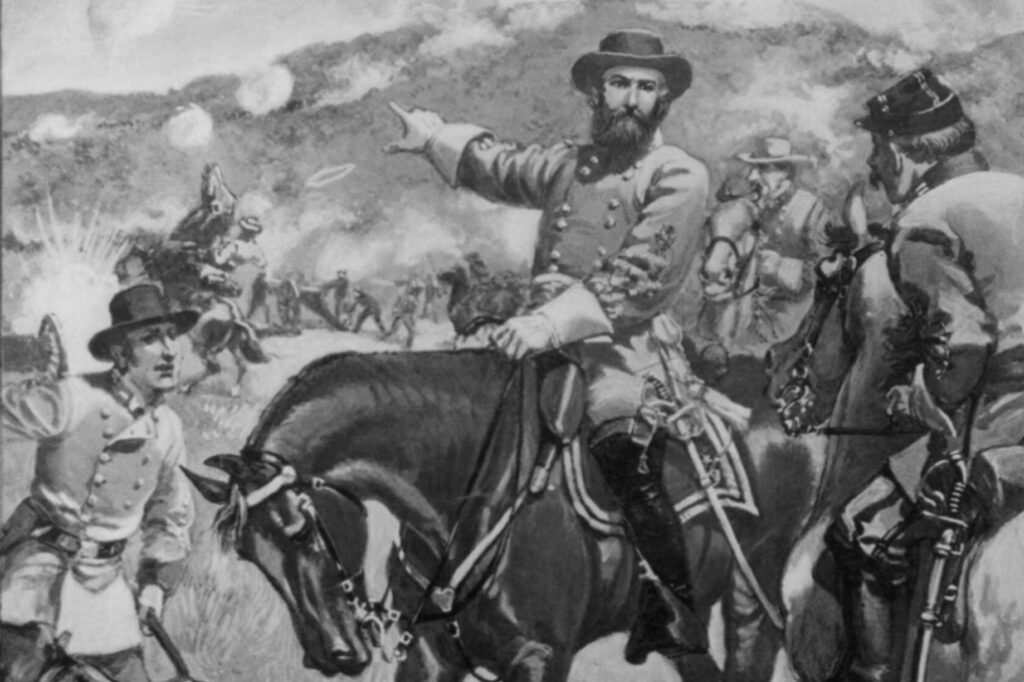
After his move to New Orleans, Louisiana, right after the war, Longstreet began a political and religious conversion. He published letters in the New Orleans Times that enraged Southerners. In an infamous 1867 publicized letter, Longstreet explained why he was abandoning the Democratic Party. He wrote, “[the Democratic party’s] prominent features oppose the enfranchisement of the colored man, and deny the right to legislate upon the subject of suffrage, except by the States, individually. These two features have a tendency to exclude Southern men from that party; for the colored man is already enfranchised here, and we cannot seek alliance with a party that would restrict his rights.”
Southerners were even more enraged by Longstreet when he backed Grant’s run for the presidency and later accepted Grant’s nomination of Longstreet to the role of Surveyor of Customs for the Port of New Orleans. As commander of the Louisiana state militia during Reconstruction, Longstreet was criticized for protecting black people against violence. Till the end of his life, Longstreet endured character assassinations from former Confederates Jubal A. Early, John B. Gordon, Fitzhugh Lee, and Jefferson Davis. Longstreet’s attempts to defend his reputation in his autobiography From Manassas to Appomattox did not prevent Southerners from reimagining the Confederacy’s loss as the result of Longstreet’s leadership, rather than Lee’s.
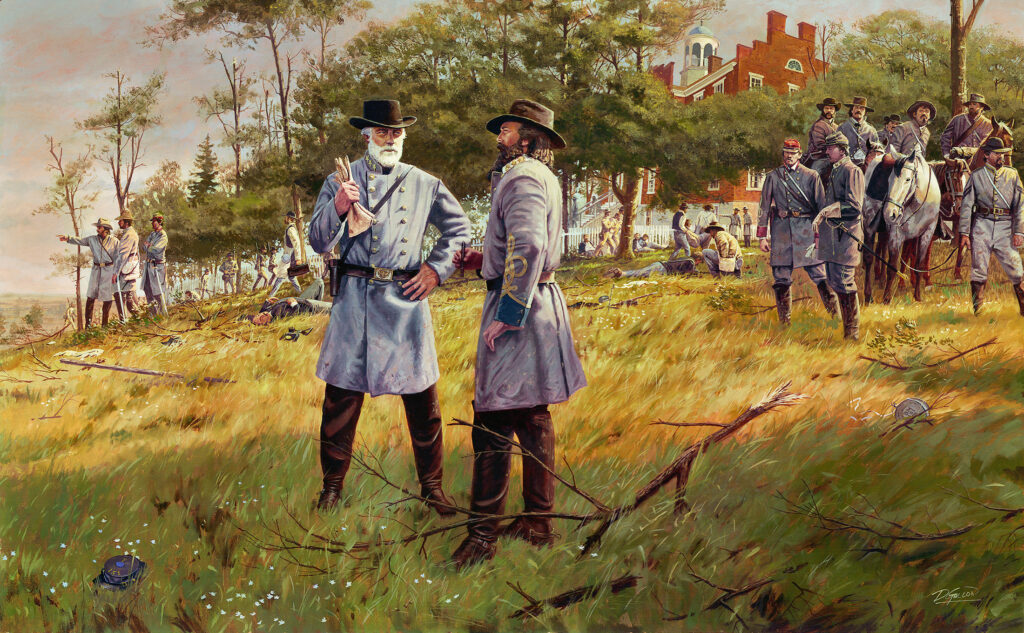
After Longstreet’s wife passed away in 1889 and he remarried in 1897 to Helen Dortch, Helen defended him until her last days. In her book, Lee and Longstreet at High Tide, she wrote of Longstreet’s faith–a part of his life he kept private. She wrote that, once his Southern friends shunned him at church after his political conversion, “[Longstreet] began to wonder if there was any church broad enough to withstand differences caused by political and sectional feeling. He discovered that the Roman Catholic priests extended him the treatment he longed for.”
Further, Helen Longstreet wrote, Longstreet “began to attend that church, and has said that its atmosphere from the first appealed to him as the church of the sorrow-laden of earth. He was converted under the ministration of Father [Abram] Ryan. After accepting the faith of the Catholic Church he followed it with beautiful devotion. He regarded it as the compensation sent him by the Almighty for doing his duty as he saw it. He clung to it as the best consolation there was in life. He went to his duties as devoutly as any priest of the church, and was on his knees night and morning, with the simple, loving faith of a little child.”
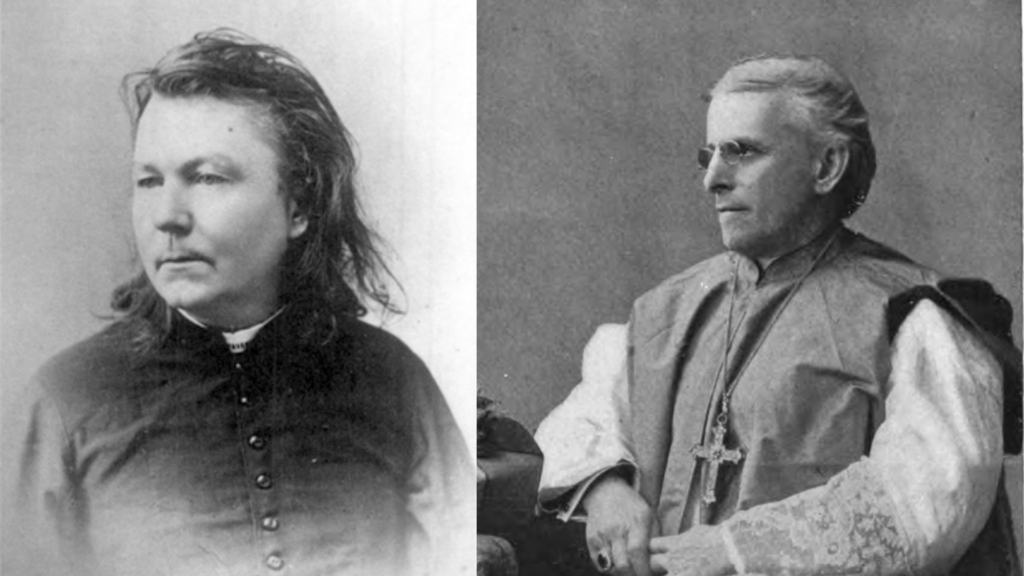
General James Longstreet died on January 2, 1904. Bishop Keiley, one of his former soldiers, delivered his eulogy. He said, “James Longstreet was a brave soldier, a gallant gentleman, but better still—a consistent Christian. After the war between the States he became a member of the Catholic Church, and to his dying day remained faithful to her teaching and loyal to her creed.”
For more Catholic Patriotic Minutes, visit CATHOLICUSA.COM
Save and Share This Catholic Patriotic Minute!