The Catholic Patriotic Minute #39: Venerable Augustus Tolton
Catholics For Catholics Special Edition | March 30th, 2026
Venerable Augustus Tolton: The First Black Priest in the United States
In the decades leading up to the Civil War, the United States split as a nation over the understanding of the human person. The Holy See had already spoken regarding slavery, especially when Pope Gregory XVI condemned the slave trade in his 1839 papal encyclical In Supremo Apostolatus. Although Pope Gregory XVI had called for bishops and priests to oppose the slave trade, those in the new nation of the United States were slow to this call.
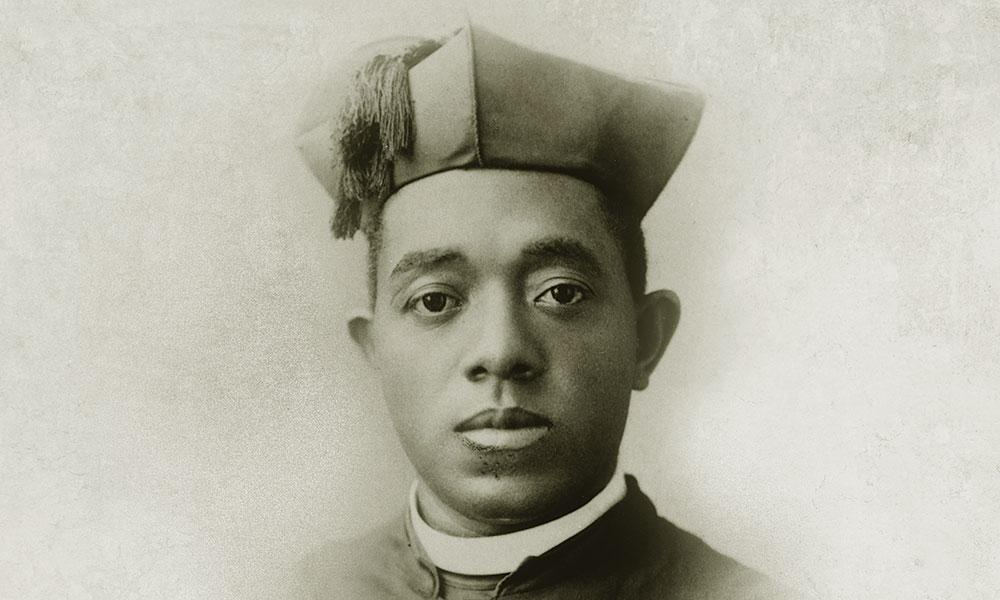
The amount of “no’s” that Venerable Augustine Tolton faced while seeking a path to the priesthood would have deterred most. But, Tolton’s courage and clarity in following God’s will for him kept Tolton on a path–although uncomfortable–straight to sanctification.
On April 1, 1854, Augustus John Tolton was born into the institution of slavery in Missouri. His parents, Martha Jane Chisley and Peter Paul Tolton, met as slaves on Stephen Eliot’s plantation. Only after the approval of their masters was given, Augustus’s parents were married at St. Peter log-cabin Church in Brush Creek, Missouri, in 1859.
The Civil War emerged in 1861, after years of the United States as a nation splitting on the issue of slavery. Although Missouri was a slave-holding state, it did not secede from the Union, as most slave states did. And so, when Augustus’s father died fighting in the Civil War in 1861, he died defending the Union. In 1862, Augustus’s mother ran away with Augustus and his siblings. Having crossed the Mississippi River, they fled to the free state of Illinois.
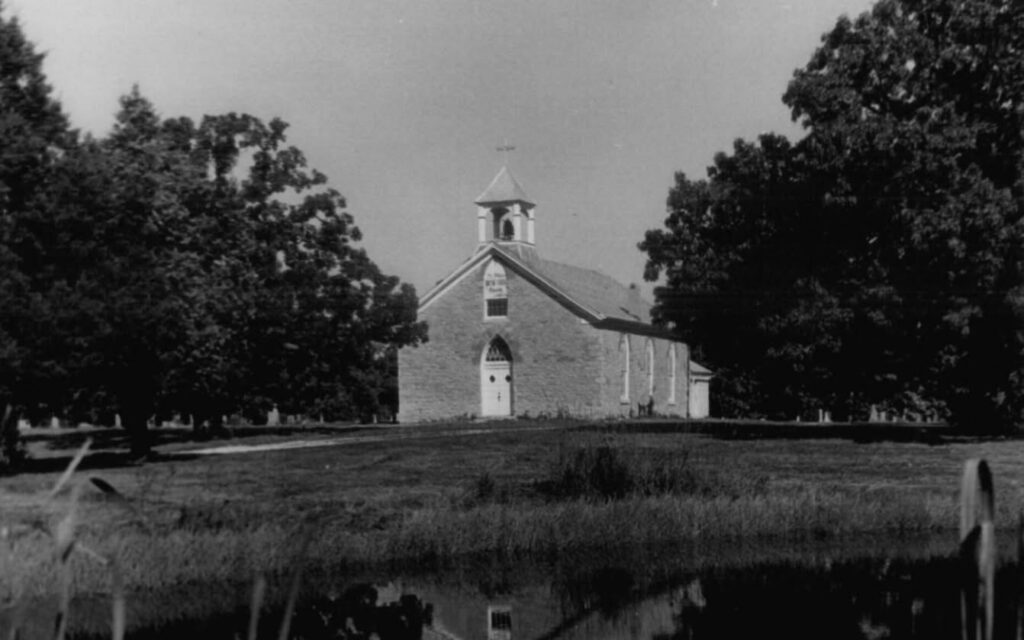
Nine-year-old Augustus began work at a tobacco factory in Quincy, Illinois. In 1865, the year that the Civil War came to an end, he joined St. Boniface’s School. However, his mother took him out of the school after he faced pushback from parts of his school community.
In addition to working at the factory, Augustus was also employed as a janitor at his church. During his pockets of time outside of school and work, Augustus often prayed in church and attended religious classes, taught by priests and nuns. They also taught Augustus how to read and write in English and German.
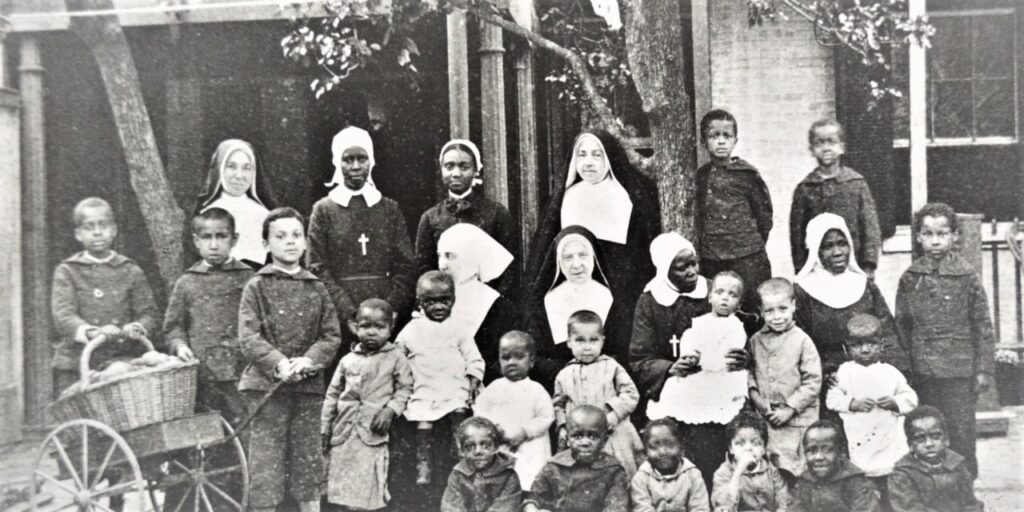
One of these priests–Fr. Peter McGirr–believed that Augustus should have a Catholic education. He asked Augustus to join St. Peter’s School in Quincy, and despite protests from particular people in the community, Augustus attended school when the factory was closed during the winter time. The School Sisters of Notre Dame would teach Augustus if other teachers balked to do so.
Augustus served the Holy Mass as an altar server and learned all the Latin prayers for the Mass word for word. Fr. McGirr administered to sixteen-year-old Augustus the sacrament of first Holy Communion. During Fr. McGirr’s homily on the Eucharist on the same day, Augustus first seriously considered the vocation of the priesthood, about which Fr. McGirr discussed with Augustus thereafter and supported.
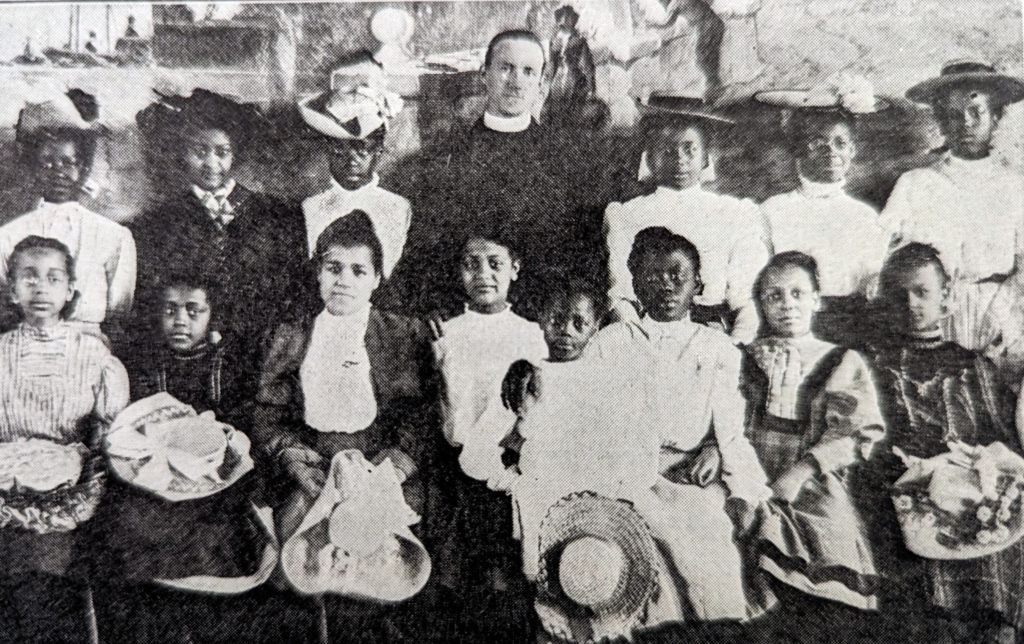
Once Augustus graduated from high school in 1872, Fr. McGirr assisted Augustus in applying for seminaries, but all responses were unfavorable. He was refused entry to all seminaries in the United States. Yet, Fr. McGirr’s bishop agreed to fund Augustus’s seminary studies.
The St. Joseph Society for Foreign Missions, called the Josephites, was interested in Augustus attending their seminary overseas and serving as a missionary priest in Borneo, an island in Southeast Asia. This possibility was encouraging to Augustus. But, his spiritual formation at the time was off and on because the priests assigned to instructing him were reassigned.
Augustus worked at a soda factory until he was enrolled at St. Francis Solanus College in 1878, where he studied literature, mathematics, and science. He even taught religious classes to black children on Sundays. Augustus’s bishop appealed to the seminary in Rome about his case. The seminary refused Augustus at first because they only accepted applicants from countries without seminaries. From Rome’s point of view, the United States did have seminaries.
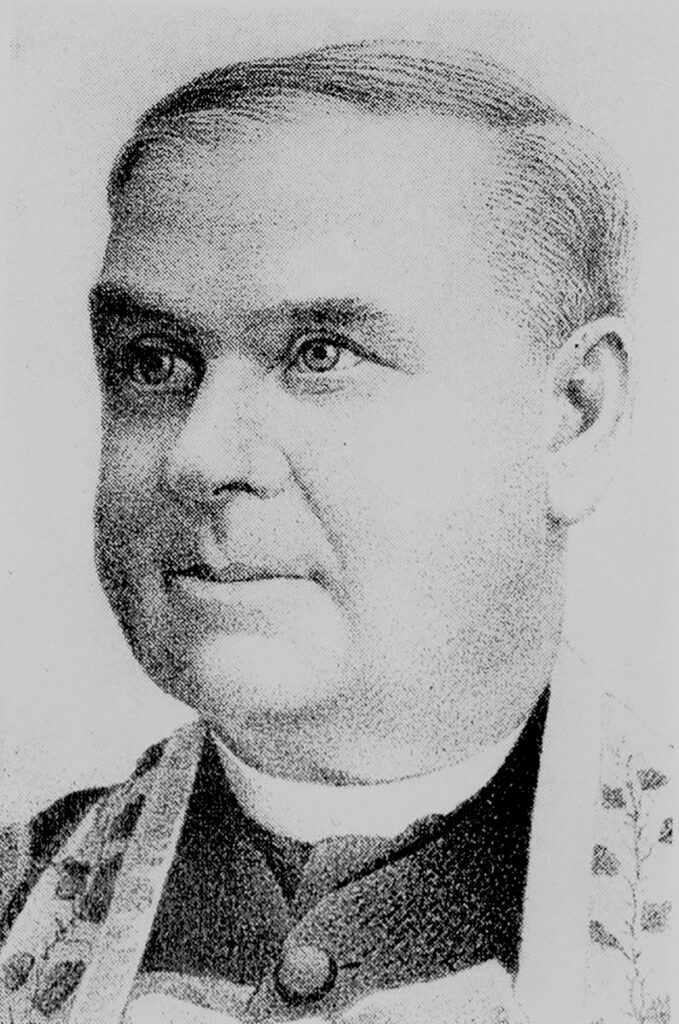
However, Augustus’s spiritual director Fr. Richardt reached out to the superior general of the Franciscan Order in Rome about Augustus’s situation. As a result, Augusts joined the Urbanum Collegium de Propaganda Fide in Rome. On March 12, 1880, he arrived in the Eternal City, where he pursued his seminarian studies for the next six years.
He was ordained a priest at St. John Lateran Basilica in Rome on April 24, 1886. Fr. Augustus Tolton was fully appreciated and respected as a Catholic in Rome in such a way that he even impressed the prefect of the Sacra Congregatio de Propaganda Fide, who asserted that “Fr. Tolton is a good priest, reliable, worthy, and capable. . . . He is deeply spiritual and dedicated.”
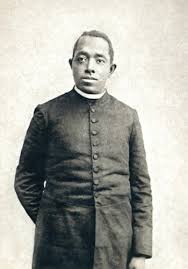
Fr. Tolton was assigned to serve as a pastor back home in Quincy, Illinois at St. Joseph’s parish, which served black and white Catholics. He was welcomed at St. Joseph’s, which he grew by inviting new parishioners. People were drawn to Fr. Tolton’s Sunday sermons, his spiritual direction, and his service for the needs of the aged and ill.
However, due to the influence of another priest, Fr. Michael Weiss, who unjustly slandered Fr. Tolton, the majority of white parishioners left St. Joseph’s and took their financial contributions with them. Bishop James Ryan, a friend of Fr. Weiss, instructed Fr. Tolton to only serve the black Catholics of his flock.
Fr. Tolton appealed to the Vatican for a transfer to another diocese, and after an investigation, the Vatican assented to his appeal. Archbishop Patrick Feehan welcomed Fr. Tolton to the Archdiocese of Chicago in December of 1889. Fr. Tolton was assigned to St. Augustine’s Church–a church in the basement of St. Mary’s that served only black Catholics. Fr. Tolton and Archbishop Patrick Feehan worked together to build a different church that could be a home for black Catholics in Chicago. This home became St. Monica’s Church in 1894. The Archbishop purchased land, and Fr. Tolton fund-raised and even received aid from Saint Katharine Drexel.
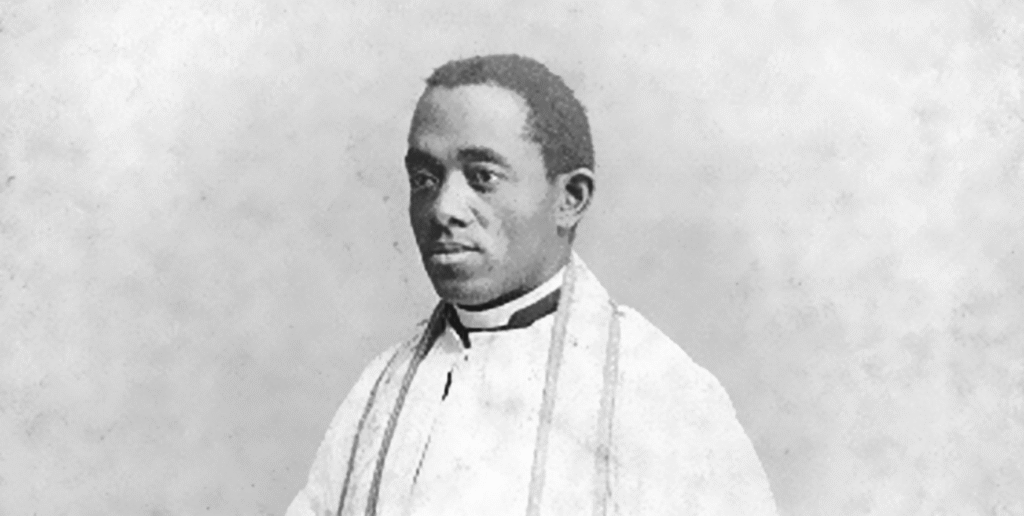
Fr. Tolton went to his heavenly home on July 9, 1897, after suffering a heat stroke at the age of forty-three. On June 11, 2019, Pope Francis named him Venerable Father Augustus Tolton.
For more Catholic Patriotic Minutes, visit CATHOLICUSA.COM
Save and Share This Catholic Patriotic Minute!