The Catholic Patriotic Minute #42: Charles Tracy
Catholics For Catholics Special Edition | April 20th, 2026
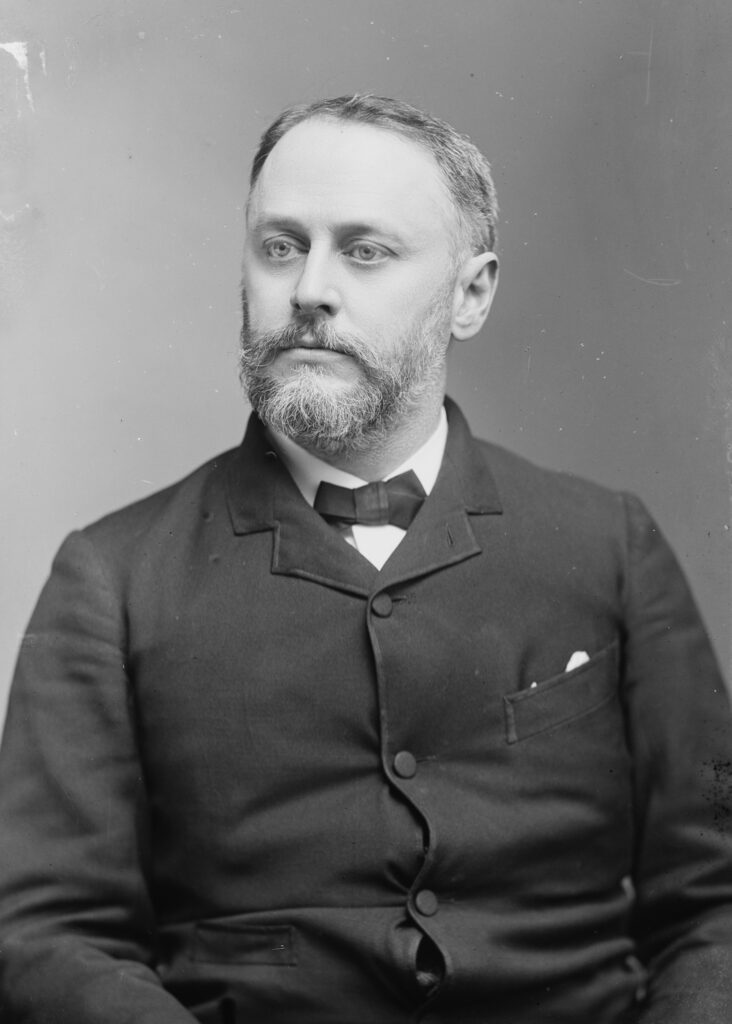
Charles Tracey: Crusader for the Pope, Statesman for America
Charles Tracey was born on May 27, 1847, in Albany, New York, into a prosperous Irish Catholic family shaped by faith, sacrifice, and service. His grandfather was debarred from the English Army for refusing to renounce his Catholic faith. His uncle fought for Irish rights in Lower Canada. His brother served as a Union Army colonel. Charles was raised amid Catholic patriotism and military honor.
His father, John Tracey, built a successful distillery in Albany and became one of the city’s most prominent Irish-American citizens. Deeply committed to the Church, he funded several Catholic projects and was described as “a Christian man, whose banner was faith, hope, and charity.”
Charles excelled at the Albany Academy, rising to the rank of Major in its Cadet Battalion, the highest a student could achieve, and delivering his class’s valedictory address in 1866. He then embarked on an extensive tour of the Holy Land, Egypt, and Europe.
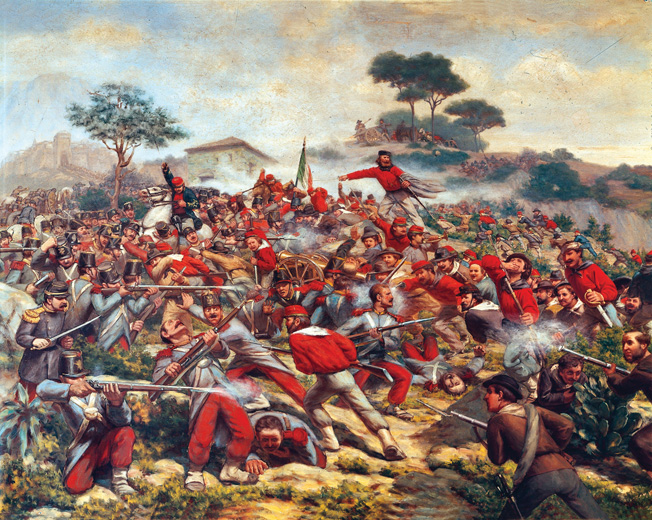
By December 1867, he found himself in Rome at a pivotal moment. That fall, Garibaldi’s Red Shirts had invaded the Papal States, threatening the very heart of Christendom. They were defeated at Mentana in November, but the danger had not passed. Catholic men from across the world rushed to defend Blessed Pope Pius IX. The twenty-year-old Charles, inspired by his family’s deep faith and tradition of service, enlisted in the Papal Zouaves on January 9, 1868.
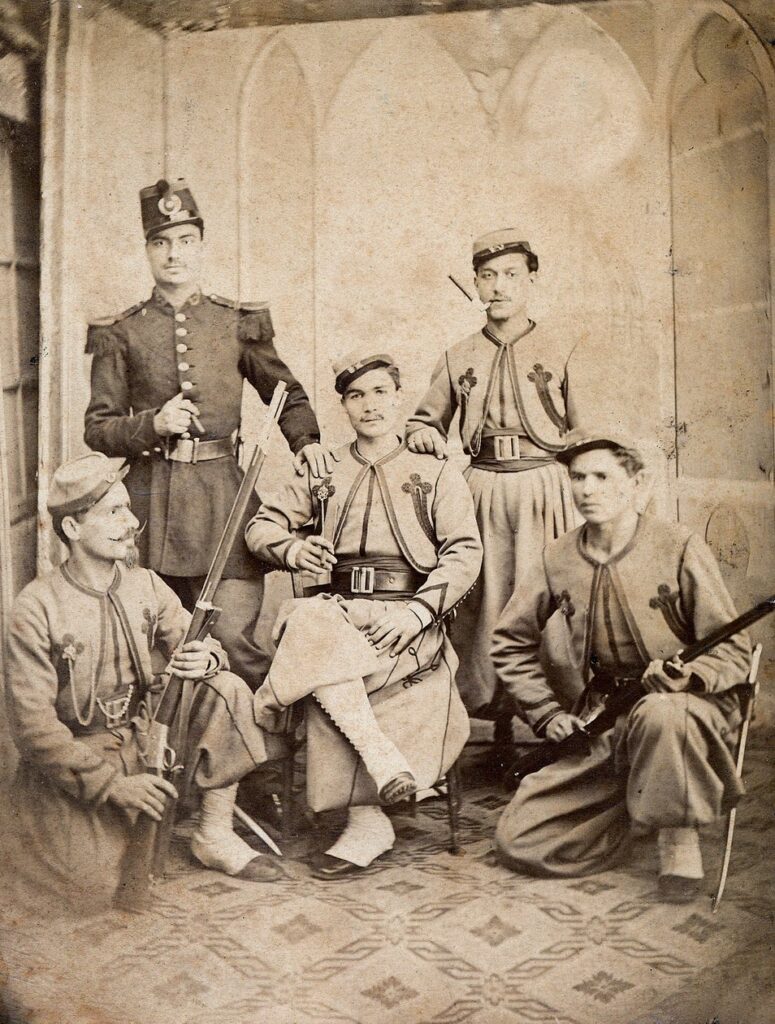
The Papal Zouaves were an international volunteer regiment formed in 1860 to defend the Papal States. Young Catholic men from France, Belgium, the Netherlands, Ireland, Canada, and even the United States flocked to Rome to fight for the Pope. They considered themselves Crusaders fighting in the Ninth Crusade.
Charles served two enlistments, rising to the rank of Corporal. When his term ended in October 1869, he returned home to Albany, believing the Papal States secure. He was wrong.
The Franco-Prussian War changed everything. When France withdrew its garrison in Cività Vecchia near Rome in August 1870, Piedmontese King Victor Emmanuel II seized his opportunity. Reading these developments in the newspapers, Charles realized the danger and left immediately for Rome, traveling “as fast as rail and sail” could take him.
When Charles arrived at Civitá Vecchia on September 16, the port had just fallen. The following day, he spotted his old comrade Patrick Keyes O’Clery, who had rushed from London with secret dispatches for Cardinal Secretary of State Antonelli. Joining them was John George Kenyon, an Englishman eager to enlist. The three resolved to reach Rome before the Italian army.
They hired a carriage and set off, but at Palo they were stopped and brought before Italian General Bixio, a veteran of Garibaldi’s campaigns. Claiming to be journalists, they were detained overnight. The next morning, halted again, Bixio warned that the Zouaves’ “destruction is inevitable.” Undeterred, Tracey recalled, “We were determined to try to get through the Italian lines.” They asked to climb a nearby hill for a better view, left their luggage behind, and once out of sight, ran twelve miles across the Campagna to Rome, arriving the day before the siege began.
The three re-enlisted and were assigned to Captain D’Arcy’s company at Bastion Sangallo near the San Sebastian Gate. D’Arcy was an Irishman whom Tracey had served with during his previous enlistment. At 5:00 a.m. on September 20, Italian artillery opened fire. For five hours, vastly outnumbered, the Papal Zouaves held their ground. O’Clery recalled: “Each time the Piedmontese bersaglieri attempted to break cover, they were swept down by the ceaseless discharge from the Remington rifles of the Zouaves.”
But when a breach was opened at the Porta Pia gate, Blessed Pope Pius IX determined that a sufficient defense had been made; the world would know the Papal States were taken by force, not surrendered willingly. He ordered the white flag raised. “I must not shed blood uselessly,” he said. “The foreigner enters here only by force.”
The Pontifical Army gathered in St. Peter’s Square that evening. The next day, as they prepared to lay down their arms, Blessed Pope Pius IX appeared on the balcony of the Basilica and gave them a final blessing. They were then marched to Civitá Vecchia, where, despite surrender terms promising safe passage home, the foreign soldiers were thrown into prisons with little food or water. An American woman in Rome appealed to the American consul on behalf of Tracey and two other Americans, but was refused. After several days, Tracey, O’Clery, and Captain D’Arcy managed to secure first-class passage on the steamer Africa bound for Genoa, but their ordeal was far from over.
The Africa also carried German and Belgian Zouave prisoners of war below deck, guarded by Italian soldiers. Conditions were deplorable, with little water and in sweltering heat. When Captain D’Arcy showed mercy and lowered water to the suffering men, the guards took notice. They soon discovered the trio were also Papal Zouaves. The following evening, as the ship sat in Genoa’s harbor, a drunken sergeant seized the three and ordered his men to load their carbines and form a firing line.
“Now then, boys, when I say ‘Fire!’ you fire,” he shouted. “I’m in charge here, and I guess I can do what I like with these beggars.”
Tracey murmured a last prayer, certain he was about to die. At that moment, a boat appeared alongside carrying the captain of the guards, just returning from shore. He leapt aboard, sword drawn, arrested the sergeant on the spot, and personally escorted the three to the docks.
They were not safe yet. A Garibaldian steward had followed them from the Africa, and as D’Arcy stepped toward a waiting carriage, the man lunged with a dagger. Tracey cried out. A customs official nearby seized the assassin by the throat, saving D’Arcy’s life by inches. The group fled Genoa that night, finally reaching safety in Switzerland. Within weeks, the men had returned to their homelands.
Back in Albany, Charles helped organize rallies protesting the seizure of the Papal States. At one such gathering in his home Cathedral, he addressed the crowd in his Papal Zouave uniform: “The Catholic world will never rest content till every one of these sacrilegious intruders has been driven out of Rome.”
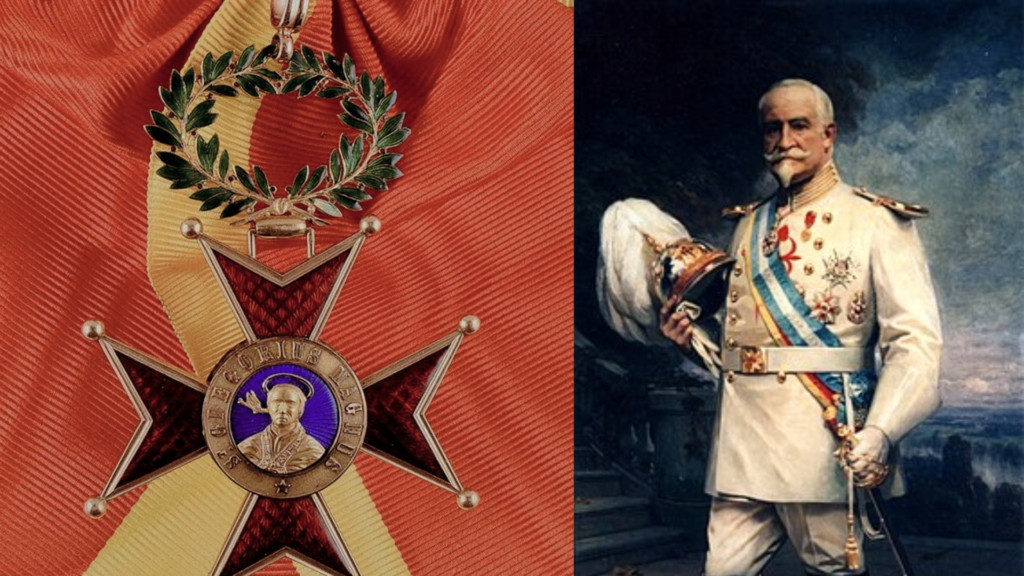
Bishop Conroy of Albany was impressed with Tracey’s service and continued commitment to the faith. He petitioned Blessed Pope Pius IX to reward the young veteran. On September 23, 1871, the Pope made Charles Tracey a Knight of the Order of St. Gregory the Great, recognizing both his service as a Papal Zouave and his continued devotion to the Holy See.
Tracey continued advocating for the faith, founding the Catholic Union in New York, an early Catholic Action organization dedicated to restoring the Pope’s temporal power and promoting the faith. He also represented the League of St. Sebastian in America, an association of English-speaking Papal Zouave veterans and allies co-founded by his old comrade O’Clery.
In 1883, Tracey married Marie-Anne Marguerite-Hermine Juchereau, known as “Hermine Duchesnay” a Québécoise from Montreal. They had a daughter and four sons.
Charles took over his father’s distillery and soon entered public life. He was appointed aide-de-camp to Governor Tilden of New York with the rank of colonel in 1875, and promoted to commissary-general of subsistence with the rank of brigadier general in 1877—earning him the lifelong title “General.” Governor Grover Cleveland later appointed him to the Board of Managers of the House of Refuge in Hudson, New York.
In 1887, Tracey was elected as a Democrat to Congress, filling a vacancy due to the death of Representative Nicholas T. Kane. His election was not without controversy; some opponents accused him of forfeiting his citizenship by swearing an oath to the Pope, but the charge was baseless. Blessed Pope Pius IX had released all Papal soldiers from their oaths after the siege of Rome. He was reelected three times, serving until 1895, and became one of President Cleveland’s most trusted friends and his personal representative in the House.
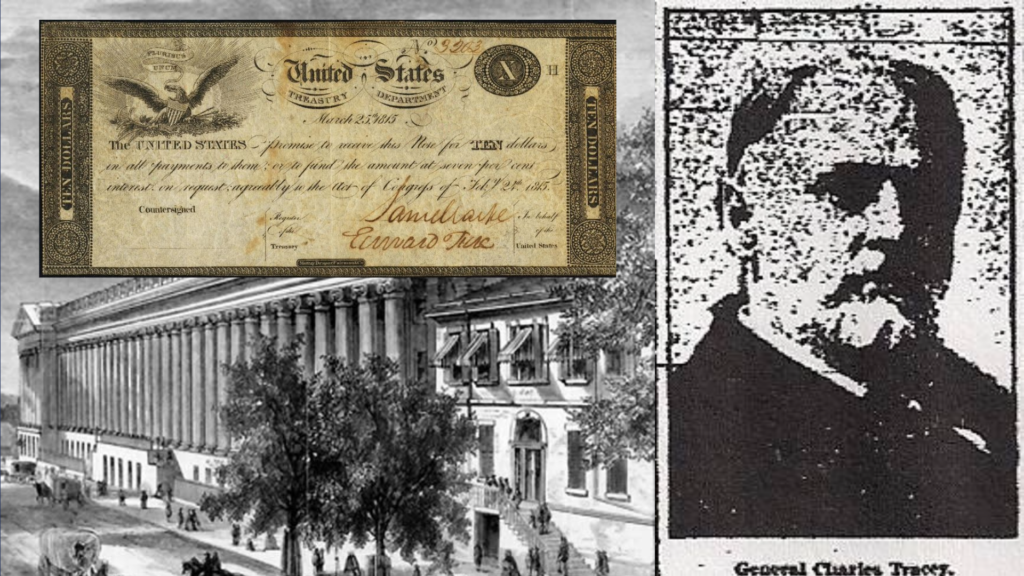
Tracey was a staunch pro-gold Democrat. As a member of the Coinage Committee, he helped repeal the silver-purchase provisions of the 1890 Sherman Act, restoring the Treasury’s ability to maintain the gold standard. Some of his other accomplishments included funding the expansion of Watervliet Arsenal and championing legislation to enforce an eight-hour workday on government premises. In 1896, Tracey helped organize a third party called the National Gold Democrats, serving as chairman in 1900, though without electoral success.
Tracey’s devotion to the faith never wavered. Charles and Hermine were deeply philanthropic, donating generously to churches and hospitals and serving on numerous charitable boards, including as President of St. Peter’s Hospital and as a trustee of St. Agnes Cemetery. He even financially supported his sister Eliza, who became a Franciscan nun in 1895, taking the name Sister Mary Ambrosia.
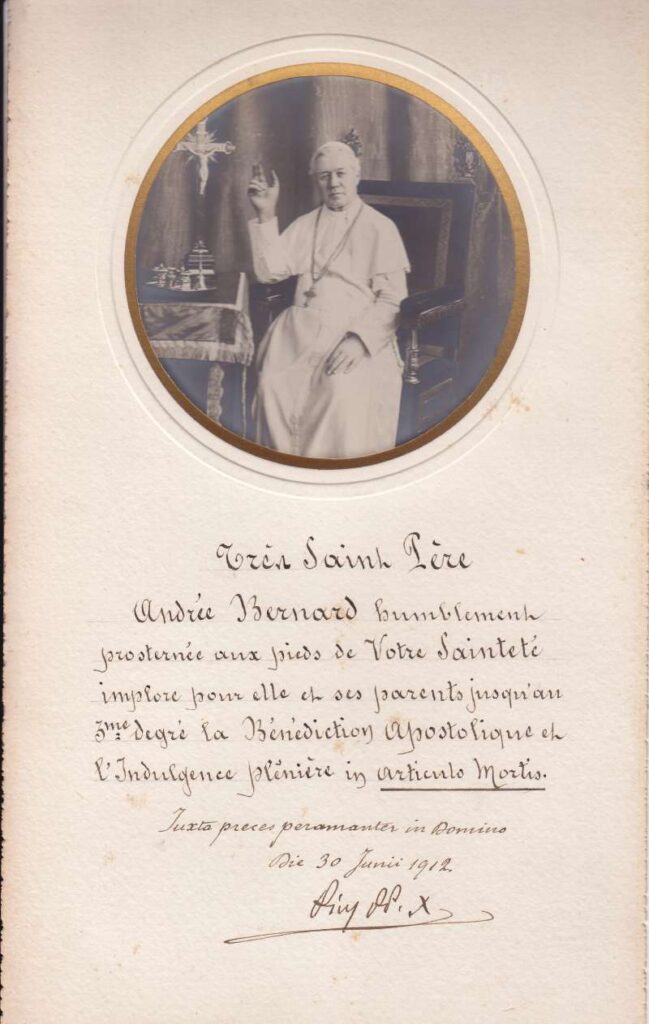
His lifelong fidelity did not go unnoticed in Rome. In 1903, St. Pius X fulfilled one of Pope Leo XIII’s deathbed requests by sending Bishop Hendrick to deliver one of Leo’s own zucchettos to Tracey. When he fell gravely ill in 1905, Pope St. Pius X granted him a Papal Benediction by cable, an honor usually reserved for prelates. Charles Tracey died on March 24, 1905, at the age of fifty-seven from liver disease.
Throughout his life, Tracey remained a committed and faithful Catholic, always ready to serve the needs of the Church. He is an exemplar of what it means to be both a Crusader and an upright statesman. A friend left behind these fitting words:
He kept the faith, he chose the purer thought, Upheld the truth and spoke with cleanly lips,
Untarnished walked the halls where men are bought And served his country more than politics.
Tol’rant of weakness in his fellowmen, Impatient only of the gross and vile,
His life was plotted on a noble plan, He viewed the future with a trustful smile.
Gentle and true he leaves an honored name More lasting in the hearts of friends than fame.
For more Catholic Patriotic Minutes, visit CATHOLICUSA.COM
Save and Share This Catholic Patriotic Minute!