The Catholic Patriotic Minute #41: Venerable Cornelia Connelly
Catholics For Catholics Special Edition | April 13th, 2026
Venerable Cornelia Connelly: The Foundress of the Society of the Holy Child Jesus
For Cornelia Connelly, to become a Catholic convert was to suffer. How would a wife normally respond to a husband who wanted to become a Catholic priest? Not only did Cornelia have to figure out her vocation twice in life, but she suffered the death of two children, the kidnapping of her other children, and a lawsuit brought against her by her husband. But, Cornelia never wavered from God. Rather, she found comfort in the Infant Jesus and the Mother of Sorrows.
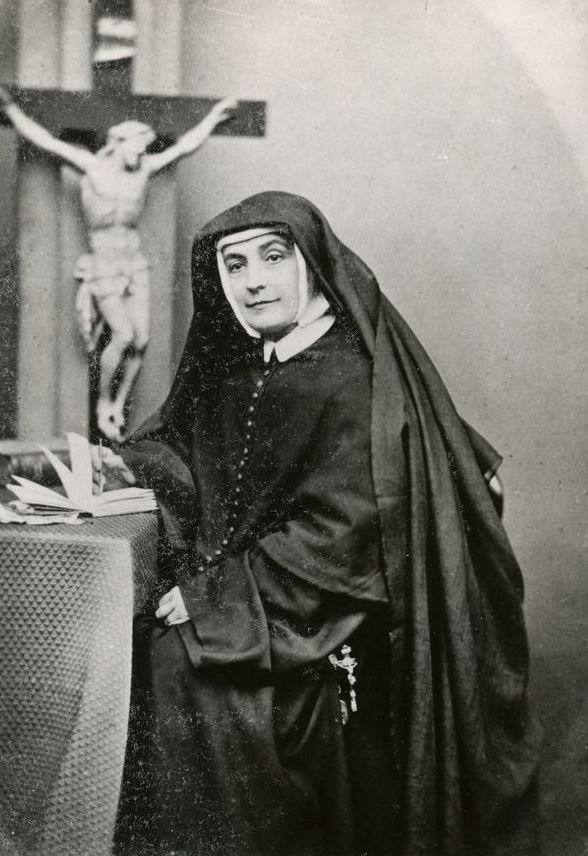
In Philadelphia, Cornelia Peacock was born on January 15, 1809, and was the youngest of seven. When Cornelia was nine, her father, Ralph Peacock, passed away. And then, fourteen-year-old Cornelia became an orphan when her mother, Mary Swope Bowen Peacock, died. Cornelia’s remaining family drifted apart, and she was sent to live with her half sister, Isabella.
Living with Isabella and her husband Austin Montgomery brought about a lonely chapter in her childhood. Without her other siblings close to her in age, Cornelia matured in a more serious, formal, and lonely setting. She attended St. Stephen’s Episcopal Church with the Montgomerys, where she met Pierce Connelly. Cornelia married Pierce when she was twenty-two.
The Connellys moved to Natchez, Mississippi. As an Episcopalian priest, Pierce was held in high esteem by his congregation. Cornelia was happy, becoming a mother and welcoming their congregation into their home regularly. But, Pierce aspired to higher positions within the Episcopal Church, all the while looking at the Catholic Church in interest.
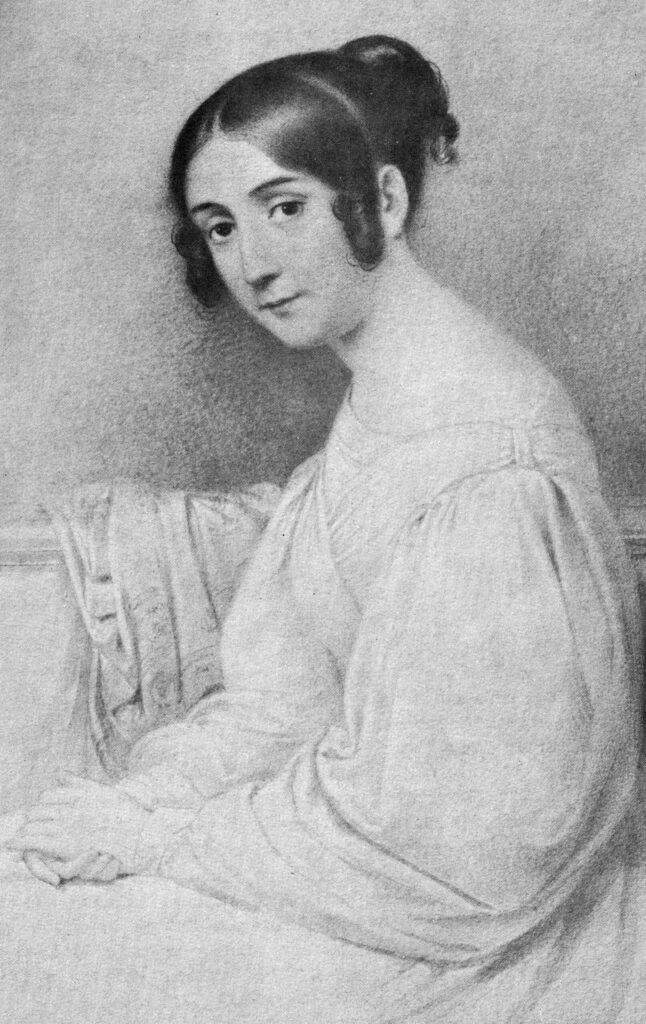
Pierce sympathized with Catholics over the increase in Anti-Catholic sentiments after the first wave of Catholic immigrants came to America. Both Pierce and Cornelia began to read books for and against the Catholic faith. After his hope to become a bishop seemed unattainable, Pierce resigned from his position and renounced his Episcopalian priesthood.
Pierce continued studying Catholic doctrine and even inquired into the possibility of becoming a Catholic priest. Although it was rarely permitted, Pierce could be ordained a Catholic priest, if he separated from his wife with her consent and if they both made perpetual vows of chastity. Fully committed to Pierce, even though she worried about his decision, Cornelia wrote, “I am ready at once to submit to whatever my loved husband believes to be the path of duty.”
Pierce decided to continue his discernment in Rome. The Connellys sold their home and possessions and travelled to New Orleans, where they remained until their voyage to Rome. St. Louis Cathedral is where Cornelia’s conversion to Catholicism took place. She experienced such peace and certainty in the Catholic faith, that she professed her faith and received her First Communion on December 8, 1835, the feast of the Immaculate Conception.
While Cornelia attended lectures on Catholic doctrines, confined in a spiritual director, and befriended other converts in Rome, Pierce discerned the Catholic priesthood and met with Pope Gregory XVI about it. He converted to Catholicism on March 27, 1836.
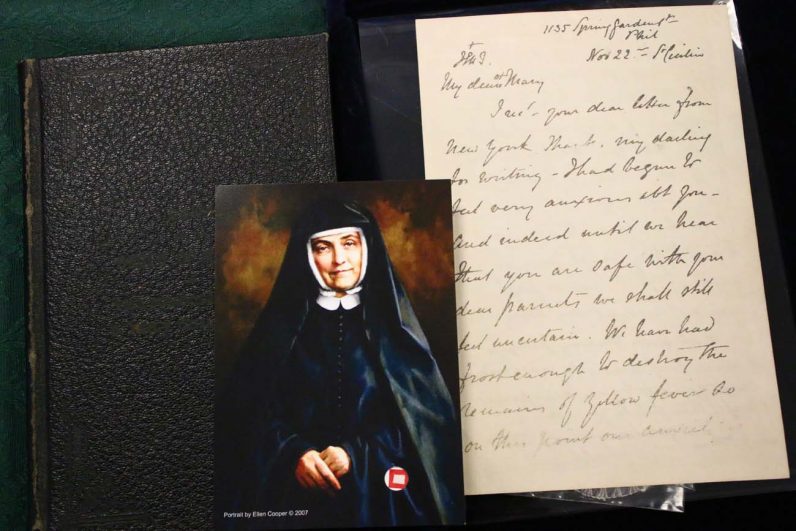
Extreme suffering met the Connellys during this period. Their fourth child, Mary Magdalene, died in 1839 at only six weeks of age. On the feast of the Presentation of Infant Jesus in February of 1840, their son, John Henry, died after falling into a vat of boiling sugar. From here on out, Cornelia kept a special devotion for Mary, under her title of the Mother of Sorrows, after watching her son die, as the Blessed Mother did.
Even though Cornelia was pregnant with their fifth child, Pierce decided to pursue the Catholic priesthood. With a heavy heart, Cornelia’s response was, “if the good God asks the sacrifice, I am prepared to make it & with all my heart.” In the winter of 1843, the whole Connelly family voyaged back to Rome for Cornelia to state her consent to the separation. Pierce’s petition for ordination was accepted in 1844. Cornelia and her two youngest children moved to the Trinità Sacred Heart Convent in Rome. In 1845, she professed her vow of perpetual chastity.
With Pierce gone, Cornelia discerned her next chapter in life, especially in light of this vow of perpetual chastity. Due to the charity of benefactors, her oldest son was attending a Jesuit boarding school in England, and the plan was for her other son to join him later. Her daughter was educated by the Sacred Heart Sisters.
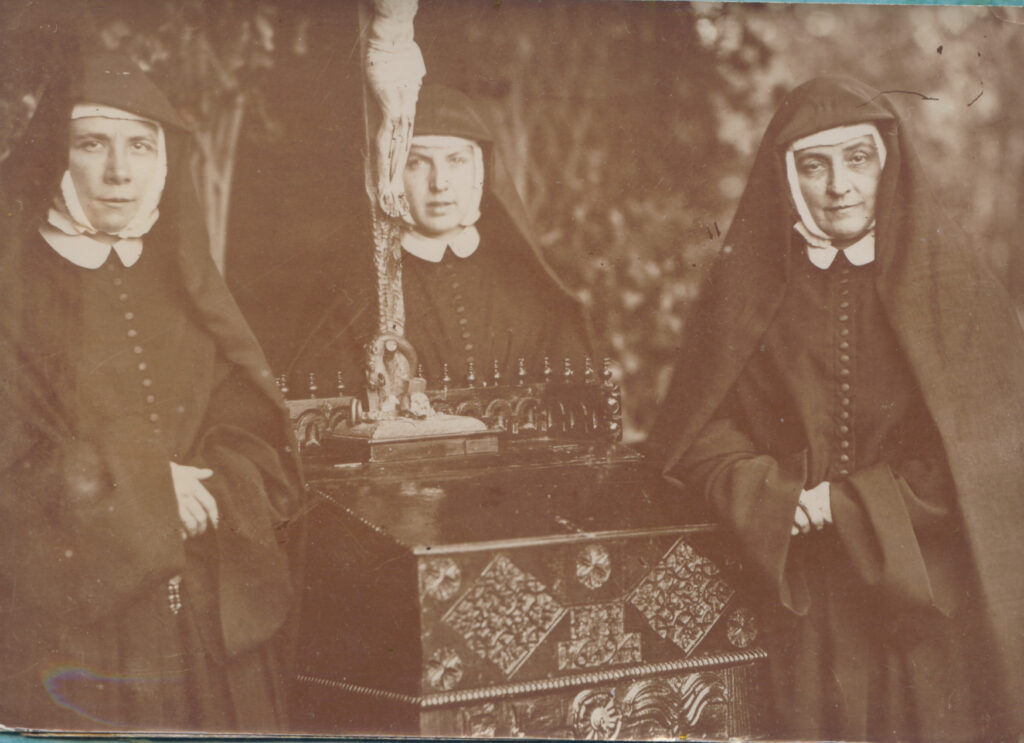
Cornelia felt called to religious life. Through prayer and conversations with her confessor, Cornelia discovered a new desire of her heart–to found a new religious order. She named the order the Society of the Holy Child Jesus because the mystery of the Incarnation had always fascinated her. The Infant Jesus’s humility and charity in his silent years inspired her. Although Cornelia hoped to found the Society of the Holy Child Jesus back in the United States, Pope Gregory XVI requested that she establish it in England, to serve the new Catholic converts there.
With the sponsorship of Bishop Nicholas Wiseman, Cornelia and her two children moved to England in the spring of 1846. In Derby, she established the Society of the Holy Child Jesus alongside three other postulants on October 15, 1846, the feast of Saint Teresa of Avila. They taught hundreds of girls. Bishop Wiseman asked Cornelia to send her daughter and younger son to boarding school, and so Cornelia obeyed. At the end of the society’s first year, Bishop Wiseman received Cornelia’s vows and officially made her the first Superior General of the Society, which then totaled sixteen women. Soon after, the Society of the Holy Child Jesus moved from Derby to St. Leonards-on-Sea.
Before this move, however, Pierce attempted to alter the path of Cornelia’s life again. He served as the chaplain of Lord Shrewsbury in England but desired a higher position within the Church. He was also upset about Bishop Wiseman’s leadership of Cornelia, as he was not allowed to see her in Derby. Emotionally unstable, he tried to force a visit, but Cornelia refused. For Cornelia, her vows to God her Father had to be respected above all else. Without Cornelia’s consent or knowledge, Pierce took their children out of their boarding schools and blocked any communication with Cornelia. Then, Pierce filed a lawsuit in England for the restoration of conjugal rights, alleging that Cornelia abandoned him and the children. Two years later, he abandoned the suit and left Cornelia with legal debts, which he was supposed to pay, and a slandered reputation. He served as an Episcopalian priest in Italy until he died.
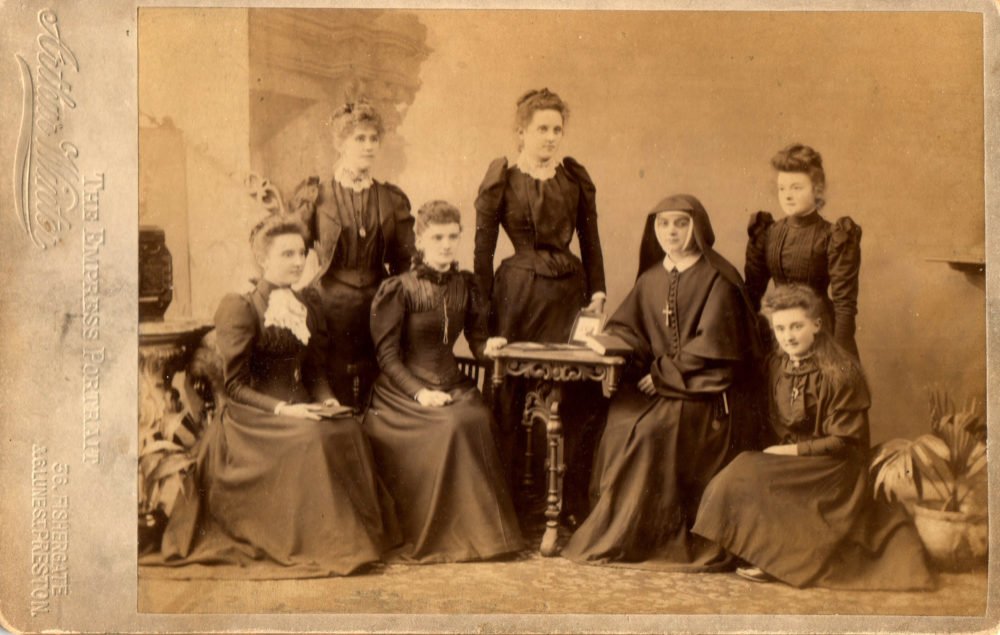
Afterwards, Cornelia grew even closer to the Mother of Sorrows and to the Infant Jesus. In her words, Cornelia gave “Pierce, self, children, all to the Blessed Virgin.” Her deepest sorrow was the loss of her children. She wrote, “[t]he remembrance of my children never leaves me. I would not be without this precious jewel of the cross.” Years later, she reunited with her daughter Adeline, who later returned to the Catholic Church with the help of a Holy Child Sister.
Cornelia’s call to the Holy Child Sisters–to live out the humility, charity, faith, and joy of Infant Jesus–grew the Society of the Holy Child Jesus to where Sisters were sent to America in 1862 and later to Africa, Chile, and the Dominican Republic. Today, there are 350 Holy Child Sisters serving today, and one hundred of the Sisters serve in America.
Cornelia surrendered everything and everyone that belonged to her on earth to God. When Pope Gregory XVI approved of Pierce’s pursuit of the Catholic priesthood and later of her religious order, Cornelia considered each change in vocation as God’s Will for her. The pain of her earthly life united her with Mary, the Mother of Sorrows. Living like the Infant Jesus brought her peace. On April 18, 1879, on Easter Friday, surrounded by her religious family, Cornelia passed away. Saint John Paul II named her Venerable Cornelia Connelly in 1992.
For more Catholic Patriotic Minutes, visit CATHOLICUSA.COM
Save and Share This Catholic Patriotic Minute!