The Catholic Patriotic Minute #47: Orestes Brownson
Catholics For Catholics Special Edition | May 26th, 2026
Orestes Brownson: America’s Catholic Thinker of the Nineteenth Century
On September 16, 1803, Orestes Augustus Brownson was born in Stockbridge, Vermont into poverty. After his father passed away when Orestes was six, he was separated from his family to live with friends of the Brownsons in Royalton, Vermont.
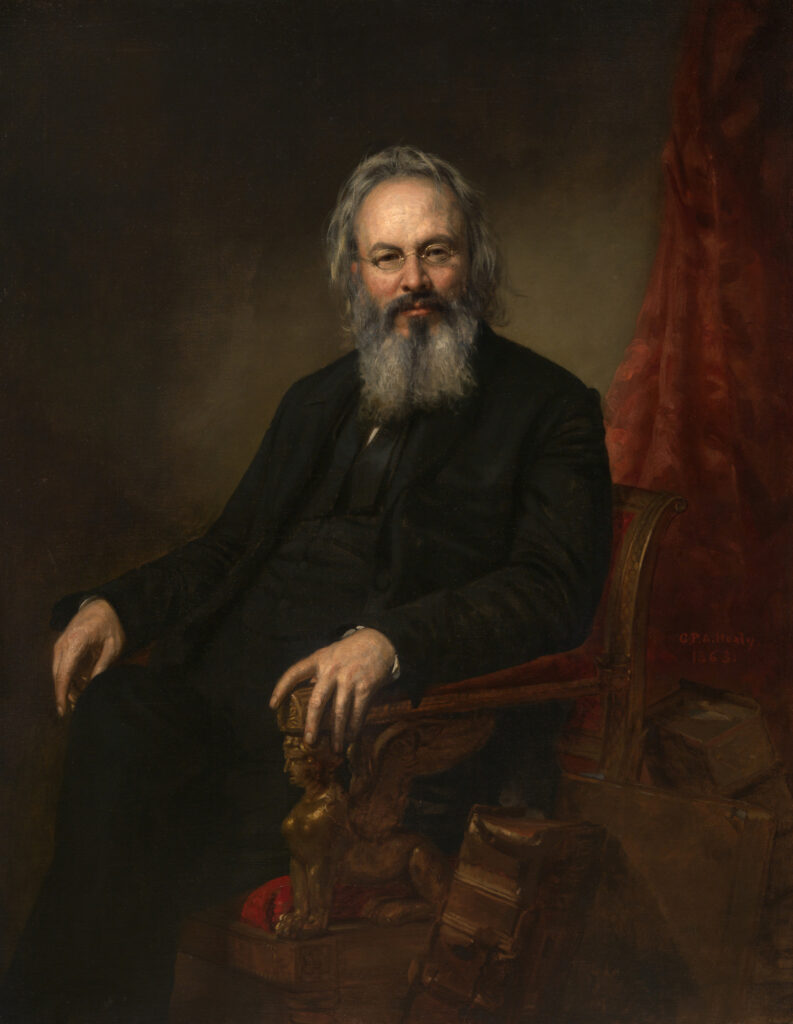
According to his spiritual autobiography, The Convert, Orestes “had no childhood.” He wrote, “[b]rought up with old people, and debarred from all the sports, plays, and amusements of children, I had the manners, the tone, and tastes of an old man before I was a boy.”
Less time outside allowed young Orestes more time to read and educate himself. By the time he was fourteen, he “knew by heart” nearly all of the Holy Bible.
When he was often alone as a child, Jesus and His Blessed Mother occupied Orestes’s imagination. He articulated, “[t]he simple history of the Passion of our Lord, as I read in the Evangelists, affected me deeply. I hung with delight on the mystery of the Redemption, and my young heart often burned with love to our Blessed Lord.”
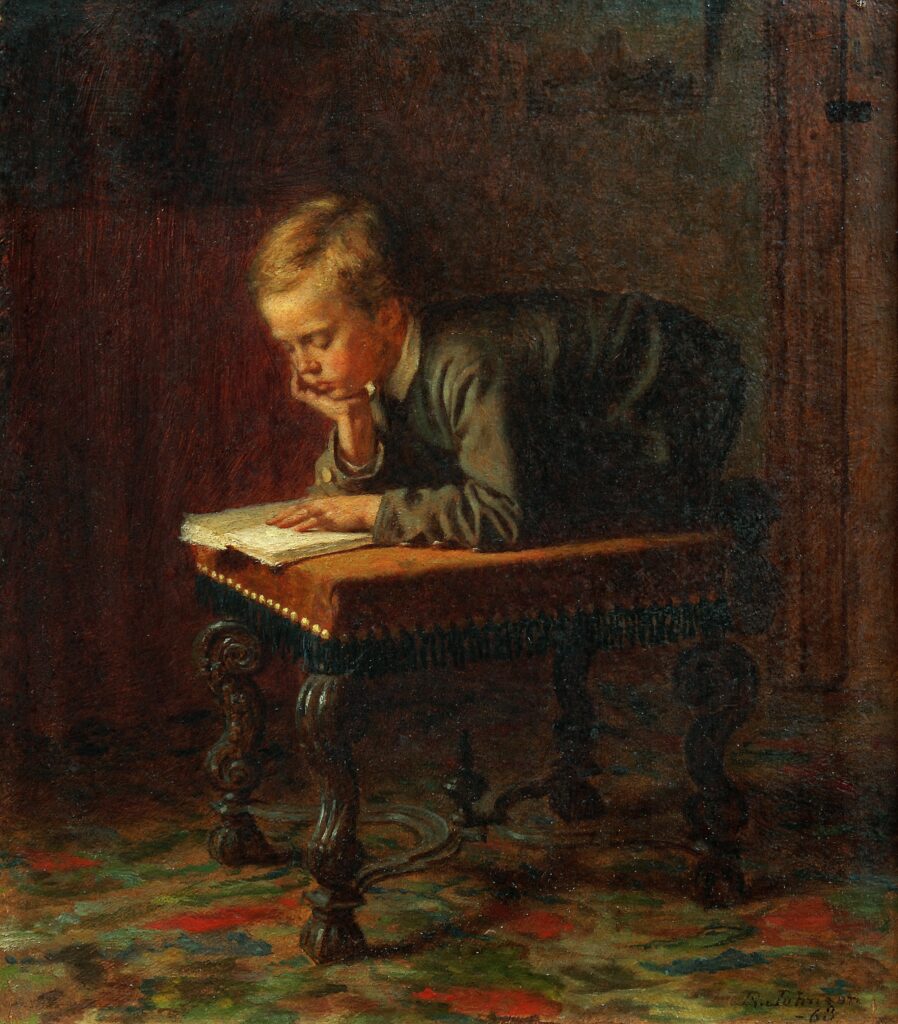
Regarding Jesus, Brownson wrote, “I wanted to know everything about him, and I used to think of him frequently in the day and the night. Sometimes I seemed to hold long familiar conversations with him, and was deeply pained when anything occurred to interrupt them. Sometimes, also, I seemed to hold a spiritual intercourse with the Blessed Mary, and with the Holy Angel Gabriel, who had announced to her that she was to be the mother of the Redeemer.”
When Orestes was fourteen, he reunited with his mother and siblings when they all moved to Saratoga County, New York. Here, he became the apprentice of James Comstock–the owner, editor, and printer of the Independent American newspaper. His apprenticeship began Brownson’s lifelong profession of writing on politics and the state of America.
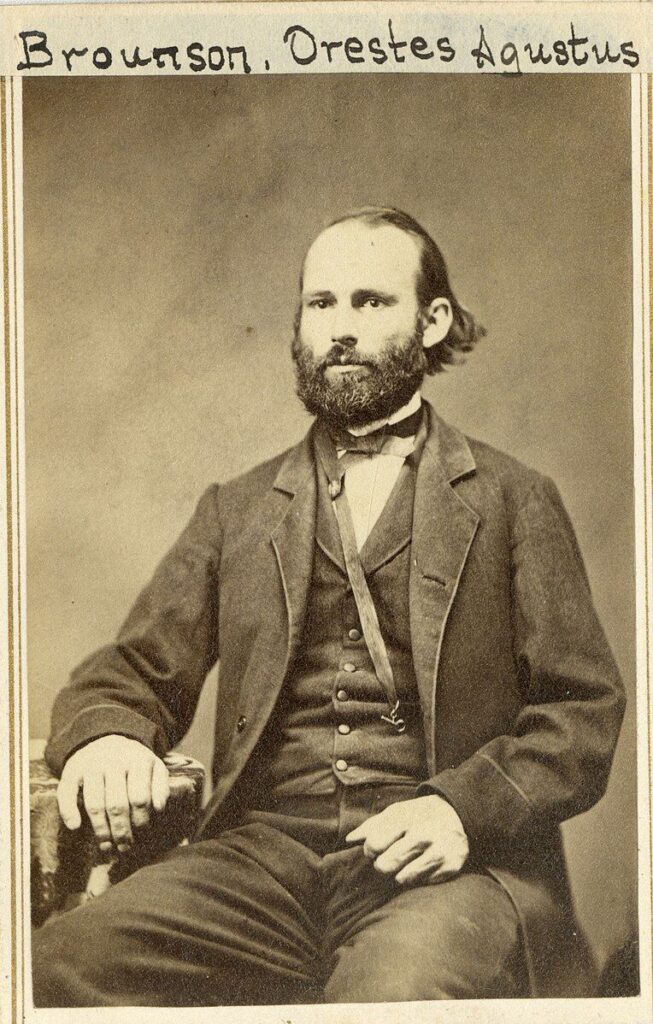
By the time his apprenticeship came to an end, Brownson studied at Ballston Academy for a few months before becoming a teacher in 1824. He taught in New York and Michigan, and during this year, he met his future wife, Sally Healy, whom he married in 1827 and later shared eight children.
Yet, he left this profession in 1825 to study to become a religious minister. Back in 1822, Brownson was baptized a Presbyterian, but afterwards he moved from one denomination to another until he found his home in Rome in 1844.
In 1826, Brownson became a Universalist minister. Six years later, he was a Unitarian minister and participated in circles with other Transcendentalists. During these shifts, Brownson at one point fully embraced the way of faith alone and then later practised believing by reason alone. Later, he acknowledged losing his childhood dependence on Holy Scripture. Brownson eventually stopped fearing hell and hoping for heaven, but rather it was crucial for him to find a heaven on earth.
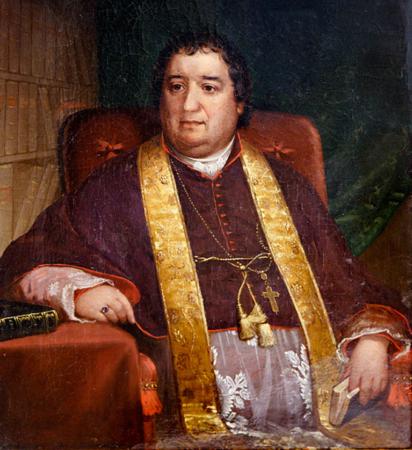
At the age of thirty-three, in 1836, Brownson abandoned Unitarianism to form his own religious community–the Society for Christian Union and Progress. In the same year, he published a book, New Views of Christianity, Society, and the Church, which described his 1836 view of where Catholicism and Protestantism differ and how the two could unite. At the time, he believed Catholicism exclusively prepared Christians to die for heaven, rather than how to live for the earthly life; whereas, Protestantism, according to Brownson, only prepared Christians how to live on earth without consideration of the afterlife.
For Brownson, it was crucial for there to be “the union of the two, the spiritual and the material, the heavenly and the earthly, the eternal and the temporal, the divine and the human.” Little did he know at the time that he would discover this duality of faith and reason in the Catholic Church eight years later.
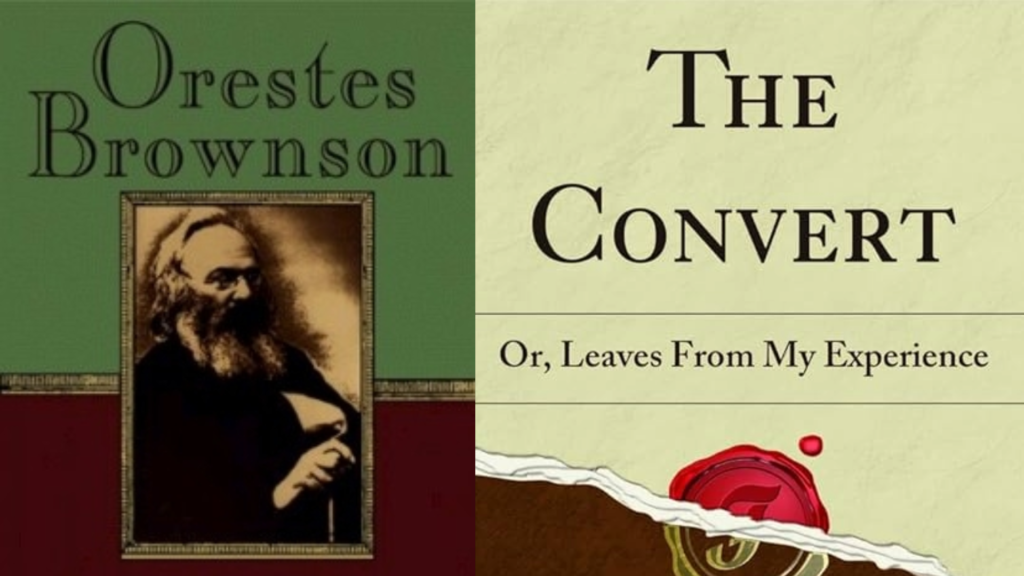
Bishop Benedict Joseph Fenwick became Brownson’s spiritual director, instructor, and confessor. As Brownson declared, “[he] owe[d] him more than it is possible for [him] to owe any other man.” In 1844, Brownson entered the Catholic Church.
He wrote of his spiritual autobiography in his 1857 book, The Convert, in which he detailed the cause of his conversion. He explained, “[b]ut my act of submission to the Catholic Church was an intelligent, a reasonable act; an act of reason, though indeed of reason assisted by grace, because I had full evidence of the fact that she is God’s church, founded and sustained by him, and endowed with the authority and the ability to teach me in all things pertaining to salvation. I had proof satisfactory to reason, that God has himself instituted her as the medium of communion between him and men.”
Servant of God Isaac Thomas Hecker–the founder of the Paulist Fathers–himself accredited his conversion partially to Brownson. Before his own conversion to Catholicism in 1844, Hecker became one of Brownson’s students in 1841. But, together they went home to Rome. Father Isaac Hecker wrote of Brownson, “God alone knows how much I am indebted to him.”
As Brownson became Catholic, his political stances also shifted for a while. In fact, his changing political beliefs are shown throughout the 2.5 million words he wrote for the Boston Quarterly Review, which began in 1838 and later became Brownson’s Quarterly Review. Before his conversion, he was a socialist. But, his political principles changed because, as he wrote, “I am a Catholic by God’s grace and great goodness, and must write as I am.”
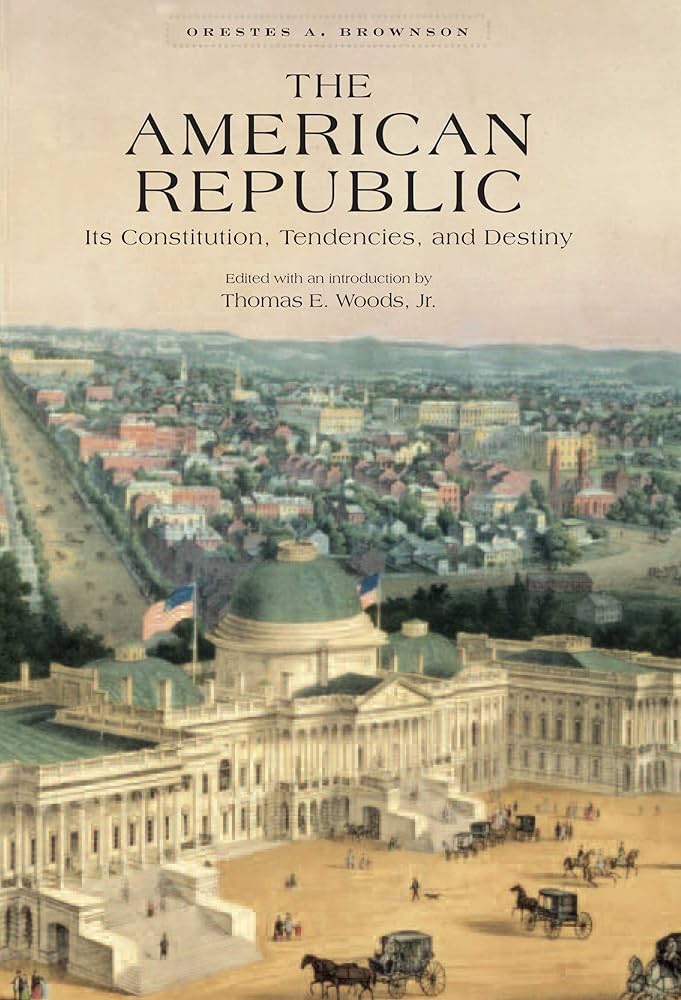
In his 1865 book, The American Republic: Its Constitution, Tendencies, and Destiny, Brownson denounced his past socialist ideology and reaffirmed America’s republican government. Even though he did not endorse a theocracy, he even went as far as to claim that the United States ought to become Catholic.
Brownson asserted, “[t]he religious destiny of the United States is not to create a new religion nor to found a new church. All real religion is catholic, and is neither new nor old, but is always and everywhere true. Even our Lord came neither to found a new church nor to create a new religion, but to do the things which had been foretold, and to fulfil[l] in time what had been determined in eternity.”
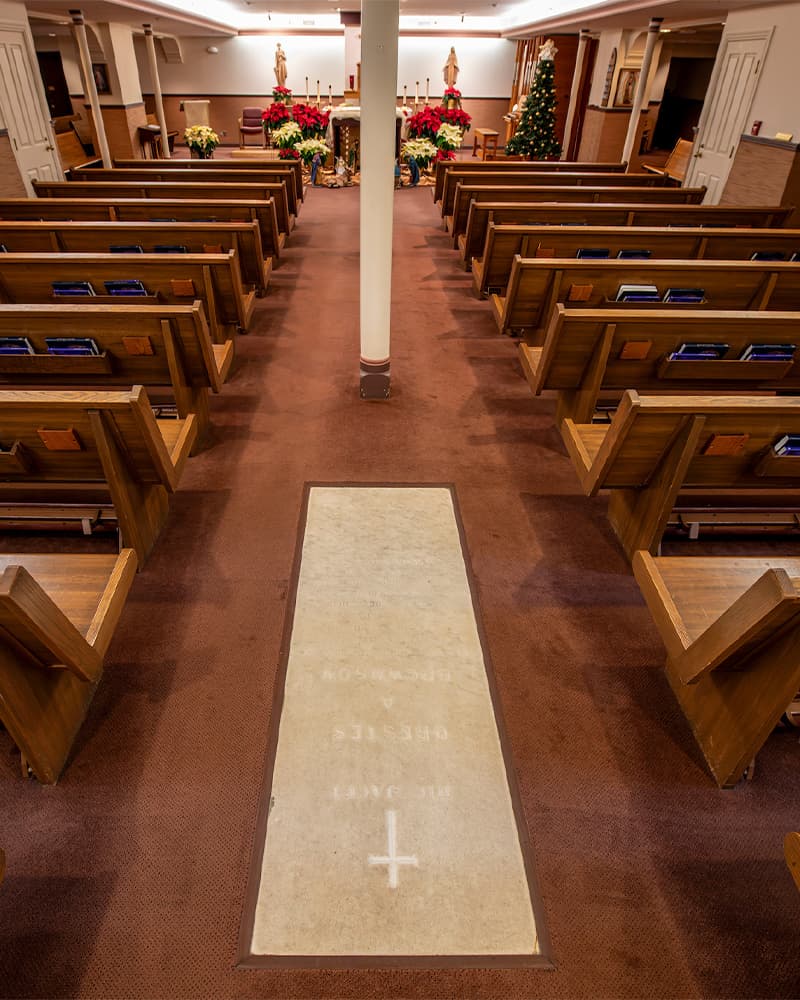
Brownson became bedridden with pneumonia on Good Friday of 1876 and passed away on Easter Monday, April 17, at the age of seventy-two. He is buried in the crypt of the Basilica of the Sacred Heart at the University of Notre Dame.
For more Catholic Patriotic Minutes, visit CATHOLICUSA.COM
Save and Share This Catholic Patriotic Minute!