The Catholic Patriotic Minute #45: Perry Como
Catholics For Catholics Special Edition | May 11th, 2026
Perry Como: A Barber, a Singer, and a Catholic
On May 18, 1912, Pierino Como was born the seventh of thirteen children to a Catholic, Italian family in Canonsburg, Pennsylvania. His father, a factory worker, often sang with his baritone voice. Despite his poverty, he made sure all his children attended music classes. Perry learned to read music and played the organ and baritone horn. He even took part in Italian street bands throughout Canonsburg.
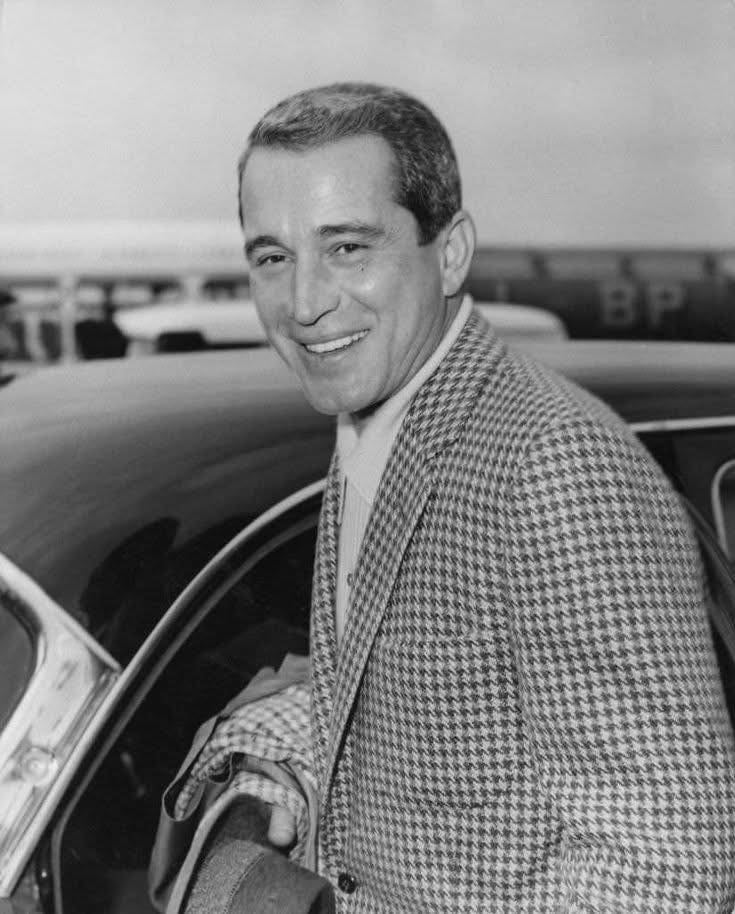
Perry attended high school for two years before he left school without graduating, with his father’s permission. Perry’s father hoped his sons would seek out trades, rather than further education, and he had decided Perry should work in the barber business.
Four years before, Perry had begun working at Steve Fragapane’s barber shop, earning fifty cents per week for sweeping out the shop before and after school. Soon thereafter, Fragapane taught Perry how to cut hair. Como later wrote of this time in his life, “My ambition then was to be the best barber between Canonsburg and Cleveland.”
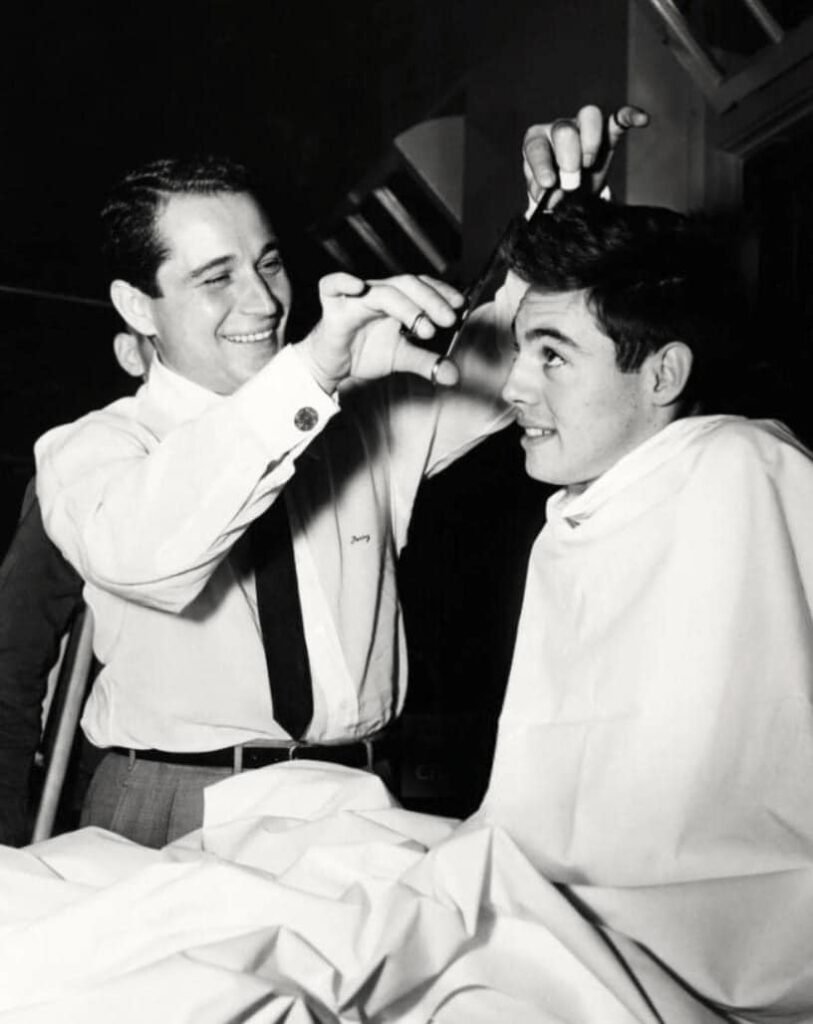
By the age of fourteen, Perry owned a successful barbershop of his own, with the help of his father’s funding. If his shop was ever empty, Perry would sing and play his guitar.
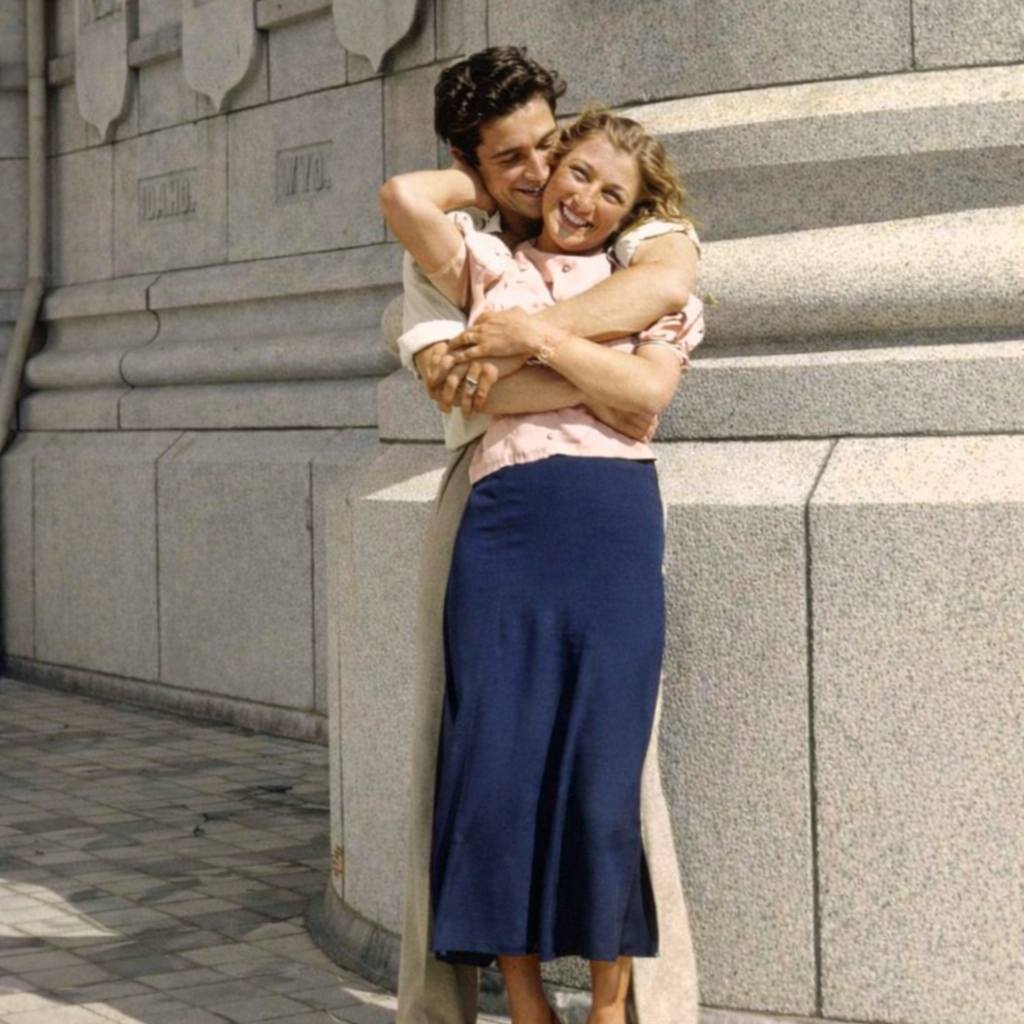
In 1933, Como married Roselle Belline, his childhood sweetheart. A year later, while on vacation in Cleveland, Roselle convinced Como to audition for a spot on Freddie Carlone’s band. Carlone invited Como to be the vocalist of his band.
With the blessings of his family, Perry left his barber business and joined Carlone’s band, where he earned twenty-five dollars weekly. Four years later, Como joined the Ted Weems Orchestra, at first making double his previous earnings and later earning 125 dollars per week. Roselle travelled with Como on the road for these seven years with the two bands.
After Como’s father first came to one of his performances, he told his son, “The audience … do all your audiences cheer you so loud and crazy?”. While Perry was upset at first at his father’s seeming indifference, he realized, upon further reflection, that for his father, “applause every day keeps feeding your vanity and pride and greed,” as Como once wrote. His father was warning him, as Perry later wrote, regarding an inclination to vanity and pride through constant applause, that “that’s no way to become poor in spirit.”
Como attributed his detached relationship with fame to his parents, especially his father. When Perry was a teenager, his father often said, “[b]ecome poor in spirit and share the light with me.” Como wrote, “[t]o Pop, prosperity meant ‘enough to remind you to be thankful.’”
Once the Second World War emerged and Weems departed the band for military service, the Comos and their son Ronald were living in a small apartment in Queens. Como performed at the Copacabana late at night. Due to the lack of time he had with his family, Como decided that his family would move back to Canonsburg and he would open his barber business again.
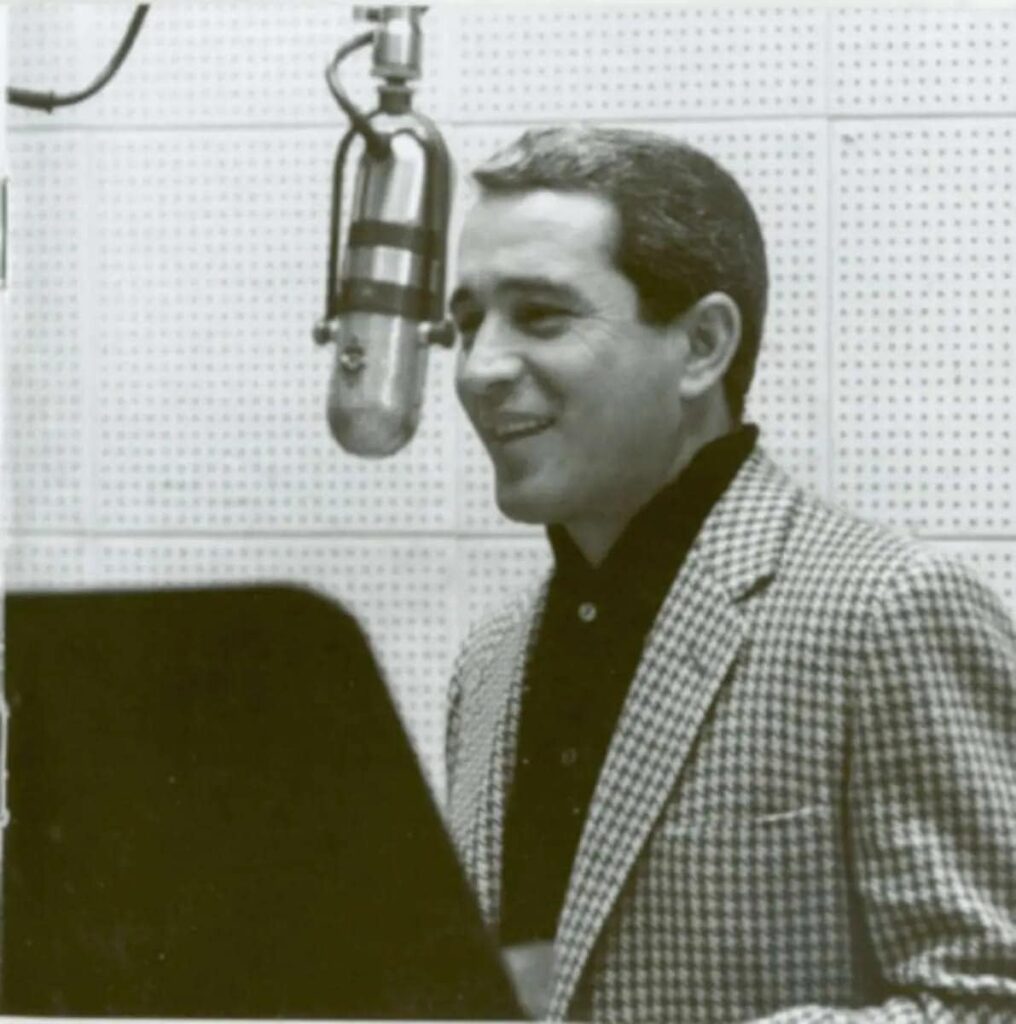
However, a phone call from New York made him return. In 1943, Como was offered a recording contract with RCA Records, a radio show with a pay of one-hundreds dollars per week, a seven-year motion picture contract. Although he was featured in the films, “Something for the Boys” (1944), “Doll Face” (1945), “If I’m Lucky” (1946) and “Words and Music” (1948), Como’s talent ultimately flourished in his music.
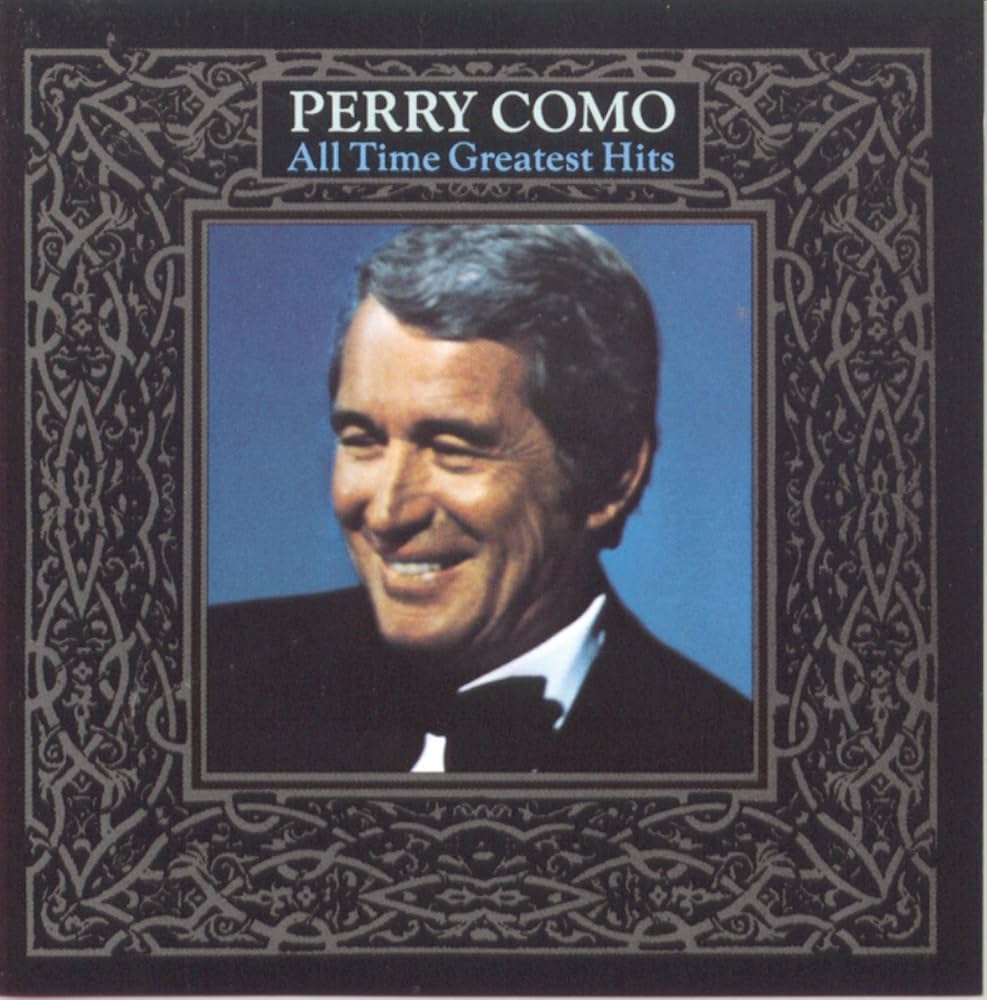
By the time of his last studio recording in the year 1987, Perry Como had recorded more than seven-hundred songs, of which 131 were charted records. Fourteen of his songs were number-one hits. Some of his biggest hits were “Because,” “When You Were Sweet 16,” “Don’t Let the Stars Get in Your Eyes,” “Wanted,” “Papa Loves Mambo,” “Round and Round,” “It’s Impossible,” “Magic Moments” and “Catch a Falling Star,” for which he earned the 1958 Grammy Award for the best male vocalist.
His songs–“(There’s No Place Like) Home for the Holidays” and “It’s Beginning to Look a Lot Like Christmas”– are played in most American homes at Christmas. Como espoused his Catholic faith with his renditions of “The Rosary,” “Ave Maria” and “The Lord’s Prayer.” In the twenty-five year period between 1945 and 1970, Como’s record sales grew to more than one-hundred million. Bing Crosby, Elvis Presley, and the Beatles were the only ones to sell more in this period of time.
His radio show, “The Chesterfield Supper Club,” was successful, and his radio career lasted until 1955. From 1948 to 1963, Como hosted NBC’s Saturday night variety show, the “Perry Como Show,” which had a well-known segment called “Letters, we get letters” where Como sang songs requested via letters by his listeners. For his television show, Perry Como earned the 1955 and 1956 Emmys for Best Male Singer, the 1956 Emmy for Best M.C. or Program host, and the 1957 Emmy for Best Male Personality.
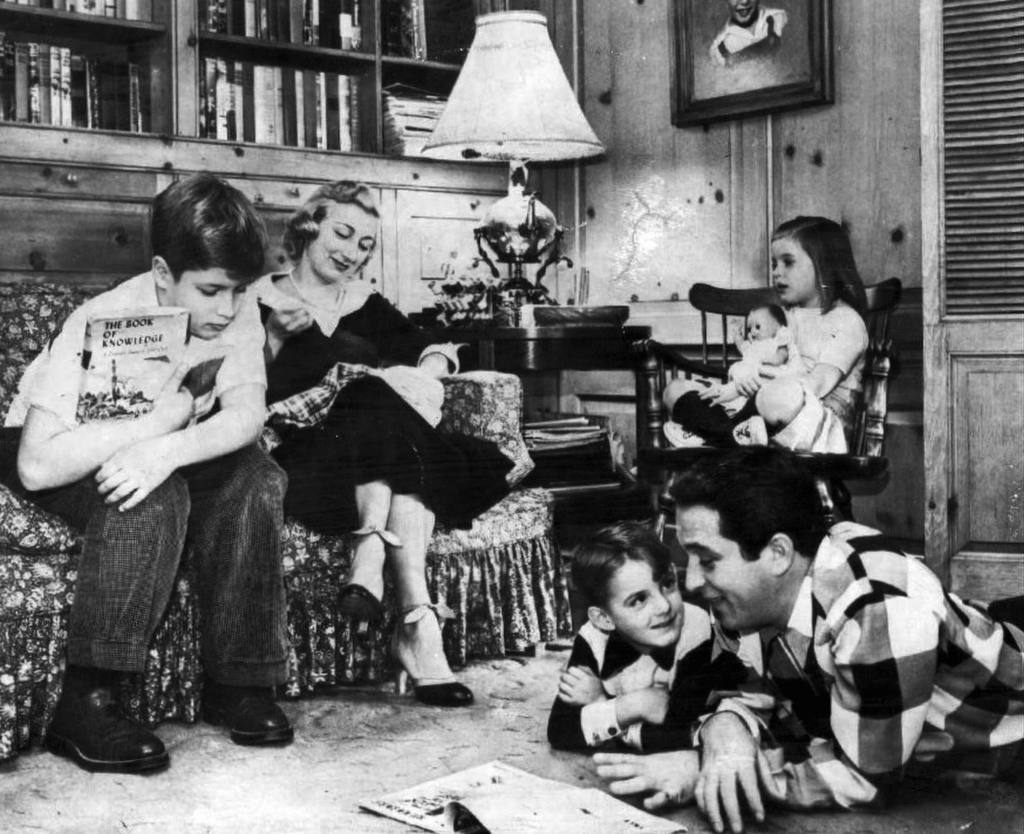
According to Como’s own father, Perry had prosperity. Perry wrote of this period of success, “[s]omewhere along the line Someone sure put His hand on my head. I keep trying to deserve it. We’ve got reason to be thankful, Roselle and I. But we never talk about it. That kind of gratitude isn’t for conversation. Faith is a word for doing, not talking.” Como lived out his faith in his works, but he recognized faith most personified in his children. He once wrote, “I see it when I know they’ll all be home waiting for me to get there. . . I see it every Sunday when we all march off to church together. . . And I see it when they say their prayers before they climb into bed every night.”
Once his television show came to an end, Como mostly exited the limelight and only occasionally returned for his Christmas television specials. But, he continued to record songs.
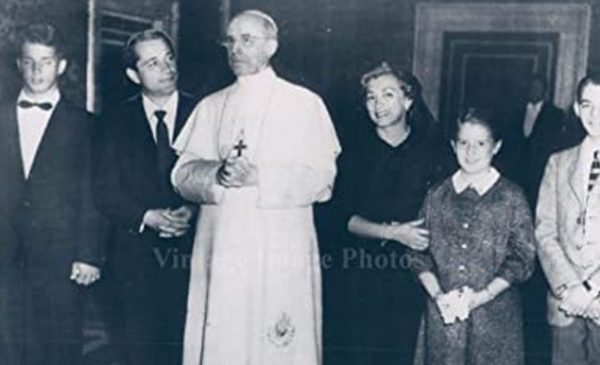
Upon his semi-retirement, Como and his family moved to Florida, and he played golf often. For his twenty-fifth wedding anniversary, the Comos had a private audience with Pope Pius XII. His last major public appearance was his last Christmas Television Special in 1994. In one of his talk show appearances leading up to this 1994 special, with a part-joking, part-serious manner, Como said, “I have to keep working when I start to think about the members of my family. . . That’s why I keep working.”
Perry Como’s life–full of gratitude and faith and void of scandal and affinity for fame–aimed at serving his family of three children and thirteen grandchildren. Even with his worldly success, Como remained poor in spirit. As Como once said, “I’ve done nothing that I can call exciting. I was a barber. Since then I’ve been a singer. That’s it.”
For more Catholic Patriotic Minutes, visit CATHOLICUSA.COM
Save and Share This Catholic Patriotic Minute!